Where the Twain Meet
Mary Gaunt
THE CLASSIC COLLECTION · 1914
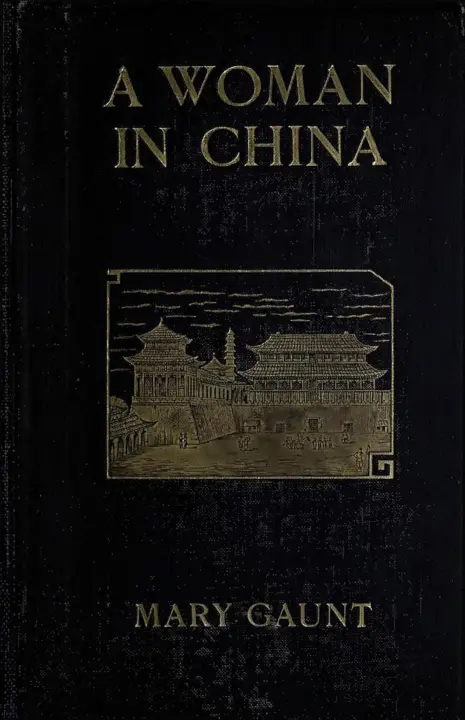
"A Woman In China" by Mary Gaunt is a travel memoir written in the early 20th century. The narrative explores the author's journey to China, combining personal observations with cultural critiques as she reflects on the complexities of the Chinese society she encounters. With a focus on her experiences, the book serves as a vivid account of a woman's exploration in a land filled with ancient customs, political tensions, and dynamic realities. At the start of the memoir, the author reminisces about her childhood fascination with her grandmother's Chinese curiosities, which ignited her desire to travel despite financial constraints. Her subsequent decision to visit China is sparked by a conversation with Dr. Morrison, an Australian correspondent she met through family ties. As she travels from England to Peking, she experiences various landscapes, confronts challenges during her journey through Russia and Siberia, and marvels at the beauty and harshness of the regions she passes. The opening chapters set the stage for an exploration of China's rich history and society, blending personal narrative with insights into the broader cultural implications of her travels.
Introduction adapted from the source catalogue; source summaries may be automatically generated.
Free to read · English · 113,160 words · No account needed
MAKE TIME FOR A GOOD BOOK
On by default. Untick to stop anonymous reading totals. Each page counts after 10 seconds in view. How this works.
Anonymous counting is on unless you have switched it off.
I pinned my badge to the front of my fur coat, for it was keen and cold in spite of the brilliant sunshine, and went off to the wrong entrance, the eastern gate, where only princes and notables were admitted. I thought it strange there should be no sign of a foreigner, but foreigners in Peking can be but as one in a hundred or less, so undismayed, I walked straight up to the gate, and immediately a row of palace servants clad in their white robes of mourning, clustered before the sacred place. They talked and explained vehemently, and with perfect courtesy, but they were very agitated, and though I could not understand one word they said, one thing was certain, admitted I could not be there. So I turned to the southern gate and there it seemed all Peking was streaming. {081}It was like China that we might not go in the direct way.
There is a great paved way through the Imperial City alongside a canal that runs between marble-lined banks, but on the principal bridge that crosses it was erected the orange silk pavilion for the poorer classes, and we, the wearers of the black chrysanthemum, hundreds and thousands and ten thousands of us, had to turn off to the right and go along by the tall, pinkish red walls till we came to the great archways in the walls, five great archways filled in with doors studded with great brazen knobs. Usually they were fast shut, but they were open to-day, guarded by soldiers in full-marching order, soldiers of the New Republic in modern khaki looking out of the picture, and there streamed into the tunnellike entrance as curious a crowd as ever I set eyes upon. All must walk, old and young, great and lowly, representatives of the mighty nations of the world and tottering Chinese ladies swaying like “lilies in the wind” upon their maimed feet, only one man, a Mongol Prince, an Incarnation of a Buddha, a living Buddha, was borne in in a sedan chair. But every other mortal had to walk. The tunnels must always be gloomy, and, even on that cold day, they struck chill after the brilliant sunlight, and they are long, for the walls, just here, are about ninety feet through, so might the entrances have been in the palace of Ahasuerus the King. The courtyard we first entered had a causeway running right across it of great hewn stones, hewn and laid by slave labour, when all men bowed before the Son of Heaven, hundreds of years ago. They are worn in many places now, worn by the passing of many {082}feet, and still more worn are the grey Chinese bricks that pave the courtyard on either side. It is a great courtyard of splendid proportions. In front of us frowned more high walls of pinkish red, topped by the buildings that can be seen all over Peking, temples or halls of audience with golden-brown tiled roofs that gleamed in the sunlight, and on either side were low buildings with fronts of lattice-work rather fallen into disrepair. They might have been used as guard-houses or, more probably, were the quarters of the six thousand or so of eunuchs that the dignity of the ruler required to attend upon him. There were a few trees, leafless then in March, but there was nothing to spoil the dignity and repose of every line. A great mind surely conceived this entrance, and great must have been the minds that kept it so severely simple. If it be the heart of a nation then do I understand. The people who streamed along the causeway, who roamed over the worn brick pavement, had, as a rule, delicate, finely formed hands though they were but humble craftsmen. If the hands of the poorest be so fine, is it any wonder that the picked men of such a people, their very heart, conceived such a mighty pile? There were more, longer and gloomier tunnels, admitting to a still greater courtyard, a courtyard that must be at least a quarter of a mile across, with the same causeway of worn stones that cry out the tale of the sufferings of the forgotten slaves, who hewed them and dragged them into place, the same grey pavement of bricks, the same tall smooth red walls, crowned over the gateway with temples, rising one story after another till the tiled roof cuts the sky. And through a third set of tunnels we came into a third courtyard, {083}the courtyard where the obsequies were being held. The third courtyard was spacious as Trafalgar Square, and round three sides was a wide raised platform of stone reached by broad and easy ramps, and all across it ran a canal held in by marble banks, crossed by graceful bridges, and every one of the uprights, made of white marble, was crowned by a figure that I took for the representation of a flame; but those, who know, tell me it is meant to represent a cloud, and is part of the dragon symbolism. When marble is the medium by which so light a thing as a cloud is represented it must be very finely done indeed, when one outside the national thought, such as I, sees in that representation a flame. Two colossal bronze monsters with grinning countenances and curly manes, conventional lions, mounted on dragon-carved pedestals, stand before the entrance to the fourth temple or hall of audience, and here was what the crowd had come to see, the lighthearted, cheerful, merry crowd, that were making high holiday, here was the altar to the dead.
Your reading position is saved on this browser. Take it to another device with a library code. Reading pages adapt to text, rather than matching a printed edition.
Mary Gaunt
Mary Gaunt
Mary Gaunt
BEHIND THE BOOK
This eBook is for the use of anyone anywhere in the United States and most other parts of the world at no cost and with almost no restrictions whatsoever. You may copy it, give it away or re-use it under the terms of the Project Gutenberg License included with this eBook or online at www.gutenberg.org. If you are not located in the United States, you will have to check the laws of the country where you are located before using this eBook. Read the source licence.
The original source file, including credits and licence, is retained by this library. Request an original-format copy at no charge. Please include the book title and Project Gutenberg identifier #54401.
KEEP YOUR CURIOSITY GOING
Wilfrid Scawen Blunt
Wilfrid Scawen Blunt

E. W. (Edgar Watson) Howe
Francis Greenleaf Allinson & Anne C. E. (Anne Crosby Emery) Allinson
Cyrenus Cole

John Martineau