Where the Twain Meet
Mary Gaunt
THE CLASSIC COLLECTION · 1914
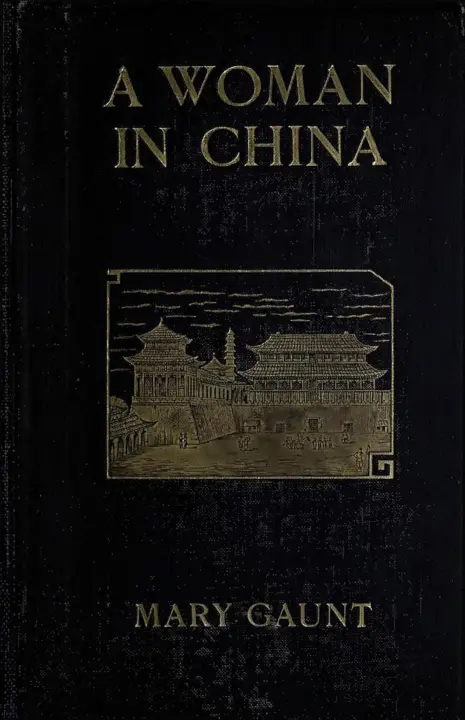
"A Woman In China" by Mary Gaunt is a travel memoir written in the early 20th century. The narrative explores the author's journey to China, combining personal observations with cultural critiques as she reflects on the complexities of the Chinese society she encounters. With a focus on her experiences, the book serves as a vivid account of a woman's exploration in a land filled with ancient customs, political tensions, and dynamic realities. At the start of the memoir, the author reminisces about her childhood fascination with her grandmother's Chinese curiosities, which ignited her desire to travel despite financial constraints. Her subsequent decision to visit China is sparked by a conversation with Dr. Morrison, an Australian correspondent she met through family ties. As she travels from England to Peking, she experiences various landscapes, confronts challenges during her journey through Russia and Siberia, and marvels at the beauty and harshness of the regions she passes. The opening chapters set the stage for an exploration of China's rich history and society, blending personal narrative with insights into the broader cultural implications of her travels.
Introduction adapted from the source catalogue; source summaries may be automatically generated.
Free to read · English · 113,160 words · No account needed
MAKE TIME FOR A GOOD BOOK
On by default. Untick to stop anonymous reading totals. Each page counts after 10 seconds in view. How this works.
Anonymous counting is on unless you have switched it off.
That incident, to my mind, explains the Legation Quarter of Peking to-day. Of course the Legation, in its present form, dates only from the Boxer rising, but the germ of it was there when the merchants of the assembled nations felt themselves compelled to sacrifice the careless gunner “from motives of policy.” One hundred and twenty years ago the Western nations were only a stage removed from the barbaric civilisation the Chinese had reached two or three thousand years before, but still they were moving onward, and they felt they must combine if they would trade with this rich land, and yet protect their subjects and their goods. And so they did combine, and there arose that curious state of affairs between the foreigners and the people of the land that has held for many years, that holds in no other land, and that has crystallised in the Legation Quarter of Peking.
Suppose in London all the great nations of the {058}earth took a strip of the town, extending say from Marble Arch to Hyde Park Corner, and from Park Lane to Bond Street, held it and fortified it heavily, barring out the inhabitants, not wholly, but by certain regulations that prevented them having the upper hand. The thing is unthinkable, yet that is exactly what has happened in Peking. Against the Tartar wall, from the Chien Men to the Ha Ta Men, the nations have taken a parallelogram of ground all but a mile square, they have heavily fortified it, on three sides they have cleared a broad glacis on which no houses may be built, and they have there a body of troops with which they could overawe if not hold all the town.
No man knows exactly how many men the Japanese have, but supposing they are on a par with the other nations, there are at least two thousand five hundred men armed to the teeth and kept at the highest pitch of perfection in the Legation Quarter. Living there is like living in an armed camp. You cannot go in or out without passing forts or guns, in the streets you meet ammunition wagons, baggage wagons, Red Cross wagons, and at every turn are soldiers, soldiers of all the European nations that have any standing at all, soldiers from America, soldiers from Japan; they are doing sentry-go at the various Legations, they are drilling, they are marching, they are shooting all day long. In one corner of the British Legation they keep untouched a piece of the old shot-torn wall of 1900 and painted on it, in big black letters, is the legend, “Lest We Forget,” a reminder always, if the nations needed a reminder, of the days of 1900, of the terrible days that may be repeated any time this {059}peace-loving nation drifts into an anti-foreign outbreak. I was going to write it is almost insulting; but it is insulting, and this armed Legation Quarter must be in truth cruelly galling to the better-class, educated Chinese. They must long to oust these arrogant men from the West and their neighbour from the East, who thus lord it over them in the very heart of their own city. Even the wall, the great Tartar wall built first by Kublai Khan, and finished by the Ming conquerors, comes under foreign domination from the Ha Ta Men to the Chien Men. The watch-tower over the Ha Ta Men is still in the hands of the Chinese, and like most things Chinese is all out of repair. The red lacquer is cracked, the gold is faded, the grass grows on the tiled roofs, in the winter dried-up and faded, in the summer lush and green, and for all the Chinese soldiers hold it, it is desolate and a thing of the past But a hundred yards or so to the west, is the German post. Always are armed men there with the eagle on their helmets, always an armed sentry marches up and down, keeping watch and ward. No great need for them to hold the Ha Ta Men, their guns dominate it, and below in the town the French hold carefully the fortified eastern side of the Legation Quarter. The centre of that strip of wall, held by the Japanese, is marked by an iron fence called, I am told, a “traverse.” There is a gate in it, and across the path to that gate, so that it may not be so easily got through, is built up a little wall of brick the height of a man. In the summertime the grass grows on it green and fresh, and all the iron bars of that fence and gate are wreathed in morning glory. The Japanese are not so much in evidence as the {060}efficient Germans or the smart Americans, but I am told they are more than keen, and would gladly and effectually hold the whole wall would the other nations allow them. At the Chien Men, the western end of the mile-long strip of wall are the Americans, tall, lean, smart, capable men in khaki, with slouch hats turned up at the sides, clean-shaven faces and the sound in their voices that makes of their English another tongue. In the troubles of 1912, when fires were breaking out all over the city, and every foreigner fled for safety to his Legation, Uncle Sam, guarding the western end of the wall overlooking those Legations, seized the beautiful new watch-tower on the Chien Men, his soldiers established themselves there, and they hold it still. It dominates their Legation they say with reason, for their own safety they must hold it, and the Chinese acquiesce, not because they like it, but because they must. Periodically representations come in, all is quiet now, the Americans may as well give up the main gate, or rather watch-tower, for they do not hold the main gate, only the tower that overlooks it. But the answer is always the same, it overlooks their Legation, they must hold it. They have a wireless telegraph post there and a block-house, and the regulations for the sentry, couched in cold, calm, official language, are an insult to the friendly nation that gives them hospitality, or would be so, if that nation had not shown itself incapable of controlling the passions of its own aroused people. The sentry clad in khaki in summer, in blue in winter, marching up and down by the watch-tower, magnificent in its gorgeous Eastern decorations of blue, and green, and red, and barbaric gold, must report at once anything {061}unusual taking place in the gate below, any large gathering of Chinese, any unusual commotion, but above all upon that wall, that wall that belongs to them and is the wall of their capital city, he must not allow, without a permit, any Chinese. The wording of the order runs, “No low-class Chinese,” but the definition of low class is left to the discretion of the soldier, and he is not likely to risk a reproof from those in authority over him by being too lax. With my own eyes have I seen a Chinese, well-dressed in European clothes, turned back by the sentry from the ramp when he would have walked upon the wall. He looked surprised, he was with European friends, the order could not apply to him, but the sentry was firm. He had his orders, “No Chinese,” and without a special permit he must see them carried out. It seemed cruel, and unnecessarily humiliating, but on the central ramp are still the places where the Americans, seeking some material for a barricade, fighting to save themselves from a ghastly death, tore out the bricks from the side of the great wall. Other nations beside Britain, write in their actions, if not on their walls: “Lest We Forget!” The lower-class Chinese probably do not mind the prohibition. It is considered bad manners for a Chinaman to walk upon the wall, because he thereby overlooks the private houses below, but in these days of the New Republic possibly good manners are not so much considered as formerly, and since the Chinese have never been allowed upon the wall they probably do not realise that thirteen miles of it are free to them, if they care to go there. Some few I know do, because I have met there men gathering the dried vegetation for fuel, and I have {062}seen one or two beggars, long-haired, filthy men in the frowsiest of rags, but the first have probably got permission from the soldiers, and the latter, seeing foreigners there, have most likely been tempted by the hope of what to them is a lavish dole, and, finding no harm happen, have come again. I may be wrong, of course, but I hardly think death can have much terror for the Chinese beggar, life must hold so very little for him. Those who, having dared their own portion of the wall with impunity, find the foreign mile still a forbidden place to them, probably put it in the same category as the Forbidden City, and never realise that it is the outlander, the outer barbarian, and not their own Government that shuts them off.
Your reading position is saved on this browser. Take it to another device with a library code. Reading pages adapt to text, rather than matching a printed edition.
Mary Gaunt
Mary Gaunt
Mary Gaunt
BEHIND THE BOOK
This eBook is for the use of anyone anywhere in the United States and most other parts of the world at no cost and with almost no restrictions whatsoever. You may copy it, give it away or re-use it under the terms of the Project Gutenberg License included with this eBook or online at www.gutenberg.org. If you are not located in the United States, you will have to check the laws of the country where you are located before using this eBook. Read the source licence.
The original source file, including credits and licence, is retained by this library. Request an original-format copy at no charge. Please include the book title and Project Gutenberg identifier #54401.
KEEP YOUR CURIOSITY GOING
Wilfrid Scawen Blunt
Wilfrid Scawen Blunt

E. W. (Edgar Watson) Howe
Francis Greenleaf Allinson & Anne C. E. (Anne Crosby Emery) Allinson
Cyrenus Cole

John Martineau