
Where the Twain Meet
Mary Gaunt
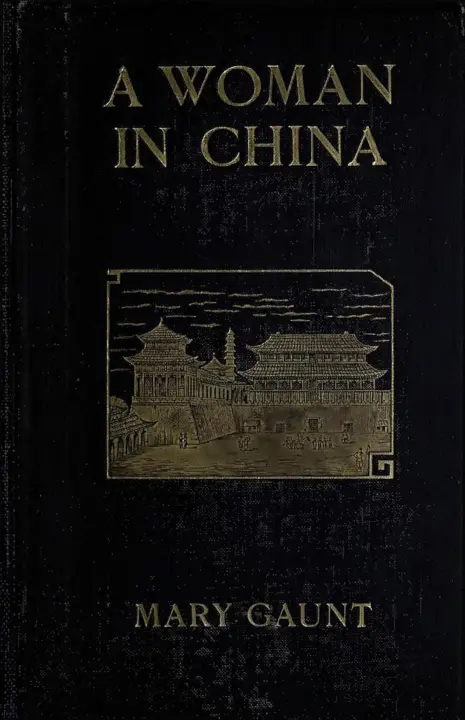
THE CLASSIC COLLECTION · 1914
"A Woman In China" by Mary Gaunt is a travel memoir written in the early 20th century. The narrative explores the author's journey to China, combining personal observations with cultural critiques as she reflects on the complexities of the Chinese society she encounters. With a focus on her experiences, the book serves as a vivid account of a woman's exploration in a land filled with ancient customs, political tensions, and dynamic realities. At the start of the memoir, the author reminisces about her childhood fascination with her grandmother's Chinese curiosities, which ignited her desire to travel despite financial constraints. Her subsequent decision to visit China is sparked by a conversation with Dr. Morrison, an Australian correspondent she met through family ties. As she travels from England to Peking, she experiences various landscapes, confronts challenges during her journey through Russia and Siberia, and marvels at the beauty and harshness of the regions she passes. The opening chapters set the stage for an exploration of China's rich history and society, blending personal narrative with insights into the broader cultural implications of her travels.
Introduction adapted from the source catalogue; source summaries may be automatically generated.
Free to read · English · 113,160 words · No account needed
MAKE TIME FOR A GOOD BOOK
On by default. Untick to stop anonymous reading totals. Each page counts after 10 seconds in view. How this works.
Anonymous counting is on unless you have switched it off.
But as a matter of fact the marriage was a great success. I saw the happy couple afterwards, and the woman looked well-cared for and neat, and her husband helped her up some steps quite as carefully as any man of the West might have done. Truly the Fates were kind to the blind beggar when they put her in the way of that missionary. She is far, far happier probably than the bride of a higher class who goes to a new home, and, henceforward, as long as the older woman lives, is but a servant to her mother-in-law. True the husband had complained his new wife ate too much. But Chinese etiquette does not seem to think it at all the correct thing to praise anything that belongs to one. And for a husband to show affection for his wife, whatever he may feel, is a most extraordinary thing. The other day a woman was working in the courtyard of a house when there came in her husband who had been away for close on six months. Did they rush at one another as Westerners would have done? Not at all. He crossed the courtyard to announce himself to his master, and she went on with her work. Each carefully refrained from looking at the other, because had they looked people might have thought they cared for each other. And it is in the highest degree indelicate for a husband or wife to express affection for each other.
In truth, once my eyes were opened, I soon grew to think that, from the point of view of the sightseer, there are few places in the world to compare with Peking, and the greatest interest lies in the people--the crowded humanity of the streets. Of course {037}I have seen crowded humanity--after London how can any busy city present any novelty--and yet, here in Peking, a new note is struck. Not all at once did I realise it; my mind went groping round asking, what is the difference between these people and those one sees in the streets of London or Paris? They are a different type, but that is nothing, it is only skin deep. What is it then? One thing cannot but strike the new-comer, and that is that they are a peaceable and orderly crowd, more amenable to discipline, or rather they discipline themselves better, than any crowd in the world. Not but that there are police. At every few yards the police of the New Republic, in dusty black bound with yellow in the winter, and in khaki in the summer, with swords strapped to their waists, direct a traffic that is perfectly capable of directing itself; and at night, armed with rifles, mounted bands of them patrol the streets, the most law-abiding streets apparently in the world. In spite of the swarms of tourists, who are more and more pouring into Peking, a foreigner is still a thing to be wondered at, to be followed and stared at; but there is no rudeness, no jostling. He has only to put out his hand to intimate to the following crowd that he wishes a little more space, that their company is a little too odoriferous, and they fall back at once, only to press forward again the next moment. Was ever there such a kindly, friendly nation? And yet--and yet--What is it I find wrong? They are a highly civilised people, from the President who reigns like a dictator, to the humble rickshaw coolie, who guards my dress from the filth of the street. He will hawk, and spit, but he is as {038}courtly a gentleman as one of the bucks of the Prince Regent's Court, who probably did much the same thing. It dawned upon me slowly. These people have achieved that refinement we of the West have been striving for and have not attained as yet. It is well surely to make perfection an aim in life, and yet I feel something has gone from these people in the process of refining. Ninety-nine times out of a hundred they can be trusted to keep order, and the hundredth probably not all the police in the capital could hold them. The very rickshaw coolies, when they fall out, trust to the sweet reasonableness of argument, even though that argument Waste interminable hours. A European, an Englishman or an American probably, comes hectoring down the street--no other word describes his attitude, when it is contrasted with that of the courteous Orientals round him. On the smallest provocation, far too small a provocation, he threatens to kick this coolie, he swings that one out of the way and, instead of being shocked, I am distinctly relieved. Here is an exhibition of force, restrained force, that is welcome as a rude breeze, fresh from the sea or the mountains, is welcome in a heated, scented room. These people, even the poorer people of the streets, are suffering from over-civilisation, from over-refinement. They need a touch of the primitive savage to make the red blood run in their veins. Not but that they can be savage, so savage on occasion, the hundredth occasion when no police could hold them, that their cruelty is such that there is not a man who knows them who would not keep the last cartridge in his revolver to save himself from the refinement of their tender mercies. {039}But I did not make this reflection the first, or even the tenth time, I walked in the streets. It was a thing that grew upon me gradually. By the time I found I was making comparisons, the comparisons were already made and my opinions were formed. I looked at these strange men and women, especially at the small-footed women, and wondered what effect the condemning of fifty per cent of the population to years of torture had had upon the mental growth of this nation, and I raised my eyes to the mighty walls that surrounded the city, and knew that the nation had done wonderful things.
Your reading position is saved on this browser. Take it to another device with a library code. Reading pages adapt to text, rather than matching a printed edition.
Mary Gaunt
Mary Gaunt

Mary Gaunt
BEHIND THE BOOK
This eBook is for the use of anyone anywhere in the United States and most other parts of the world at no cost and with almost no restrictions whatsoever. You may copy it, give it away or re-use it under the terms of the Project Gutenberg License included with this eBook or online at www.gutenberg.org. If you are not located in the United States, you will have to check the laws of the country where you are located before using this eBook. Read the source licence.
The original source file, including credits and licence, is retained by this library. Request an original-format copy at no charge. Please include the book title and Project Gutenberg identifier #54401.
KEEP YOUR CURIOSITY GOING
Wilfrid Scawen Blunt
Wilfrid Scawen Blunt

E. W. (Edgar Watson) Howe
Francis Greenleaf Allinson & Anne C. E. (Anne Crosby Emery) Allinson
Cyrenus Cole

John Martineau