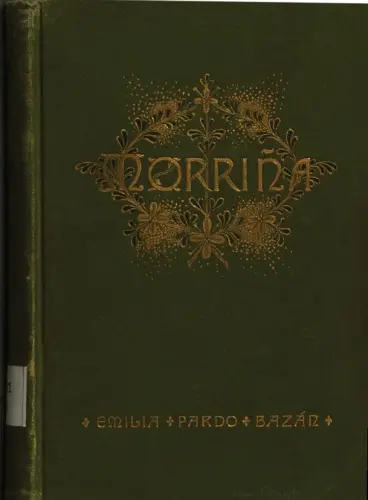
Morriña (Homesickness)
Emilia, condesa de Pardo Bazán
THE CLASSIC COLLECTION · 1891
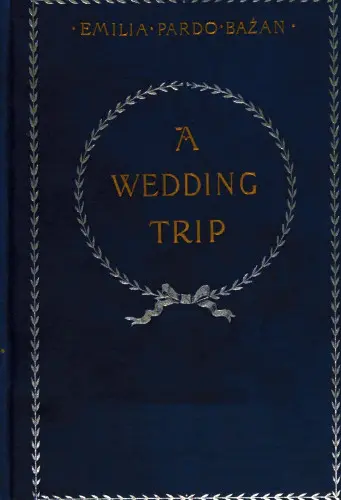
"A Wedding Trip" by Emilia Pardo Bazán is a novel likely written in the late 19th century. The story revolves around Lucía, a young bride, as she embarks on her journey with her husband, Aurelio Miranda, after a marriage marked by various social dynamics and familial connections. The narrative explores themes of class, relationships, and the expectations surrounding marriage, especially for young women in that era. The opening of the story vividly sets the scene for Lucía's wedding day, illustrating the contrasting social backgrounds of the bride and groom, alongside the emotional farewells exchanged with family. We see Lucía, a figure of robust youth and grace, feeling the weight of her new position while expressing innocence and apprehension about the transition into married life. The departure at the railway station captures a poignant moment of change, with Lucía's tears juxtaposed against her excitement for the adventures ahead. As the couple sets off towards France, the narrative hints at the complexities of their relationship and the challenges that lie ahead, establishing tension about Lucía's path as she navigates her new life.
Introduction adapted from the source catalogue; source summaries may be automatically generated.
Free to read · English · 77,016 words · No account needed
MAKE TIME FOR A GOOD BOOK
On by default. Untick to stop anonymous reading totals. Each page counts after 10 seconds in view. How this works.
Anonymous counting is on unless you have switched it off.
“Thank you! Thank you, Señor de Artegui. Oh, but will you stay in earnest? I am beside myself with joy. What happiness! But,” she added suddenly, as if the thought had only just occurred to her, “can you remain? Will it be a sacrifice, will it be a trouble to you?”
“No,” answered Artegui, with a gloomy countenance.
“That lady, that Doña Armanda, who is expecting you in Paris--may not
she, too, need you?”
“She is my mother,” answered Artegui, and Lucía was satisfied with the response, although it failed to answer her question.
Artegui, meanwhile, pushed a chair toward the table, and seating himself in it leaned his elbow on the cover and burying his face in his hands, gave himself up to his thoughts. Lucía, from the embrasure of the window, was observing his movements. When ten minutes had passed, and Artegui had neither moved nor spoken, she approached him softly, and, in a timid and supplicating voice, stammered:
“Señor de Artegui----”
He looked up. His face wore its former gloomy expression.
“What do you wish?” he asked hoarsely.
“What is the matter? It seems to me that you are--very downcast and very sad--I suppose it is on account of--what we were saying--see, if it annoys you so greatly, I think I prefer that you should go. Yes, I am sure I do.”
“I am not annoyed. I am--as I always am. It is because you know me so little that you are surprised at my manner.”
And seeing that Lucía remained standing with a remorseful expression on her countenance, he motioned to the other chair. Lucía drew it forward and sat down in it, facing Artegui.
“Say something,” continued Artegui, “let us talk. We must amuse ourselves, we must chat--as we did this afternoon.”
“Ah, this afternoon you were in a good humor.”
“And you?”
“I was suffocated with the heat. Our house at Leon is very cool; I am much more susceptible to the heat than to the cold.”
“You found it pleasant, no doubt, to wash off the dust of the road. It is so refreshing to make one’s toilet after a journey.”
“Yes, but----” Lucía stopped. “I missed one thing--a very important
thing,” she added.
“What? Cologne water, perhaps. I forgot to bring you my necessaire.”
“No, indeed,--the trunk which contained my linen--I could not change my
things.”
Artegui rose.
“Why did you not mention this before?” he said. “We are precisely in the place where Spanish brides purchase their wedding outfits!--I will be back directly.”
“But--where are you going?”
Your reading position is saved on this browser. Take it to another device with a library code. Reading pages adapt to text, rather than matching a printed edition.
Emilia, condesa de Pardo Bazán
Emilia, condesa de Pardo Bazán
BEHIND THE BOOK
This eBook is for the use of anyone anywhere in the United States and most other parts of the world at no cost and with almost no restrictions whatsoever. You may copy it, give it away or re-use it under the terms of the Project Gutenberg License included with this eBook or online at www.gutenberg.org. If you are not located in the United States, you will have to check the laws of the country where you are located before using this eBook. Read the source licence.
The original source file, including credits and licence, is retained by this library. Request an original-format copy at no charge. Please include the book title and Project Gutenberg identifier #54577.
KEEP YOUR CURIOSITY GOING
Coulson Kernahan

Maurice Baring
Frances Wright
Cécile Tormay

Frederic Jesup Stimson

W. H. P. (William Henry Pope) Jarvis