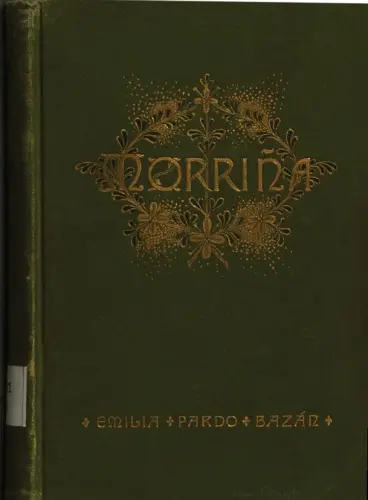
Morriña (Homesickness)
Emilia, condesa de Pardo Bazán
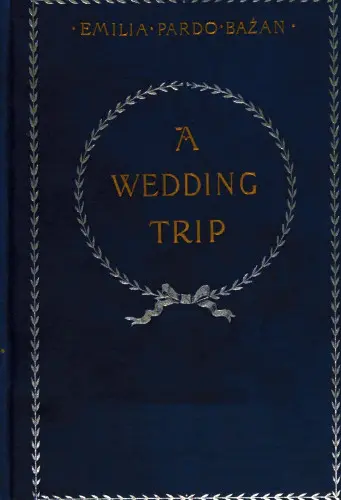
THE CLASSIC COLLECTION · 1891
"A Wedding Trip" by Emilia Pardo Bazán is a novel likely written in the late 19th century. The story revolves around Lucía, a young bride, as she embarks on her journey with her husband, Aurelio Miranda, after a marriage marked by various social dynamics and familial connections. The narrative explores themes of class, relationships, and the expectations surrounding marriage, especially for young women in that era. The opening of the story vividly sets the scene for Lucía's wedding day, illustrating the contrasting social backgrounds of the bride and groom, alongside the emotional farewells exchanged with family. We see Lucía, a figure of robust youth and grace, feeling the weight of her new position while expressing innocence and apprehension about the transition into married life. The departure at the railway station captures a poignant moment of change, with Lucía's tears juxtaposed against her excitement for the adventures ahead. As the couple sets off towards France, the narrative hints at the complexities of their relationship and the challenges that lie ahead, establishing tension about Lucía's path as she navigates her new life.
Introduction adapted from the source catalogue; source summaries may be automatically generated.
Free to read · English · 77,016 words · No account needed
MAKE TIME FOR A GOOD BOOK
On by default. Untick to stop anonymous reading totals. Each page counts after 10 seconds in view. How this works.
Anonymous counting is on unless you have switched it off.
It afforded great diversion to the Spanish group to see the Englishwomen gravely take out a newspaper, as large as a sheet, from their pockets, and read it from the first word to the last.
Pilar had been unable to persuade Lucía to accompany her to the Salle des Dames; the shyness and timidity resulting from her provincial education deterred her from going; she dreaded, more than fire, the inquisitive glances of those women, who examined her toilet as minutely as a skillful confessor examines the recesses of the conscience of his penitent. Pilar, on the contrary, was there in her natural element. Her rather shrill voice yielded in power only to the Cuban lisp of the leader, Lola Amézega.
Let us listen to the concert:
“Well, I bought this to-day,” Lola was saying unconstrainedly, as she turned up the sleeve of her pink muslin gown, trimmed with dark garnet bows, and displaying to view a bracelet, from which hung a little pig with curled-up tail and swelling sides, executed in fine enamel.
“I have one in another style,” said Amalia Amézega, showing a pig no less resplendent than her sister’s, which dug its snout into the lace of her necktie.
“Heavens! what an ugly fashion!” exclaimed Luisa Natal, a belle whose attractions were now on the wane, and who was very careful to use no ornaments except such as might serve to enhance her beauty. “For my part, I would not wear such creatures. They make one think of black-pudding, don’t they, countess?”
The Countess of Monteros, a Spanish woman of the old-fashioned type, very devout and somewhat austere, nodded in the affirmative.
“I don’t know what they are going to invent next,” she said slowly. “I have seen in the shops, elephants, lizards, frogs, and toads, and even spiders,--in short, the most disgusting creatures possible,--as ornaments for young ladies. In my youthful days we had no fancy for such oddities; fine brilliants, beautiful pearls, a ruby heart--and, yes, we wore cameos, also, but it was a charming caprice--one had one’s likeness or that of some virgin or saint engraved on the stone.”
There was a brief silence; the Amézegas, subjugated by the imperiousness of that authoritative voice, did not venture to reply.
“See, countess,” said Pilar, at last, delighted to have an opportunity to enrage the Amézegas, “what is really pretty is that pin of Luisa’s.”
Luisa drew from her hair the long golden pin with its head of amethyst
set with diamonds.
Your reading position is saved on this browser. Take it to another device with a library code. Reading pages adapt to text, rather than matching a printed edition.
Emilia, condesa de Pardo Bazán
Emilia, condesa de Pardo Bazán
BEHIND THE BOOK
This eBook is for the use of anyone anywhere in the United States and most other parts of the world at no cost and with almost no restrictions whatsoever. You may copy it, give it away or re-use it under the terms of the Project Gutenberg License included with this eBook or online at www.gutenberg.org. If you are not located in the United States, you will have to check the laws of the country where you are located before using this eBook. Read the source licence.
The original source file, including credits and licence, is retained by this library. Request an original-format copy at no charge. Please include the book title and Project Gutenberg identifier #54577.
KEEP YOUR CURIOSITY GOING
Coulson Kernahan

Maurice Baring
Frances Wright
Cécile Tormay

Frederic Jesup Stimson

W. H. P. (William Henry Pope) Jarvis