THE CLASSIC COLLECTION✦An outlaw’s diary: the CommuneCLASSIC FREE BOOKS
An outlaw’s diary: the Commune
Cécile Tormay
THE CLASSIC COLLECTION · 1852
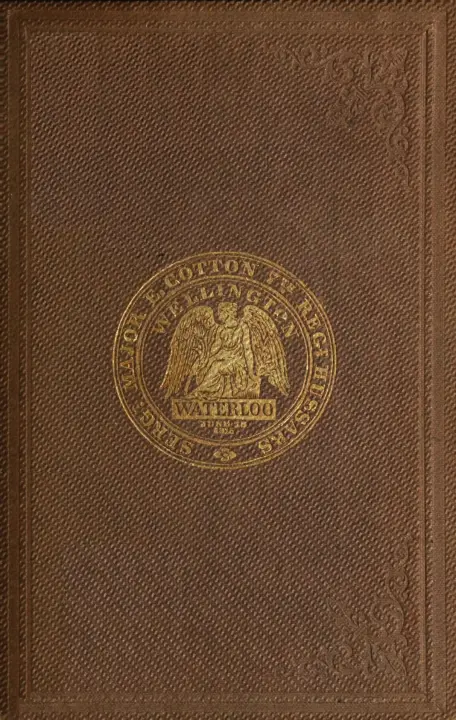
“A Voice from Waterloo: A History of the Battle Fought on the 18th June, 1815” by Sergeant-Major Edward Cotton is a historical account written in the mid-19th century. This narrative seeks to provide a detailed and authentic perspective of the iconic Battle of Waterloo, focusing on Cotton's experiences as a soldier who witnessed and participated in the events. The work is thorough in correcting misconceptions and presenting factual information, combining personal observation with historical insights. The opening of the book begins with a preface where Sergeant Cotton expresses his admiration for the Duke of Wellington and reveals his unique position in narrating events, having spent over fourteen years as a guide on the battlefield. He acknowledges the difficulty of accurately portraying the battle due to the numerous conflicting accounts published over the years and outlines his aim to rectify such errors. Cotton outlines the political and military atmosphere leading up to the battle, detailing Napoleon's return from exile and his subsequent mobilization of the French army. The preparations of the allied forces, led by Wellington, are outlined, along with tactical considerations that inform the narrative that follows. Overall, the beginning sets the stage for a comprehensive exploration of the events surrounding the battle, emphasizing Cotton's direct encounters and the roles played by key figures.
Introduction adapted from the source catalogue; source summaries may be automatically generated.
Free to read · English · 99,423 words · No account needed
MAKE TIME FOR A GOOD BOOK
On by default. Untick to stop anonymous reading totals. Each page counts after 10 seconds in view. How this works.
Anonymous counting is on unless you have switched it off.
The following document is to the Author, and probably it will be to not a few of his readers, deeply interesting: it is from the late lamented colonel Gurwood, whose labour in collecting and publishing the Wellington Dispatches, whilst it rendered an invaluable, perhaps an unrequited service to his country and to civilization, broke his health, and bore down his gallant spirit:
“70, LOWNDES-SQUARE, LONDON, June 18th, 1843.
“I have had a set of the Dispatches of the Duke of Wellington packed up to be forwarded to you, which I shall endeavour to send you on the return of king Leopold to Brussels, to the care of sir G. H. Seymour, her Majesty’s minister, to whom I shall write to inform you when they arrive.
“The marquis of Anglesey has much enhanced the value of my present to you, in writing his name in the title page at my request, and he appeared much pleased at gratifying an old soldier of his regiment.
“Very faithfully yours,
“J. GURWOOD.”
On the 15th of May 1846, colonel Macdonald, of the Royal artillery, visited the Author’s interesting collection at Mont-St.-Jean, of arms, etc., spoils of the Waterloo campaign. The gallant veteran recognized his own sword of a curious workmanship, that had been lost on the field, when he was wounded.
This precious relic the colonel left with the Author, giving him the
following certificate:
“This sword I wore at the battle of Waterloo, and after I was wounded my servant left it on the field.
“ALEXANDER MACDONALD, colonel, “Royal horse artillery[113].
“WATERLOO, May 15th, 1846.”
Amongst the kind presents which the Author has received from his countrymen, for his Waterloo Museum and library, at Mont-St.-Jean, he gratefully mentions the following:
“Selections from Dispatches, etc., of the Duke of Wellington, by
colonel Gurwood;
“Presented by Lieutenant-Colonel N. Norcliffe, K. H., of Langton-Hall, Yorkshire, to his fellow soldier, Sergeant-Major Cotton, late of the 7th hussars.
“July 25th, 1842.”
“BLACKHEATH, July 30th, 1846.
“Alderman Moon rejoiced in being able to gratify the patriotic feelings of an old Waterloo hero, and at once offered to present you with a copy of his celebrated engraving of the Waterloo Banquet, which he trusts you will frame and place in your Museum.
“Mr. Billen has much pleasure ... in sending Sergeant-Major Cotton an engraved portrait of the brave general Sir James Kempt, and further promises, should he have the honour to engrave any other officers who took part in that eventful day, to send an impression to Sergeant-Major Cotton.
“23, HIGH-STREET, CAMDEN-TOWN, 6th September, 1842.”
Of the first edition of this work, the following notice appeared in
a London journal:
Your reading position is saved on this browser. Take it to another device with a library code. Reading pages adapt to text, rather than matching a printed edition.
BEHIND THE BOOK
This eBook is for the use of anyone anywhere in the United States and most other parts of the world at no cost and with almost no restrictions whatsoever. You may copy it, give it away or re-use it under the terms of the Project Gutenberg License included with this eBook or online at www.gutenberg.org. If you are not located in the United States, you will have to check the laws of the country where you are located before using this eBook. Read the source licence.
The original source file, including credits and licence, is retained by this library. Request an original-format copy at no charge. Please include the book title and Project Gutenberg identifier #69670.
KEEP YOUR CURIOSITY GOING
Cécile Tormay

Moritz Busch
John L. Ransom
Frances Wright
Cécile Tormay

Mabel Potter Daggett