
The Carcellini Emerald, With Other Tales
Burton, Mrs. Harrison
THE CLASSIC COLLECTION · 1895
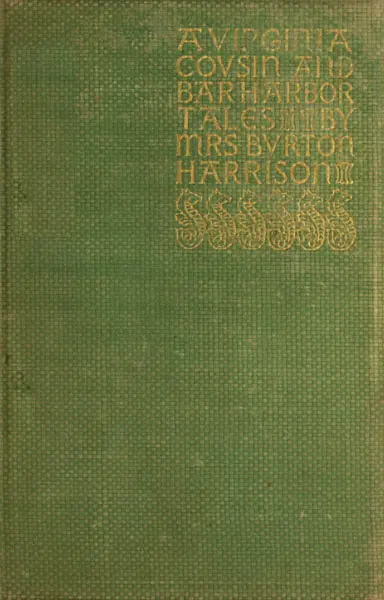
"A Virginia Cousin & Bar Harbor Tales" by Mrs. Burton Harrison is a collection of fictional narratives likely written in the late 19th century. The stories revolve around the interactions and relationships of characters in American society, particularly focusing on the dynamics of family, class, and romantic entanglements. The opening chapter introduces Mr. Theodore Vance Townsend, a discontented young man navigating his social life and consideration of marriage, specifically to a woman named Katherine Ainger, amidst complex family ties and personal expectations. At the start of the narrative, Theodore Vance Townsend wakes on a bright spring morning in New York, grappling with an unease that seems to overshadow his privileged social standing. As he reflects on his relationships, particularly with his sister and potential fiancée, Katherine Ainger, feelings of frustration and ennui begin to crystallize around his desire for love and meaning. His journey takes a turn when he visits his Aunt Myrtle, who boasts of family connections to a cousin named Evelyn Carlyle from Virginia, hinting at an unfolding exploration of both familial and romantic connections. The opening sets the stage for themes of societal expectation, personal growth, and the complexities inherent in matters of the heart as Vance navigates his path toward love and fulfillment.
Introduction adapted from the source catalogue; source summaries may be automatically generated.
Free to read · English · 34,791 words · No account needed
MAKE TIME FOR A GOOD BOOK
On by default. Untick to stop anonymous reading totals. Each page counts after 10 seconds in view. How this works.
Anonymous counting is on unless you have switched it off.
Ethel was more hurt at his tone than disappointed by his refusal. She could not think what had come over her husband, of late, so often had this constrained manner presented itself to her advance. She set it down to her unwonted indulgence in society, and promised herself, with a sigh of relinquishment, that, after this summer, she would go back to her life lived for Max alone.
Then, Cranbrooke coming in with two or three visitors, who lingered till almost dinner-time and were persuaded easily to stop for dinner, there was no chance to indulge in meditations, penitential or otherwise. When her guests took their departure, it was in the little steam-launch, she and Cranbrooke accompanying the party, and all bound for the fête, to be given on a wooded island in the bay. As they were leaving the house, something impelled her to run back and, in the semi-darkness of the veranda, seek her husband's side.
"Max darling, kiss me good-by. Or, if you want me, let me stay with
you."
"No, no; I want you to enjoy every moment while you can," he said, withdrawing from her gaze to the shadow of a vine-wreathed column.
"Max, your voice is strange. And once, at dinner, I saw you looking at me, and there was something in your eyes that frightened me. If you hadn't smiled, and lifted your glass to pledge me, I should not have known what to think."
"Ethel! Wife! Do you love me?" he said, catching her to his heart.
"Max! Why, Max! You foolish boy, we shall be seen."
"Tell me, and kiss me once more, my own, my own!"
"They are all aboard except you, Mrs. Pollock," a voice said; and, from the dew of the lawn, Cranbrooke stepped upon the veranda.
Max started violently, and let his wife go from his embrace.
"You see how rude you are making me toward our guests," said Ethel. "You have my wrap, Mr. Cranbrooke? Good-night, Max; and to-morrow I'll tell you all about it. Better change your mind and come after us, though."
"Max need not trouble to do so," put in Cranbrooke, in a muffled voice. "As usual, I will fill his place."
Max thought he almost hurried her away. They went down the slope of the lawn together; and, at the steep descent leading to the bridge, he saw Ethel stumble, and Cranbrooke throw his arm around her to steady her.
And now, a passion took possession of Maxwell Pollock's being that impelled him to the impetuous action of following them to the wharf, and gesticulating madly after the swift little steamer that bore them away from him.
Your reading position is saved on this browser. Take it to another device with a library code. Reading pages adapt to text, rather than matching a printed edition.
Burton, Mrs. Harrison
Burton, Mrs. Harrison
BEHIND THE BOOK
This eBook is for the use of anyone anywhere in the United States and most other parts of the world at no cost and with almost no restrictions whatsoever. You may copy it, give it away or re-use it under the terms of the Project Gutenberg License included with this eBook or online at www.gutenberg.org. If you are not located in the United States, you will have to check the laws of the country where you are located before using this eBook. Read the source licence.
The original source file, including credits and licence, is retained by this library. Request an original-format copy at no charge. Please include the book title and Project Gutenberg identifier #41591.
KEEP YOUR CURIOSITY GOING
Coulson Kernahan

Maurice Baring
Frances Wright
Cécile Tormay

Frederic Jesup Stimson

W. H. P. (William Henry Pope) Jarvis