
The Carcellini Emerald, With Other Tales
Burton, Mrs. Harrison
THE CLASSIC COLLECTION · 1895
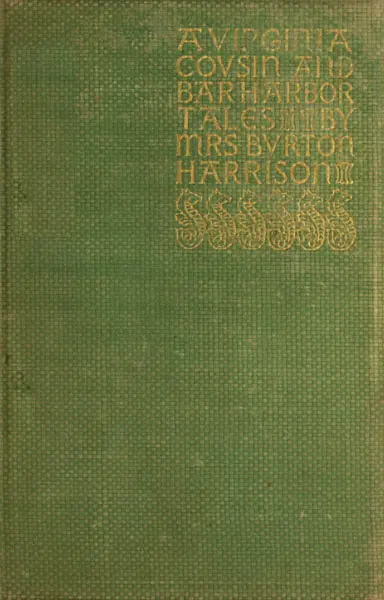
"A Virginia Cousin & Bar Harbor Tales" by Mrs. Burton Harrison is a collection of fictional narratives likely written in the late 19th century. The stories revolve around the interactions and relationships of characters in American society, particularly focusing on the dynamics of family, class, and romantic entanglements. The opening chapter introduces Mr. Theodore Vance Townsend, a discontented young man navigating his social life and consideration of marriage, specifically to a woman named Katherine Ainger, amidst complex family ties and personal expectations. At the start of the narrative, Theodore Vance Townsend wakes on a bright spring morning in New York, grappling with an unease that seems to overshadow his privileged social standing. As he reflects on his relationships, particularly with his sister and potential fiancée, Katherine Ainger, feelings of frustration and ennui begin to crystallize around his desire for love and meaning. His journey takes a turn when he visits his Aunt Myrtle, who boasts of family connections to a cousin named Evelyn Carlyle from Virginia, hinting at an unfolding exploration of both familial and romantic connections. The opening sets the stage for themes of societal expectation, personal growth, and the complexities inherent in matters of the heart as Vance navigates his path toward love and fulfillment.
Introduction adapted from the source catalogue; source summaries may be automatically generated.
Free to read · English · 34,791 words · No account needed
MAKE TIME FOR A GOOD BOOK
On by default. Untick to stop anonymous reading totals. Each page counts after 10 seconds in view. How this works.
Anonymous counting is on unless you have switched it off.
At last, Maxwell Pollock awoke one morning, with a start of disagreeable consciousness, to the fact that this was the eve of his thirtieth birthday. Occupied as he had been with various thoughts that had to do with his transient relations to this sublunary sphere, he had actually allowed himself to lose sight of the swift approach of his day of doom. Now, he arose, took his bath, dressed, and without arousing his wife, who, in the room adjoining, slept profoundly after a gay dance overnight, went alone to the waterside, with the intention of going out in his canoe.
Early as he was, Cranbrooke was before him, carrying the canoe upon his head, moving after the fashion of some queer shelled-creature down to the float.
Max realized, with a sense of keen self-rebuke, that the spectacle of his friend was repellant to him, and the prospect of a talk alone with Stephen on this occasion, the last thing he would have chosen.
And--evidently a part of the latter-day revolution of affairs--Cranbrooke seemed to have forgotten that this day meant more than another to Pollock. He greeted him cheerily, in commonplace terms, commented on their identity of fancy in the matter of a paddle at sunrise, and offered to relinquish the craft in favor of its owner.
"Of course not. Get in, will you," said Max, throwing off his coat; and, taking one of the paddles, while Cranbrooke plied the other, their swift, even strokes soon carried them far over toward the illuminated east.
When well out upon the bay, they paused to watch the red coming of the sun. Beautiful with matin freshness was the sleeping world around them; and, inspired by the scene, Max, who was kneeling in the bow, turned to exclaim to Cranbrooke, with his old, hearty voice, upon the reward coming to early risers in such surroundings.
"Jove, a man feels born again when he breathes air like this!"
Cranbrooke started. It was almost beyond hope that Max should use such a phrase, in such accents, at such a juncture. Immediately, however, the exhilaration died out of Pollock's manner; and, again turning away his face, he showed that his thoughts had reverted to the old sore spot. He did not see the expression of almost womanly yearning in Cranbrooke's face when the certainty of this was fixed upon his anxious mind.
The two men talked little, and of casual things only, while abroad. As they returned to the house, Cranbrooke made a movement as if to speak out something burning upon his tongue, and then, repressing it, walked with hasty strides to his own apartment.
Your reading position is saved on this browser. Take it to another device with a library code. Reading pages adapt to text, rather than matching a printed edition.
Burton, Mrs. Harrison
Burton, Mrs. Harrison
BEHIND THE BOOK
This eBook is for the use of anyone anywhere in the United States and most other parts of the world at no cost and with almost no restrictions whatsoever. You may copy it, give it away or re-use it under the terms of the Project Gutenberg License included with this eBook or online at www.gutenberg.org. If you are not located in the United States, you will have to check the laws of the country where you are located before using this eBook. Read the source licence.
The original source file, including credits and licence, is retained by this library. Request an original-format copy at no charge. Please include the book title and Project Gutenberg identifier #41591.
KEEP YOUR CURIOSITY GOING
Coulson Kernahan

Maurice Baring
Frances Wright
Cécile Tormay

Frederic Jesup Stimson

W. H. P. (William Henry Pope) Jarvis