
Enoch Crane
Francis Hopkinson Smith & F. Berkeley (Frank Berkeley) Smith
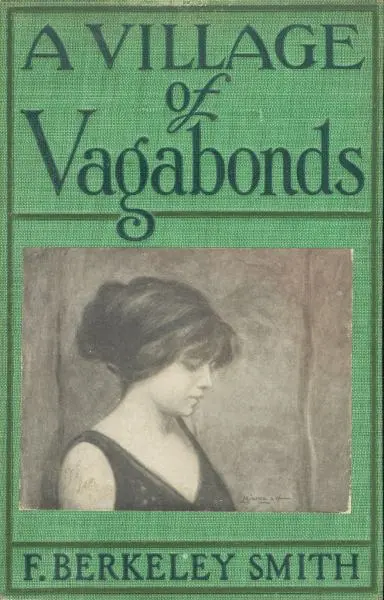
THE CLASSIC COLLECTION · 1910
"A Village of Vagabonds" by F. Berkeley Smith is a novel written in the early 20th century. The story revolves around a group of charming characters in a quaint fishing village called Pont du Sable, a place filled with endearing peculiarities, camaraderie, and secrets. The protagonist, a passionate artist, has abandoned his comfortable life to fully embrace the beauty and rustic allure of the village, leading to a series of encounters that explore friendship, love, and the captivating simplicity of rural life. The opening of the novel introduces us to the protagonist as he decides to move to Pont du Sable, despite the protests from his friends who dismiss the village as a "lost hole of a village of sacré vagabonds." Set against the backdrop of market day at Madame Fontaine’s café, we gain insight into the protagonist's desire for a deeper connection with nature and his love for hunting, having become enchanted by his visits to the marshlands. Through his reflections on the village life and the interesting characters he meets, including a friendly butcher, a blacksmith, and the local mayor, the reader is drawn into the vibrant world of Pont du Sable, hinting at the adventures and relationships that will unfold as the story progresses.
Introduction adapted from the source catalogue; source summaries may be automatically generated.
Free to read · English · 64,423 words · No account needed
MAKE TIME FOR A GOOD BOOK
On by default. Untick to stop anonymous reading totals. Each page counts after 10 seconds in view. How this works.
Anonymous counting is on unless you have switched it off.
Marianne's square jaw shut hard. She glanced at Yvonne's patched skirt, the one that had been the Mere Bourron's winter petticoat, feeling its quality as critically as a fashionable dressmaker.
"Sacristi!" she exclaimed, examining a rent, "there's one door that the little north wind won't knock twice at before he enters. Keep still, ma petite, I've got thread and a needle."
She drew from her trousers' pocket a leather wallet in which lay four two-sous pieces, an iron key and a sail needle driven through a ball of linen thread. "It is easily seen thou art not in love," laughed Marianne, as she cross-stitched the tear. "Thou wilt pay ten sous for a ribbon gladly some day when thou art in love."
The child was silent while she sewed. Presently she asked timidly, "One
eats well there?"
"Where?"
"But thou knowest--there."
"In the prison?"
"Mais oui," whispered Yvonne.
"Of course," growled Marianne, "one eats well; it is perfect. Tiens! we have the good soup, that is well understood; and now and then meat and rice."
"Oh!" exclaimed the child in awe.
"Mais oui," assured Marianne with a nod, "and prunes."
"Where is that, the prison?" ventured the child.
"It is very far," returned Marianne, biting off the thread, "and it is not for every one either," she added with a touch of pride--"only I happen to be an old friend and know the judge."
"And how much does it cost a day, the prison?" asked Yvonne.
"Not that," replied Marianne, snipping her single front tooth knowingly with the tip of her nail.
"Mon Dieu! and they give you all that for nothing?" exclaimed the child in astonishment. "It is chic, that, hein!" and she nodded her pretty head with decision, "Ah mais oui, alors!" she laughed.
"I must be going," said Marianne, abruptly. "My young ones will be wanting their soup." She flattened her back against her heavy basket, slipped the straps under her armpits and rose to her feet, the child passing the bundle of nets to her and helping her shoulder them to the proper balance.
"Au revoir, ma belle petite," she said, bending to kiss the girl's cheek; then with her free hand she dove into her trousers' pocket and drew out a two-sous piece. "Tiens," she exclaimed, pressing the copper into the child's hand.
Yvonne gave a little sigh of delight. It was not often she had two sous all to herself to do what she pleased with, which doubles the delight of possession. Besides, the Mere Bourron kept her wages--or rather, count of them, which was cheaper--on the back page of a greasy book wherein were registered the births of calves.
Your reading position is saved on this browser. Take it to another device with a library code. Reading pages adapt to text, rather than matching a printed edition.
Francis Hopkinson Smith & F. Berkeley (Frank Berkeley) Smith
F. Berkeley (Frank Berkeley) Smith
F. Berkeley (Frank Berkeley) Smith
BEHIND THE BOOK
This eBook is for the use of anyone anywhere in the United States and most other parts of the world at no cost and with almost no restrictions whatsoever. You may copy it, give it away or re-use it under the terms of the Project Gutenberg License included with this eBook or online at www.gutenberg.org. If you are not located in the United States, you will have to check the laws of the country where you are located before using this eBook. Read the source licence.
The original source file, including credits and licence, is retained by this library. Request an original-format copy at no charge. Please include the book title and Project Gutenberg identifier #26678.
KEEP YOUR CURIOSITY GOING
Coulson Kernahan

Maurice Baring
Frances Wright
Cécile Tormay

Frederic Jesup Stimson

W. H. P. (William Henry Pope) Jarvis