Enoch Crane
Francis Hopkinson Smith & F. Berkeley (Frank Berkeley) Smith
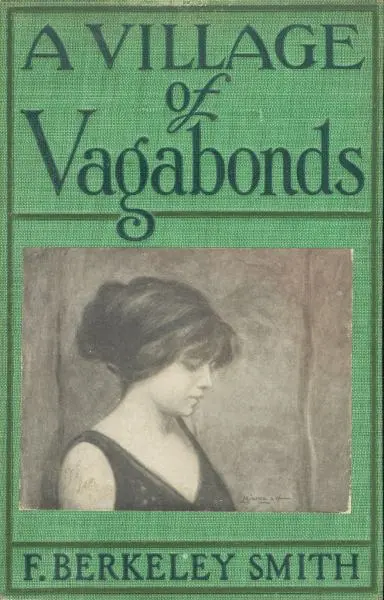
THE CLASSIC COLLECTION · 1910
"A Village of Vagabonds" by F. Berkeley Smith is a novel written in the early 20th century. The story revolves around a group of charming characters in a quaint fishing village called Pont du Sable, a place filled with endearing peculiarities, camaraderie, and secrets. The protagonist, a passionate artist, has abandoned his comfortable life to fully embrace the beauty and rustic allure of the village, leading to a series of encounters that explore friendship, love, and the captivating simplicity of rural life. The opening of the novel introduces us to the protagonist as he decides to move to Pont du Sable, despite the protests from his friends who dismiss the village as a "lost hole of a village of sacré vagabonds." Set against the backdrop of market day at Madame Fontaine’s café, we gain insight into the protagonist's desire for a deeper connection with nature and his love for hunting, having become enchanted by his visits to the marshlands. Through his reflections on the village life and the interesting characters he meets, including a friendly butcher, a blacksmith, and the local mayor, the reader is drawn into the vibrant world of Pont du Sable, hinting at the adventures and relationships that will unfold as the story progresses.
Introduction adapted from the source catalogue; source summaries may be automatically generated.
Free to read · English · 64,423 words · No account needed
MAKE TIME FOR A GOOD BOOK
On by default. Untick to stop anonymous reading totals. Each page counts after 10 seconds in view. How this works.
Anonymous counting is on unless you have switched it off.
The silence became embarrassing. Still the pen scratched on. Was he writing my death-warrant, I wondered nervously, or only a milder order for my arrest? It was a relief when he finally sifted a spoonful of fine blue sand over the document, poured the remaining grains back into their receptacle, puffed out his coarse red jowls, emitted a grunt of approval, and raised his keen eyes to mine.
"A thousand pardons, monsieur," I began, "for being where I assure you I would not have been had I known exactly where I was."
"So monsieur is fond of the chase of the hare?" he asked, with a grim
smile.
"So fond, Monsieur le Brigadier," I replied, "that my enthusiasm has, as you see, led me thoughtlessly into your private territory. I beg of you to accept my sincere apologies."
He reached back of him, took down one of the musty ledgers, and began to turn the leaves methodically. From where I sat I saw his coarse forefinger stop under a head-line.
"Smeeth, Berkelek," he muttered, and read on down the page. "Citizen of
Amerique du Nord.
"Height--medium.
"Age--forty-one.
"Hair--auburn.
"Eyes--brown.
"Chin and frontal--square.
"No scars."
"Would your excellency like to see my hunting permit and description?" I
ventured.
"Unnecessary--it is in duplicate here," he returned curtly, and his eyes again reverted to the ledger. Then he closed the book, rose, and drawing his chair to the stove planted his big fists on his knees.
I began to breathe normally.
"So you are a painter?" said he.
"Yes," I confessed, "but I do not make a specialty of fortresses, your excellency, even in the most distant landscapes."
I was grateful he understood, for I saw a gleam of merriment flash in
his eyes.
"Bon!" he exclaimed briskly--evidently the title of "excellency" helped. "It is not the best day, however, for you to be hunting hares. Are you a good shot, monsieur?"
"That is an embarrassing question," I returned. "If I do not miss I
generally kill."
Pierre, who, during the interview, had been standing mute in attention, now stepped up to him and bending with a hurried "Pardon," whispered something in his coarse red ear.
The brigadier raised his shaggy eyebrows and nodded in assent.
"Ah! So you are a friend of Monsieur le Cure!" he exclaimed. "You would not be Monsieur le Cure's friend if you were not a good shot. Sapristi!" He paused, ran his hand over his rough jowls, and resumed bluntly: "It is something to kill the wild duck; another to kill a man."
"Has war been suddenly declared?" I asked in astonishment.
A gutteral laugh escaped his throat, he shook his grizzled head in the
negative.
Your reading position is saved on this browser. Take it to another device with a library code. Reading pages adapt to text, rather than matching a printed edition.
Francis Hopkinson Smith & F. Berkeley (Frank Berkeley) Smith
F. Berkeley (Frank Berkeley) Smith
F. Berkeley (Frank Berkeley) Smith
BEHIND THE BOOK
This eBook is for the use of anyone anywhere in the United States and most other parts of the world at no cost and with almost no restrictions whatsoever. You may copy it, give it away or re-use it under the terms of the Project Gutenberg License included with this eBook or online at www.gutenberg.org. If you are not located in the United States, you will have to check the laws of the country where you are located before using this eBook. Read the source licence.
The original source file, including credits and licence, is retained by this library. Request an original-format copy at no charge. Please include the book title and Project Gutenberg identifier #26678.
KEEP YOUR CURIOSITY GOING
Coulson Kernahan

Maurice Baring
Frances Wright
Cécile Tormay

Frederic Jesup Stimson

W. H. P. (William Henry Pope) Jarvis