Enoch Crane
Francis Hopkinson Smith & F. Berkeley (Frank Berkeley) Smith
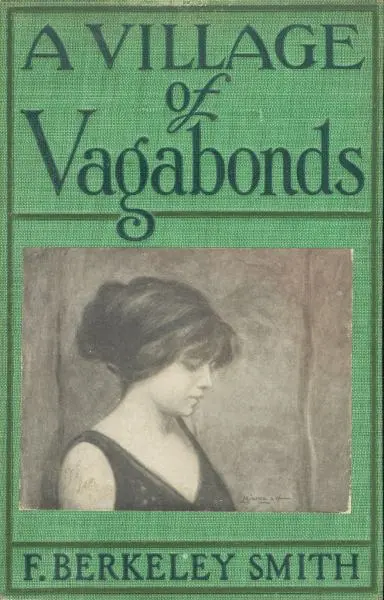
THE CLASSIC COLLECTION · 1910
"A Village of Vagabonds" by F. Berkeley Smith is a novel written in the early 20th century. The story revolves around a group of charming characters in a quaint fishing village called Pont du Sable, a place filled with endearing peculiarities, camaraderie, and secrets. The protagonist, a passionate artist, has abandoned his comfortable life to fully embrace the beauty and rustic allure of the village, leading to a series of encounters that explore friendship, love, and the captivating simplicity of rural life. The opening of the novel introduces us to the protagonist as he decides to move to Pont du Sable, despite the protests from his friends who dismiss the village as a "lost hole of a village of sacré vagabonds." Set against the backdrop of market day at Madame Fontaine’s café, we gain insight into the protagonist's desire for a deeper connection with nature and his love for hunting, having become enchanted by his visits to the marshlands. Through his reflections on the village life and the interesting characters he meets, including a friendly butcher, a blacksmith, and the local mayor, the reader is drawn into the vibrant world of Pont du Sable, hinting at the adventures and relationships that will unfold as the story progresses.
Introduction adapted from the source catalogue; source summaries may be automatically generated.
Free to read · English · 64,423 words · No account needed
MAKE TIME FOR A GOOD BOOK
On by default. Untick to stop anonymous reading totals. Each page counts after 10 seconds in view. How this works.
Anonymous counting is on unless you have switched it off.
"I saw you at mass this morning," he returned bending over, his hands on his knees. "But you are not a Catholic, my friend? You are always welcome to my church, however, remember that."
"Thank you," I said. "I like your little church, and--I like you,
Monsieur le Cure."
He put forth his hand. "Brother sportsmen," he said. "It is a brotherhood, isn't it? You are a Protestant, is it not so?" And his voice sank to a gentle tone.
"Yes, I am what they call a blue Presbyterian."
"I have heard of that," he said. "'A blue Presbyterian.'" He repeated it to himself and smiled. Suddenly he straightened and his finger went to his lips.
"Hark!" he whispered. "Hear their wings!"
Instantly the decoys set up a strenuous quacking. Then again all was
silent.
"Too high," muttered the cure. "I do not expect much in before the late afternoon. Do you smoke?"
"Yes, gladly," I replied, "but my cigarettes are done for, I am afraid; they were in the pocket of my hunting coat."
"Don't move," he said, noticing my effort to rise. "I've got cigarettes." And he fumbled in the shadow of the narrow shelf.
I had hardly lighted my own over the candle-flame, which he held for me, when I felt a gentle rocking and heard the shells rattle as they rolled to the end of the shelf, stop, and roll back again.
"Do not be alarmed," he laughed, "it's only the water filling the outer jacket of my gabion. We shall be settled and steady in a moment, and afloat for the night."
"The night!" I exclaimed in amazement. "But, my good friend, I have no intention of wearing out my welcome; I had planned to get home for luncheon."
"Impossible!" he replied. "We are now completely surrounded by water. It is always so at high tide at this end of the bay. Come, see for yourself. Besides, you don't know how glad I am that we can have the chance to shoot together. I've been waiting weeks for this wind."
He blew out the candle, and again opened the firing-slit. As far as one could see the distant sea was one vast sweep of roaring water.
"You see," he said, closing the firing-slit and striking a match--"you must stay. I have plenty of dry clothes for you in the locker, and we shall not go hungry." He drew out a basket from beneath the cot and took from it a roasted chicken, two litres of red wine, and some bread and cheese, which he laid on the shelf. "A present," he remarked, "from one of my parishioners. You know, I have no bonne."
Your reading position is saved on this browser. Take it to another device with a library code. Reading pages adapt to text, rather than matching a printed edition.
Francis Hopkinson Smith & F. Berkeley (Frank Berkeley) Smith
F. Berkeley (Frank Berkeley) Smith
F. Berkeley (Frank Berkeley) Smith
BEHIND THE BOOK
This eBook is for the use of anyone anywhere in the United States and most other parts of the world at no cost and with almost no restrictions whatsoever. You may copy it, give it away or re-use it under the terms of the Project Gutenberg License included with this eBook or online at www.gutenberg.org. If you are not located in the United States, you will have to check the laws of the country where you are located before using this eBook. Read the source licence.
The original source file, including credits and licence, is retained by this library. Request an original-format copy at no charge. Please include the book title and Project Gutenberg identifier #26678.
KEEP YOUR CURIOSITY GOING
Coulson Kernahan

Maurice Baring
Frances Wright
Cécile Tormay

Frederic Jesup Stimson

W. H. P. (William Henry Pope) Jarvis