Enoch Crane
Francis Hopkinson Smith & F. Berkeley (Frank Berkeley) Smith
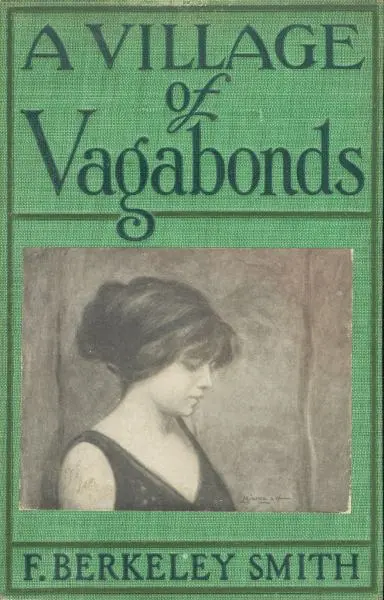
THE CLASSIC COLLECTION · 1910
"A Village of Vagabonds" by F. Berkeley Smith is a novel written in the early 20th century. The story revolves around a group of charming characters in a quaint fishing village called Pont du Sable, a place filled with endearing peculiarities, camaraderie, and secrets. The protagonist, a passionate artist, has abandoned his comfortable life to fully embrace the beauty and rustic allure of the village, leading to a series of encounters that explore friendship, love, and the captivating simplicity of rural life. The opening of the novel introduces us to the protagonist as he decides to move to Pont du Sable, despite the protests from his friends who dismiss the village as a "lost hole of a village of sacré vagabonds." Set against the backdrop of market day at Madame Fontaine’s café, we gain insight into the protagonist's desire for a deeper connection with nature and his love for hunting, having become enchanted by his visits to the marshlands. Through his reflections on the village life and the interesting characters he meets, including a friendly butcher, a blacksmith, and the local mayor, the reader is drawn into the vibrant world of Pont du Sable, hinting at the adventures and relationships that will unfold as the story progresses.
Introduction adapted from the source catalogue; source summaries may be automatically generated.
Free to read · English · 64,423 words · No account needed
MAKE TIME FOR A GOOD BOOK
On by default. Untick to stop anonymous reading totals. Each page counts after 10 seconds in view. How this works.
Anonymous counting is on unless you have switched it off.
Toward the end of the afternoon, a week later, at Pont du Sable, Tanrade and the cure sat smoking under my sketching-umbrella on the marsh. The cure is far from a bad painter. His unfinished sketch of the distant strip of sea and dunes lay at my feet as I worked on my own canvas while the sunset lasted.
Tanrade was busy between puffs of his pipe in transposing various passages in his latest score. Now and then he would hesitate, finger the carefully thought out bar on his knee, and again his stub of a pencil would fly on through a maze of hieroglyphics that were to the cure and myself wholly unintelligible.
Suddenly the cure looked up, his keen gaze rivetted upon two dots of figures on bicycles speeding rapidly toward us along the path skirting the marsh.
"Hello!" exclaimed the cure, and he gave a low whistle. "The gendarmes!"
There was no mistaking their identity; their gold stripes and white duck trousers appeared distinctly against the tawny marsh.
The next moment they dismounted, left their wheels on the path, and came slowly across the desert of wire-grass toward us.
"Diable!" muttered Tanrade, under his breath, and instantly our minds
reverted to Le Bour.
The two officials of the law were before us.
"We regret to disturb you, messieurs," began the taller of the two pleasantly as he extracted a note-book from a leather case next to his revolver. "But"--and he shrugged his military shoulders--"it is for the little affair at Hirondelette."
"Which one of us is elected?" asked Tanrade grimly.
"Ah! Bon Dieu!" returned the tall one; half apologetically. "A proces-verbal unfortunately for you, Monsieur Tanrade. Read the charge," he said to the short one, who had now unfolded a paper, cleared his throat, and began to read in a monotonous tone.
"Monsieur Gaston Emile Le Bour, agriculturist at Hirondelette, charges Monsieur Charles Louis Ernest Tanrade, born in Paris, soldier of the Thirteenth Infantry, musician, composer, with flagrant trespass in his buckwheat on hectare number seven, armed with the gun of percussion on the thirtieth of September at ten-forty-five in the morning."
"I was not in his sacre buckwheat!" declared Tanrade, and he described the entire incident of the morning.
"Take monsieur's denial in detail," commanded the tall one.
His companion produced a small bottle of ink and began to write slowly with a scratchy pen, while we stood in silence.
"Kindly add your signature, monsieur," said the tall one, when the
bottle was again recorked.
Tanrade signed.
The gendarmes gravely saluted and were about to withdraw when Tanrade asked if he was "the only unfortunate on the list."
Your reading position is saved on this browser. Take it to another device with a library code. Reading pages adapt to text, rather than matching a printed edition.
Francis Hopkinson Smith & F. Berkeley (Frank Berkeley) Smith

F. Berkeley (Frank Berkeley) Smith
F. Berkeley (Frank Berkeley) Smith
BEHIND THE BOOK
This eBook is for the use of anyone anywhere in the United States and most other parts of the world at no cost and with almost no restrictions whatsoever. You may copy it, give it away or re-use it under the terms of the Project Gutenberg License included with this eBook or online at www.gutenberg.org. If you are not located in the United States, you will have to check the laws of the country where you are located before using this eBook. Read the source licence.
The original source file, including credits and licence, is retained by this library. Request an original-format copy at no charge. Please include the book title and Project Gutenberg identifier #26678.
KEEP YOUR CURIOSITY GOING
Coulson Kernahan

Maurice Baring
Frances Wright
Cécile Tormay

Frederic Jesup Stimson

W. H. P. (William Henry Pope) Jarvis