
Switch off
Oliver Optic
THE CLASSIC COLLECTION · 1893
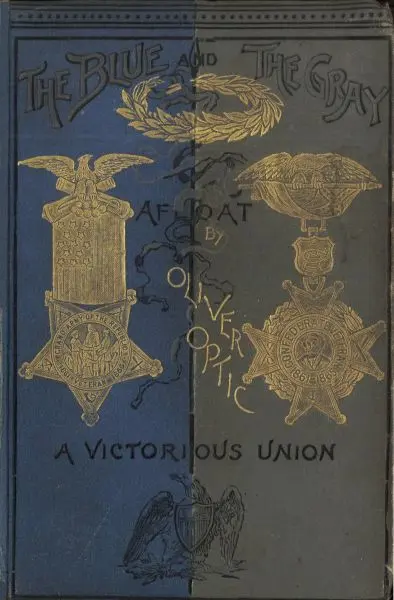
"A Victorious Union" by Oliver Optic is a novel written in the late 19th century. This work is part of a series known as "The Blue and the Gray," which explores themes surrounding the American Civil War, emphasizing patriotism and the valor of Union soldiers. The protagonist, Christy Passford, serves as the first lieutenant on the naval vessel Bellevite, where he embarks on a daring mission related to the blockade-running activities during the conflict. The opening of "A Victorious Union" introduces Captain Breaker and his executive officer, Christy, as they contemplate a strategic move to gather intelligence on a fast blockade-runner named Trafalgar. As the narrative unfolds, Christy is tasked with leading an expedition to explore the area around Fort Morgan, which includes engaging with local elements sympathetic to the Confederacy. The initial chapters set a tone of camaraderie, duty, and the unfolding tension of wartime responsibilities as Christy prepares to balance his roles as a naval officer and a patriot, determined to protect the Union against the backdrop of the Civil War's complexities.
Introduction adapted from the source catalogue; source summaries may be automatically generated.
Free to read · English · 68,698 words · No account needed
MAKE TIME FOR A GOOD BOOK
On by default. Untick to stop anonymous reading totals. Each page counts after 10 seconds in view. How this works.
Anonymous counting is on unless you have switched it off.
"Wake up, Bokes! You ain't dead yet."
"No, sir; wide awake's a coon in a hencoop," added the man, who appeared to be one of the two left on board by the deserters, the cook being the other.
"Be alive, Bokes! Here, wait a minute!" and the captain ran down the companion ladder to the cabin, from which he presently appeared with a bottle in each hand. "Do you see them men on the cotton, Bokes?" he asked, pointing with one of them at the six Belleviters, who stood where they had taken their stations after hoisting up the quarter-boat.
"I see sunthin over thar," replied the seaman, who seemed to be hardly
awake yet.
"Them's the new crew I shipped to-night--six on 'em, or seven with the second mate," added the captain. "Show 'em over to the deck-house, and let 'em pick out their bunks."
"Seven on 'em; the cook and me makes nine, and they ain't but eight berths in the deck-house, Cap'n," replied Bokes, who seemed to be afraid of losing his own sleeping quarters.
"You can sleep on the deck, then. These are all good men, and they must have good berths," added the captain. "You can sleep as well in the scuppers as anywhere else, Bokes; and you ain't more'n half awake any time."
"Must have my berth, Cap'n, or I go ashore," persisted the seaman.
"Small loss anyhow," growled the captain.
"How is the cabin, Captain Sullendine?" interposed Graines.
"Two staterooms and four berths," replied the master.
"Then why can't the second mate take one of the berths in the cabin?" suggested the new mate. "He is a first-rate fellow, and I reckon he's a better sailor than I am, for he's been to sea about all his life."
"'Tain't reg'lar to have the second mate in the cabin. He'll have t'eat with us if he bunks there," argued the master.
"He'll have to keep his watch on deck when we eat, and I reckon he'll have to take his grub alone," reasoned the mate.
"I'd ruther live in the deck-house with the crew," said Christy.
"But there ain't no room thar," added Graines, who thought his superior had made the remark simply to keep up his character.
"Let him come into the cabin, then," said Captain Sullendine, in order to settle the question. "Now, Bokes, take this apple-jack, and show the other six to the deck-house. Give 'em one or two drinks all round. It'll do 'em good."
Bokes obeyed the order, after the master had lighted another lantern for his use, and he went over the bales of cotton to the seamen.
Your reading position is saved on this browser. Take it to another device with a library code. Reading pages adapt to text, rather than matching a printed edition.
BEHIND THE BOOK
This eBook is for the use of anyone anywhere in the United States and most other parts of the world at no cost and with almost no restrictions whatsoever. You may copy it, give it away or re-use it under the terms of the Project Gutenberg License included with this eBook or online at www.gutenberg.org. If you are not located in the United States, you will have to check the laws of the country where you are located before using this eBook. Read the source licence.
The original source file, including credits and licence, is retained by this library. Request an original-format copy at no charge. Please include the book title and Project Gutenberg identifier #18678.
KEEP YOUR CURIOSITY GOING
Cécile Tormay

Moritz Busch
Coulson Kernahan
John L. Ransom

Maurice Baring
Frances Wright
