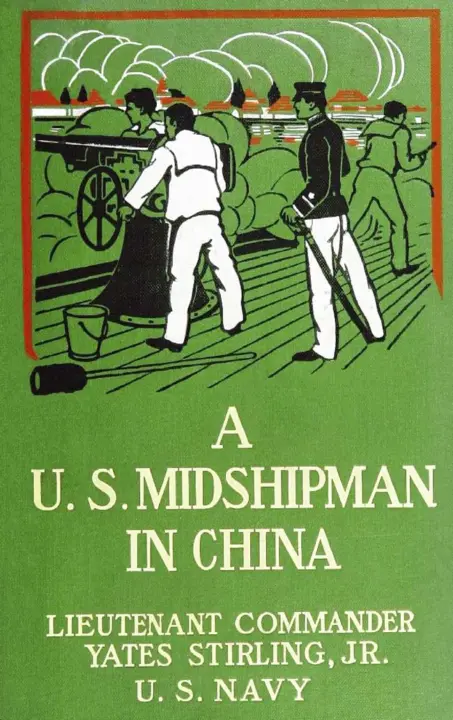
A United States Midshipman in China
Yates Stirling
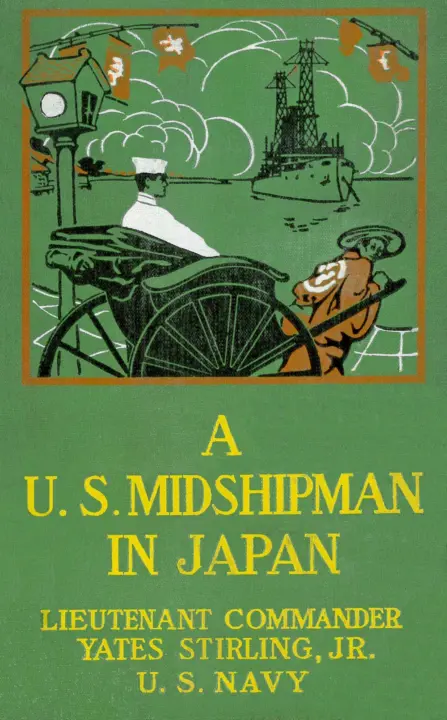
THE CLASSIC COLLECTION · 1911
"A United States Midshipman in Japan" by Yates Stirling is a historical adventure novel written in the early 20th century. The story follows two young American naval officers, Midshipmen Philip Perry and Sydney Monroe, as they explore the complexities of their journey to Japan against a backdrop of diplomatic tension. The narrative unfolds with action, intrigue, and camaraderie, as these midshipmen navigate personal relationships and international affairs. The opening portion of the book introduces the young midshipmen during their arrival in Yokohama, where they are greeted with ceremony and enthusiasm by the Japanese, highlighting the cultural contrasts between the two nations. During a train journey to Tokyo, Philip overhears a conversation hinting at a conspiracy that could drag both countries into conflict, setting the stage for the unfolding drama. As they reach their destination, the midshipmen face an array of societal and diplomatic challenges, indicating a precarious journey filled with potential conflict, exploration, and interwoven destinies amidst misunderstandings between the nations.
Introduction adapted from the source catalogue; source summaries may be automatically generated.
Free to read · English · 69,723 words · No account needed
MAKE TIME FOR A GOOD BOOK
On by default. Untick to stop anonymous reading totals. Each page counts after 10 seconds in view. How this works.
Anonymous counting is on unless you have switched it off.
Before the girl could answer, her neighbor on the other side claimed her attention, much to Phil’s chagrin, and he unconsciously frowned in the direction of Lieutenant Winston, the intruder.
“Our friend Impey has been watching you very closely, Perry,” Takishima said in a low voice as Phil turned away from Helen’s averted face.
“Watching us both, I imagine,” he replied. “A much colored account of our little misunderstanding this afternoon will probably figure prominently in the ‘Shimbunshi’ to-morrow,” he added in concern.
“I’ve seen to that,” Takishima assured him. “The ‘Shimbunshi’ has been suppressed by the prime minister’s order. And all cablegrams from the country are being censored, and nothing can be sent in cipher.”
“I wish you could persuade your minister to recall Captain Inaba,” Phil urged earnestly. “Captain Rodgers believes that if he seizes the ships a war may still be the outcome.”
After the dinner was over Phil and Sydney maneuvered to have a quiet talk with Takishima. A bold plan, the seed of which had been sown in Phil’s mind by Impey’s proposal to use the yacht, had occurred to the midshipman. Phil was not sure the “Sylvia” would be allowed to leave Yokohama harbor, but a word from the Japanese lieutenant would be enough.
Helen was taken into the conspiracy, and with the three classmates quietly stole away to a sun parlor in the back of the legation.
“No one will find us here,” Helen whispered breathlessly, her face
showing keen excitement.
Phil, remembering Takishima’s promise to be open and frank with him, began by asking the question that seemed to be the most important to clear up.
“Have your war-ships been given orders to prevent the sailing of the
‘Alaska’?”
Takishima’s eyes opened in mild surprise.
“How could you believe that Japan would be so impolite?” he replied. “Who is responsible for such a rumor?”
“Impey, of course,” Phil returned, smilingly, “the source of all our
misinformation.
“But,” Phil persisted, “if the ‘Alaska’ should leave now and send a wireless to the American fleet in Manila to take the Chinese ships, Captain Inaba’s mission would fail.”
Takishima was thoughtful.
“We should not stop the ‘Alaska,’” he said decidedly. “What steps our Minister of Marine would take afterward I cannot say, but of course you know we would take all steps possible to insure Captain Inaba’s success.”
“If you were sure America did not want the Chinese ships, your minister would be willing to have Captain Inaba fail, wouldn’t he?” Phil asked.
“Yes, certainly,” Takishima answered without a moment’s hesitation.
Your reading position is saved on this browser. Take it to another device with a library code. Reading pages adapt to text, rather than matching a printed edition.
Yates Stirling
Yates Stirling
Yates Stirling
Yates Stirling
BEHIND THE BOOK
This eBook is for the use of anyone anywhere in the United States and most other parts of the world at no cost and with almost no restrictions whatsoever. You may copy it, give it away or re-use it under the terms of the Project Gutenberg License included with this eBook or online at www.gutenberg.org. If you are not located in the United States, you will have to check the laws of the country where you are located before using this eBook. Read the source licence.
The original source file, including credits and licence, is retained by this library. Request an original-format copy at no charge. Please include the book title and Project Gutenberg identifier #67484.
KEEP YOUR CURIOSITY GOING
Cécile Tormay

Moritz Busch
Coulson Kernahan
John L. Ransom

Maurice Baring
Frances Wright