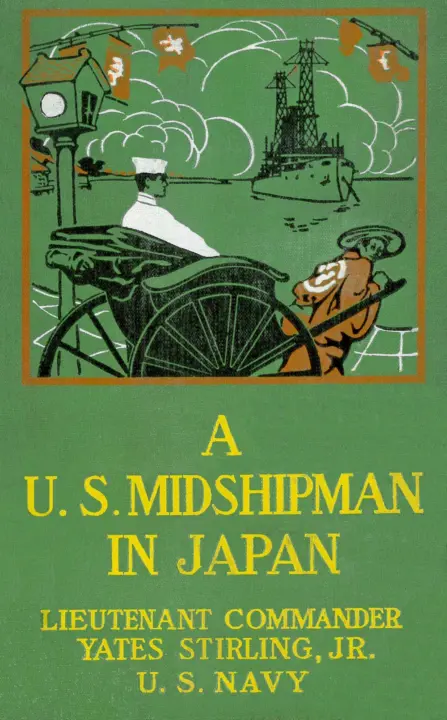
A United States Midshipman in Japan
Yates Stirling
THE CLASSIC COLLECTION · 1908
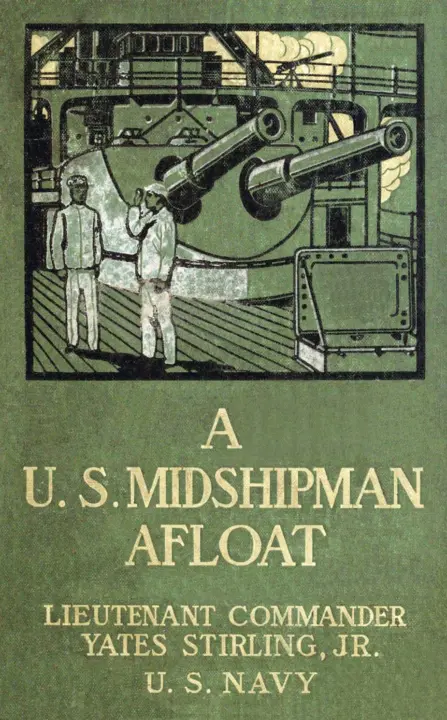
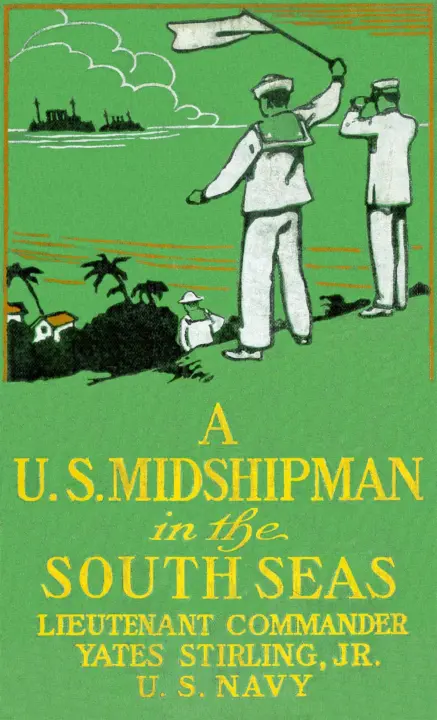
"A United States Midshipman Afloat" by Lt. Com. Yates Stirling Jr. is a novel written in the early 20th century. The story centers on two newly graduated midshipmen, Philip Perry and Sydney Monroe, as they embark on their naval careers aboard the battleship U.S.S. “Connecticut.” The book explores themes of duty, friendship, and rivalry, particularly as the main character, Philip, navigates the complexities of his relationship with his divisional officer, Jules Lazar, whose past conflict with him introduces tension to their interactions. At the start of the novel, readers are introduced to the bustling Navy-Yard at Brooklyn, where Philip and Sydney excitedly begin their first day aboard the battleship. As tensions begin to surface, particularly concerning their relationship with Lazar, Philip's insecurities about potentially hostile encounters with his superior officer become apparent. A harrowing incident involving a life boat and a near-accident while at sea leads to serious consequences for Philip, intensifying his struggles with obedience and loyalty. Overall, the opening chapters set the stage for an intricate tale of naval life, personal growth, and the challenges of leadership within the military.
Introduction adapted from the source catalogue; source summaries may be automatically generated.
Free to read · English · 66,568 words · No account needed
MAKE TIME FOR A GOOD BOOK
On by default. Untick to stop anonymous reading totals. Each page counts after 10 seconds in view. How this works.
Anonymous counting is on unless you have switched it off.
Inside of ten minutes night had settled down over the sea and the war-ships had turned about and were steaming at full speed toward the enemy’s harbor.
The hours passed with leaden feet. Cloud banks which had been visible on the horizon before sunset slowly spread a filmy mantle over the sky, blotting out the brilliant tropical stars. The night became darker. With all lights screened, the gray hulls moved noiselessly through the calm sea.
“If she is outside the night is in her favor,” Captain Garcia said, peering through the inky blackness. “We couldn’t see her five hundred yards away, while from her low deck she could see our hull at nearly twice that distance.”
“Maybe our better chance is to enter the harbor after all,” exclaimed
Phil, losing heart.
“But think of the mines and the guns of the forts,” replied the captain; “for me, I’d rather find her outside. She can hardly be lucky enough to sink both ships, and I have confidence that we shall sink her if we see her.”
He turned to Phil questioningly.
“May I count upon my American friends for aid?” he added.
Phil hesitated. If the torpedo-boat attacked them it would be surely self-defense for them to help defend the cruiser.
“We are entirely at your service, sir,” he declared, “if the boat is outside. I am sorry, but our aid cannot be given otherwise.”
Captain Garcia seemed perplexed.
“I find I become ever more heavily your debtor. Are all American naval men like you and your companions?” Then he added sincerely, “I pray that some day I shall be given an opportunity to show my gratitude.”
The boys took his proffered hand and wrung it warmly.
O’Neil stepped hesitatingly on the bridge. The lads seized upon the sailor and brought him up beside them.
“What is it now?” he inquired, peering into the darkness ahead.
The situation was quickly explained.
The boatswain’s mate’s face lit up with pleasure for a moment, then he turned to Phil, a troubled note in his voice.
“Them dagos can’t hit even the water at night,” he whispered; “some of them have been begging me to come and find out what’s going to happen.”
“But the enemy’s sailors are just as much afraid of the dark,” Phil declared in a low tone.
“These men ain’t sailors,” he answered disgustedly, “they are soldiers, landlubbers. All the sailormen of the country are with the rebels.”
A sudden idea struck the lad. He turned from O’Neil toward Captain Garcia, wrapped in his own thoughts.
“Captain Garcia, O’Neil says all your men are soldiers,” he cried
anxiously.
Your reading position is saved on this browser. Take it to another device with a library code. Reading pages adapt to text, rather than matching a printed edition.
Yates Stirling
Yates Stirling
Yates Stirling
Yates Stirling
BEHIND THE BOOK
This eBook is for the use of anyone anywhere in the United States and most other parts of the world at no cost and with almost no restrictions whatsoever. You may copy it, give it away or re-use it under the terms of the Project Gutenberg License included with this eBook or online at www.gutenberg.org. If you are not located in the United States, you will have to check the laws of the country where you are located before using this eBook. Read the source licence.
The original source file, including credits and licence, is retained by this library. Request an original-format copy at no charge. Please include the book title and Project Gutenberg identifier #67215.
KEEP YOUR CURIOSITY GOING
Coulson Kernahan

Maurice Baring
Frances Wright
Cécile Tormay

Frederic Jesup Stimson

W. H. P. (William Henry Pope) Jarvis