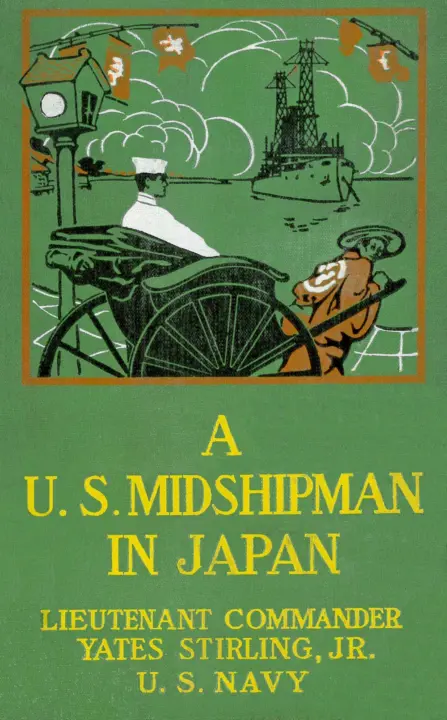
A United States Midshipman in Japan
Yates Stirling
THE CLASSIC COLLECTION · 1908
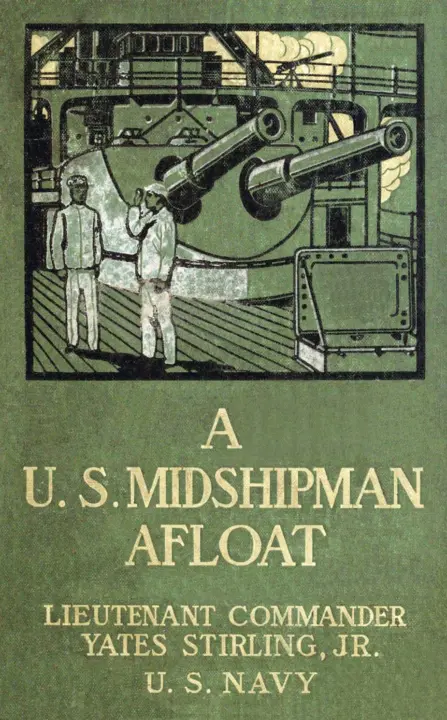
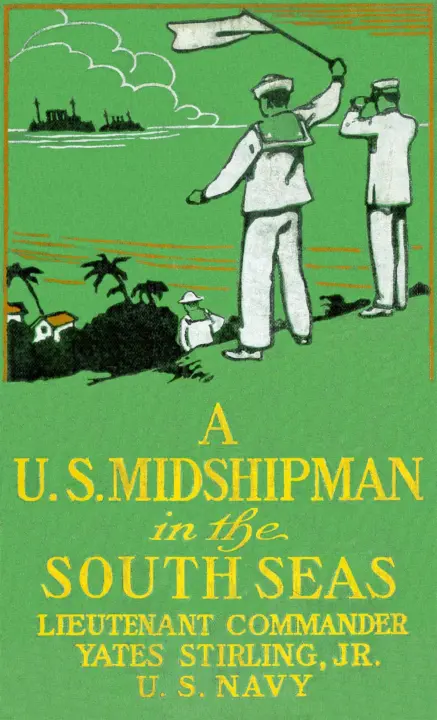
"A United States Midshipman Afloat" by Lt. Com. Yates Stirling Jr. is a novel written in the early 20th century. The story centers on two newly graduated midshipmen, Philip Perry and Sydney Monroe, as they embark on their naval careers aboard the battleship U.S.S. “Connecticut.” The book explores themes of duty, friendship, and rivalry, particularly as the main character, Philip, navigates the complexities of his relationship with his divisional officer, Jules Lazar, whose past conflict with him introduces tension to their interactions. At the start of the novel, readers are introduced to the bustling Navy-Yard at Brooklyn, where Philip and Sydney excitedly begin their first day aboard the battleship. As tensions begin to surface, particularly concerning their relationship with Lazar, Philip's insecurities about potentially hostile encounters with his superior officer become apparent. A harrowing incident involving a life boat and a near-accident while at sea leads to serious consequences for Philip, intensifying his struggles with obedience and loyalty. Overall, the opening chapters set the stage for an intricate tale of naval life, personal growth, and the challenges of leadership within the military.
Introduction adapted from the source catalogue; source summaries may be automatically generated.
Free to read · English · 66,568 words · No account needed
MAKE TIME FOR A GOOD BOOK
On by default. Untick to stop anonymous reading totals. Each page counts after 10 seconds in view. How this works.
Anonymous counting is on unless you have switched it off.
Phil ran from the cabin in joyful haste, after thanking the captain as if he himself had received the promotion.
He found O’Neil in his quarters and pressed the paper upon him.
The new boatswain’s mate’s eyes opened wide with surprise, and his face was flushed with delight.
“I congratulate you, O’Neil,” Phil cried. “You deserve it, and more
too.”
O’Neil’s voice was husky with manly emotion, as he thanked the young
officer.
“I shan’t forget your kindness,” he said gratefully.
A few hours later three travelers passed along the narrow streets of La Boca in the direction of the suburbs. Each carried a small bundle in one hand and a climbing stick in the other. Their clothes were old and worn as if their owners were accustomed to much tramping over a rough country. They passed without hindrance through the successive lines of defense of the loyal army. Walking Englishmen were frequent and their costumes bore out the part.
Leaving the city behind them, they traveled along the military road, running parallel to the sea. Its sides were lined with high tropical vegetation, with here and there a hut nestling in a clearing, but all were deserted. They were between the lines of the two armies.
A quarter of a mile down the road a dark object came into view,
standing like an abandoned wagon in the middle of the sun-baked
road-bed.
“Artillery,” Phil cried; “now look out for a challenge.”
“I hope they don’t shoot first and challenge afterward, like Cuban guerrillas,” said O’Neil calmly.
As the three came nearer the solitary cannon, pointing its frowning muzzle menacingly toward them, several figures suddenly appeared from the shade of a hut by the roadside, and peered at the approaching Americans. One then left the group and advanced slowly toward them.
The travelers saw by his uniform that he was an officer.
“Good-afternoon,” Phil called politely in Spanish, taking off his hat.
The officer saluted and gazed questioningly at the three men.
“What is your business here?” he inquired brusquely in his native
tongue.
“Oh, we are just out for a tramp,” Phil replied lightly. “You fellows are so persistent in your siege, that our legs were beginning to get soft in the city, so we thought we’d come out and stretch them.”
The officer smiled, pleased at the compliment to the army in which he
was an officer.
“English?” he asked, relenting.
“Yes, travelers,” Phil replied suavely; “we are getting news for European papers.” This, Phil thought, was rather clever and not untrue, either, for what they found out would in time find its way to European newspapers.
Your reading position is saved on this browser. Take it to another device with a library code. Reading pages adapt to text, rather than matching a printed edition.
Yates Stirling
Yates Stirling
Yates Stirling
Yates Stirling
BEHIND THE BOOK
This eBook is for the use of anyone anywhere in the United States and most other parts of the world at no cost and with almost no restrictions whatsoever. You may copy it, give it away or re-use it under the terms of the Project Gutenberg License included with this eBook or online at www.gutenberg.org. If you are not located in the United States, you will have to check the laws of the country where you are located before using this eBook. Read the source licence.
The original source file, including credits and licence, is retained by this library. Request an original-format copy at no charge. Please include the book title and Project Gutenberg identifier #67215.
KEEP YOUR CURIOSITY GOING
Coulson Kernahan

Maurice Baring
Frances Wright
Cécile Tormay

Frederic Jesup Stimson

W. H. P. (William Henry Pope) Jarvis