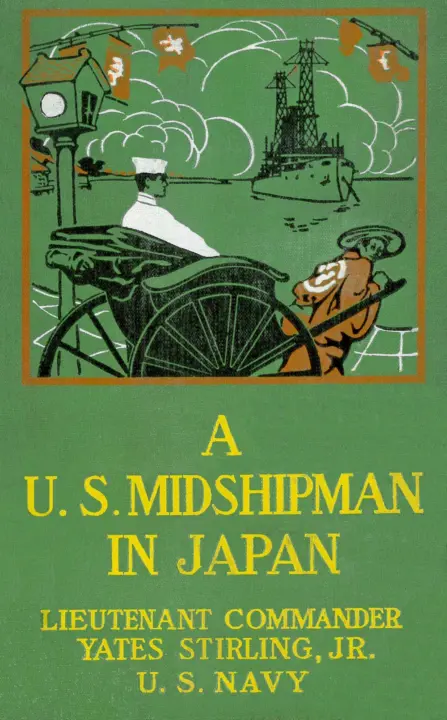
A United States Midshipman in Japan
Yates Stirling
THE CLASSIC COLLECTION · 1908
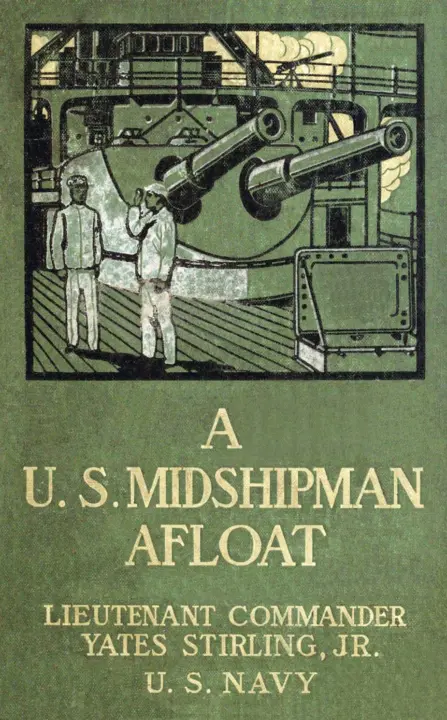
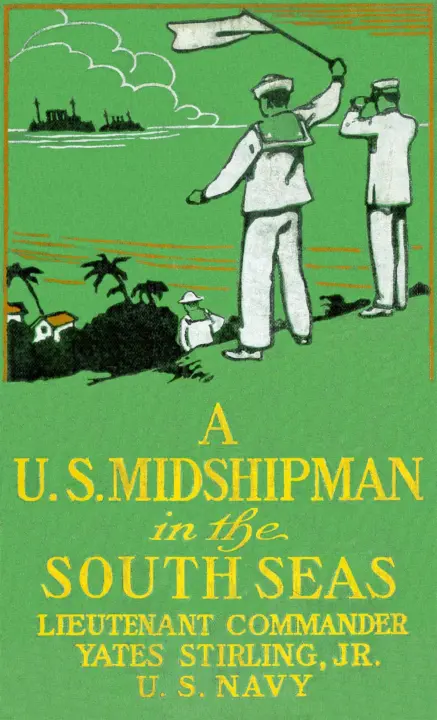
"A United States Midshipman Afloat" by Lt. Com. Yates Stirling Jr. is a novel written in the early 20th century. The story centers on two newly graduated midshipmen, Philip Perry and Sydney Monroe, as they embark on their naval careers aboard the battleship U.S.S. “Connecticut.” The book explores themes of duty, friendship, and rivalry, particularly as the main character, Philip, navigates the complexities of his relationship with his divisional officer, Jules Lazar, whose past conflict with him introduces tension to their interactions. At the start of the novel, readers are introduced to the bustling Navy-Yard at Brooklyn, where Philip and Sydney excitedly begin their first day aboard the battleship. As tensions begin to surface, particularly concerning their relationship with Lazar, Philip's insecurities about potentially hostile encounters with his superior officer become apparent. A harrowing incident involving a life boat and a near-accident while at sea leads to serious consequences for Philip, intensifying his struggles with obedience and loyalty. Overall, the opening chapters set the stage for an intricate tale of naval life, personal growth, and the challenges of leadership within the military.
Introduction adapted from the source catalogue; source summaries may be automatically generated.
Free to read · English · 66,568 words · No account needed
MAKE TIME FOR A GOOD BOOK
On by default. Untick to stop anonymous reading totals. Each page counts after 10 seconds in view. How this works.
Anonymous counting is on unless you have switched it off.
He was seated at his desk under the ventilator shaft, which brought fresh air from above. It opened into one of the numerous ventilator-cowls on the quarter-deck.
He could hear indistinctly above him the voices of two men, pacing the quarter-deck, but they did not disturb him until they stopped directly over his ventilator shaft, and he recognized at once the voices of Lazar and the vice-consul.
“So your precious conscience hurts you, does it?” the vice-consul was
saying.
“It’s not a question of that,” Lazar’s voice answered, “and you know it, Juarez. But smuggling is too risky. I had a narrow escape from detection in New York a year ago, getting your goods ashore, and I don’t wish to go through that worry again.”
“You made a handsome sum out of it, didn’t you?” Juarez’s voice
questioned.
“Not so loud,” Lazar cautioned, “it’s too dangerous; if this were known, I’d lose my commission.”
“You are losing your nerve, Lazar,” the vice-consul’s voice sneered; “there is no one about.”
“You can’t tell, and anyway, this is not the place to discuss such matters,” Lazar said decidedly.
“As you please, but, by the way, I might as well tell you; I know you dare not betray me,” the vice-consul’s voice said menacingly, “and I need your help.”
The speakers changed their positions slightly and their voices failed to carry distinctly to the eager eavesdropper.
Phil trembled with expectancy at the startling intelligence he had
received.
So Lazar had been tempted to do something for which his commission would be forfeited if found out. What a terrible weapon to hold over his enemy if he continued his persecution. What was the secret Juarez had confided to Lazar? The arms surely.
The voices had now died out entirely, and a shuffling of feet on deck told Phil that the minister was ready to leave the ship.
He told Sydney all he had heard as soon as they had returned to their room after the departure of the American minister.
“I am not surprised,” exclaimed Sydney, when Phil had finished his story. “Lazar is capable of anything evil. We have another person to reckon with, however, in this arms smuggling. If he suspects we are attempting to intercept them, Lazar will, in hatred of you, try to defeat your plan.”
“Hadn’t we better confide in Captain Taylor?” questioned Phil. “We can thus cut Lazar’s claws.”
“We should not do that until we can prove our story fully,” answered Sydney. “The captain might believe our accusations were true, but he could hardly act officially upon them.”
Your reading position is saved on this browser. Take it to another device with a library code. Reading pages adapt to text, rather than matching a printed edition.
Yates Stirling
Yates Stirling
Yates Stirling
Yates Stirling
BEHIND THE BOOK
This eBook is for the use of anyone anywhere in the United States and most other parts of the world at no cost and with almost no restrictions whatsoever. You may copy it, give it away or re-use it under the terms of the Project Gutenberg License included with this eBook or online at www.gutenberg.org. If you are not located in the United States, you will have to check the laws of the country where you are located before using this eBook. Read the source licence.
The original source file, including credits and licence, is retained by this library. Request an original-format copy at no charge. Please include the book title and Project Gutenberg identifier #67215.
KEEP YOUR CURIOSITY GOING
Coulson Kernahan

Maurice Baring
Frances Wright
Cécile Tormay

Frederic Jesup Stimson

W. H. P. (William Henry Pope) Jarvis