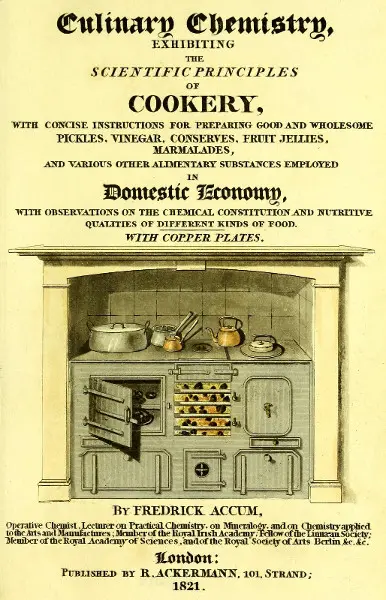
A Treatise on Adulterations of Food, and Culinary Poisons Exhibiting the Fraudulent Sophistications of Bread, Beer, Wine, Spiritous Liquors, Tea, Coffee, Cream, Confectionery, Vinegar, Mustard, Pepper, Cheese, Olive Oil, Pickles, and Other Articles Employed in Domestic Economy
[27] Dried bilberries are imported from Germany, under the fallacious
name of berry-dye.
[28] The gypsum had the property of clarifying wines, was known to the ancients. "The Greeks and Romans put gypsum in their new wines, stirred it often round, then let it stand for some time; and when it had settled, decanted the clear liquor. (Geopon, lib. vii. p. 483, 494.) They knew that the wine acquired, by this addition, a certain sharpness, which it afterwards lost; but that the good effects of the gypsum were lasting."
[29] Sawdust for this purpose is chiefly supplied by the ship-builders, and forms a regular article of commerce of the brewers' druggists.
[30] Tatler, vol. viii. p. 110, edit. 1797. 8vo.
[31] Dr. Reece's Gazette of Health, No. 7.
[32] Supplement to the Pharmacopoeias, p. 245.
[33] Chemical Essays, vol. viii. p. 369.
[34] Medical Trans. vol. ii. p. 80.
[35] This book, which has run through many editions, may be supposed to have done some mischief.--In the Vintner's Guide, 4th edit. 1770, p. 67, a lump of sugar of lead, of the size of a walnut, and a table-spoonful of sal enixum, are directed to be added to a tierce (forty-two gallons) of muddy wine, to cure it of its muddiness.
[36] Beckman's History of Inventions, vol. i. p. 398.
[37] Pliny, lib. xiv. cap. 20.
[38] Philosophical Magazine, 1819, No. 257, p. 229.
[39] Journ. Pharm. iv. 56 (Feb. 1818.) and Thomson's Annals, Sept. 1818,
p. 232.
[40] Of a Specific Gravity. 825.
[41] Philosophical Trans. 1811, p. 345; 1813, p. 87; Journal of Science and the Arts, No. viii. p. 290.
[42] Macculloch on Wine. This is by far the best treatise published in this country on the Manufacture of Home-made Wines.
Adulteration of Bread.
This is one of the sophistications of the articles of food most commonly practised in this metropolis, where the goodness of bread is estimated entirely by its whiteness. It is therefore usual to add a certain quantity of alum to the dough; this improves the look of the bread very much, and renders it whiter and firmer. Good, white, and porous bread, may certainly be manufactured from good wheaten flour alone; but to produce the degree of whiteness rendered indispensable by the caprice of the consumers in London, it is necessary (unless the very best flour is employed,) that the dough should be bleached; and no substance has hitherto been found to answer this purpose better than alum.
Without this salt it is impossible to make bread, from the kind of flour usually employed by the London bakers, so white, as that which is commonly sold in the metropolis.