The Philosophy of Art
Hippolyte Taine
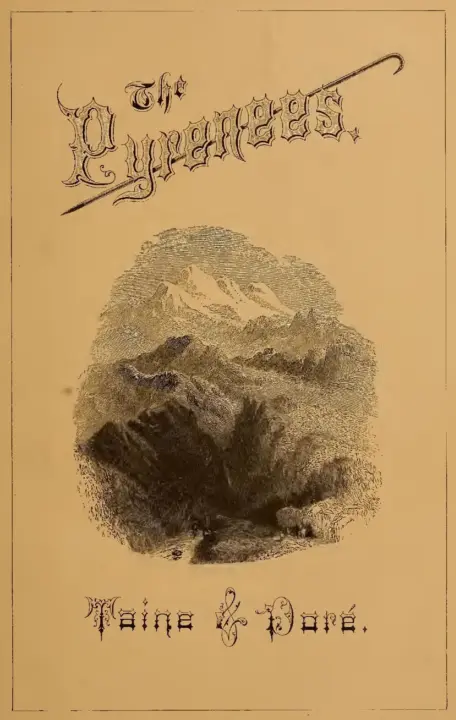
THE CLASSIC COLLECTION · 1874
"A Tour Through the Pyrenees" by Hippolyte Taine is a travelogue written in the late 19th century. The work provides a detailed exploration of the Pyrenees region, emphasizing the author’s personal experiences and observations as he journeys through landscapes, towns, and natural wonders, while also delving into the culture and history of the area. At the start of the narrative, Taine introduces himself and the intent behind his journey, describing his travels from Royan to Bordeaux and beyond. He captures the beauty and turbulence of the river scenery with vivid imagery, reflecting on both the joy and the brutality of nature. The opening chapters illustrate his encounters with the environments and people of the regions he visits, showcasing the contrasts between natural landscapes and urban settings, while hinting at historical events and characters tied to the locales, such as the Mayor of Bayonne, Pé de Puyane, who is presented through anecdotes steeped in dramatic action and local lore. Taine’s tone blends admiration for nature’s beauty with a critical lens on humanity’s historical follies, effectively setting the stage for a rich and immersive travel experience.
Introduction adapted from the source catalogue; source summaries may be automatically generated.
Free to read · English · 75,555 words · No account needed
MAKE TIME FOR A GOOD BOOK
On by default. Untick to stop anonymous reading totals. Each page counts after 10 seconds in view. How this works.
Anonymous counting is on unless you have switched it off.
Fifth variety; rare: learned tourists.
One day, at the foot of a damp rock, I saw a little lean man coming toward me, with a nose like an eagle’s beak; a hatchet face, green eyes, grizzling locks, nervous, jerky movements, and something quaint and earnest in his countenance. He had on huge gaiters, an old black, rain-beaten cap, trousers spattered to the knee with mud, a botanical case full of dents on his back, and in his {439}hand a small spade. Unfortunately I was looking at a plant with long, straight, green stalk, and white, delicate corolla, which grew near some hidden springs. He took me for a raw fellow-botanist. “Ah, here you are, gathering plants! What, by the stalk, clumsy? What will it do in your herbarium without roots? Where is your case? your weeder?”
“But, sir--”
“Common plant, frequent in the environs of Paris, Parnassia palustris: stem simple, erect, a foot in height, glabrous, radical leaves petiolate (sheathing caulis, sessile), cordiform, entirely glabrous; simple flower, white, terminal, the calix with lanceolate leaves, petals rounded, marked with hollow lines, nectaries ciliate and furnished with yellow globules at the extremity of the cilia resembling pistils; helleboraceous. Those nectaries are curious; good study, plant well chosen. Courage! you’ll get on.”
“But I am no botanist!”
“Very good, you are modest. However, since you are in the Pyrenees, you must study the flora of the country; you will not find another such opportunity. There are rare-plants here which you should absolutely carry away. I gathered near Oleth, the Menziesra Daboeci, an inestimable godsend. I will show you at the house the Ramondia {440}Pyrenaica, solanaceous with the aspect of the primrose. I scaled Mont Perdu to find the Ranunculus parnassifolius mentioned by Ramond, and which grows at a height of 2,700 mètres. Hah! what is that! the Aquilcgia Pyrenaica!”
And my little man started off like an isard, clambered up a slope, carefully dug the soil about the flower, took it up, without cutting a single root, and returned with sparkling eyes, triumphant air, and holding it aloft like a banner.
“Plant peculiar to the Pyrenees. I have long wanted it; the specimen is excellent. Come, my young friend, a slight examination: you don’t know the species, but you recognize the family?”
“Alas! I don’t know a word of botany.”
He looked at me stupefied. “And why do you gather plants?”
“To see them, because they are pretty.”
He put his flower into his case, adjusted his cap, and went off without
adding another word.
Your reading position is saved on this browser. Take it to another device with a library code. Reading pages adapt to text, rather than matching a printed edition.
Hippolyte Taine
BEHIND THE BOOK
This eBook is for the use of anyone anywhere in the United States and most other parts of the world at no cost and with almost no restrictions whatsoever. You may copy it, give it away or re-use it under the terms of the Project Gutenberg License included with this eBook or online at www.gutenberg.org. If you are not located in the United States, you will have to check the laws of the country where you are located before using this eBook. Read the source licence.
The original source file, including credits and licence, is retained by this library. Request an original-format copy at no charge. Please include the book title and Project Gutenberg identifier #44429.
KEEP YOUR CURIOSITY GOING
Wilfrid Scawen Blunt
Wilfrid Scawen Blunt

E. W. (Edgar Watson) Howe
Francis Greenleaf Allinson & Anne C. E. (Anne Crosby Emery) Allinson
Cyrenus Cole

John Martineau