THE CLASSIC COLLECTION✦My diaries, being a personal narrative of events 1888-1914, Part 2 (1900-1914)CLASSIC FREE BOOKS
My diaries, being a personal narrative of events 1888-1914, Part 2 (1900-1914)
Wilfrid Scawen Blunt
THE CLASSIC COLLECTION · 1877
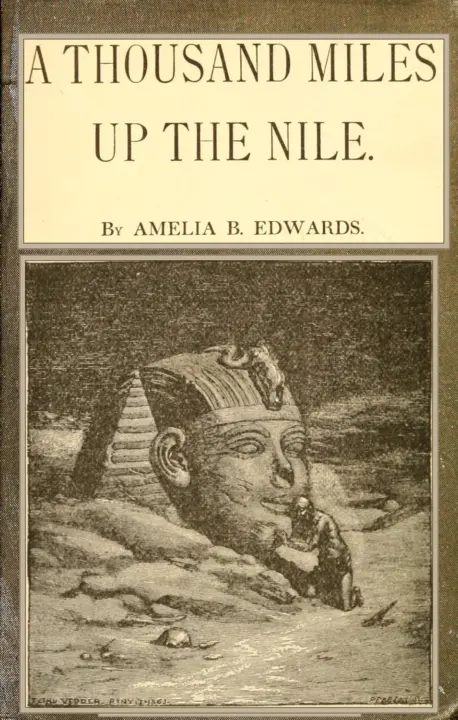
"A Thousand Miles Up the Nile" by Amelia B. Edwards is a travel narrative and exploration account written in the late 19th century. The book chronicles the author’s journey up the Nile River in Egypt, vividly depicting the landscapes, cultures, and historic sites encountered along the way. The narrative likely focuses on the experiences of the author and her companion as they delve into the wonders of ancient Egypt, blending personal anecdotes with observations about the local customs and historical significance of the sites they visit. The opening of the book sets the stage for a grand adventure, starting with the author's arrival in Cairo and the bustling atmosphere of Shepheard’s Hotel, where travelers from various backgrounds converge. The initial chapters describe the author's impressions of the rich culture, vibrant bazaars, and monumental landmarks like the Great Pyramid. Through detailed descriptions and personal reflections, Edwards captures the essence of Egyptian life, highlighting the contrast between modern travelers and the timelessness of the ancient world. The narrative promises a journey that combines historical insights with the excitement of exploration along the legendary Nile.
Introduction adapted from the source catalogue; source summaries may be automatically generated.
Free to read · English · 188,295 words · No account needed
MAKE TIME FOR A GOOD BOOK
On by default. Untick to stop anonymous reading totals. Each page counts after 10 seconds in view. How this works.
Anonymous counting is on unless you have switched it off.
[270] This letter appeared in The Times of March 18, 1874.
Typographical errors corrected by the etext transcriber:
AMELIA BLANDFORD EDWARDS.=> AMELIA BLANFORD EDWARDS. {pg}
Shegered-Durr, a beautiul Turkish=> Shegered-Durr, a beautiful Turkish
{fn 6}
cut a sorroy figure=> cut a sorry figure {pg 46}
But the must amazing=> But the most amazing {pg 46}
low perdendicular cliffs=> low perpendicular cliffs {pg 46}
This colussus is now raised=> This colossus is now raised {fn 19}
it place in history=> its place in history {pg 62}
and murmnr’d “bakhshîsh!”=> and murmur’d “bakhshîsh!” {pg 63}
certain amount of insistance=> certain amount of insistence {pg 66}
is supended a goat-skin bucket=> is suspended a goat-skin bucket {fn 22}
a shoal of medicant monks=> a shoal of mendicant monks {pg 75}
and most suble gradations=> and most subtle gradations {pg 77}
régulièrement trios enfants sur cinq=> régulièrement troos enfants sur
cinq {fn 24}
to downs-tairs=> to down-stairs {pg 83}
fifty colored lanters outlined=> fifty colored lanterns outlined {pg 84}
for contemplatation=> for contemplation {pg 91}
nomarch of the Lycopolite nome=> monarch of the Lycopolite nome {pg 95}
the twelth dynasty=> the twelfth dynasty {pg 26}
reputation for unusal sanctity=> reputation for unusual sanctity {fn 31}
effect of afterg-low=> effect of after-glow {pg 105}
towed by goverment=> towed by government {pg 106}
the precints=> the precincts {pg 111}
these gloomy threshelds=> these gloomy thresholds {pg 118}
the Triad worshiped=> the Triad worshipped {fn 44}
La culta de Bes parait=> La culte de Bes parait {fn 45}
but quite preceptibly=> but quite perceptibly {pg 147}
for which purpuse=> for which purpose {pg 147}
expressive pantomine=> expressive pantomime {pg 148 x 2}
of more that doubtful=> of more than doubtful {pg 148}
incapable of oevenge=> incapable of revenge {pg 150}
his bad cnes=> his bad ones {pg 150}
much better rharacter=> much better character {pg 150}
the usual attemps=> the usual attempts {pg 160}
the judical susceptibilities=> the judicial susceptibilities {pg 161}
we found ourselvelves=> we found ourselves {pg 170}
his next two successsors=> his next two successors {fn 54}
following succint account=> following succinct account {fn 56}
on the righ road to Thebes=> on the high road to Thebes {pg 197}
in the precints=> in the precincts {pg 199}
supended in his time=> suspended in his time {fn 60}
and believd Philæ to=> and believed Philæ to {fn 61}
when Burkhardt went up=> when Burckhardt went up {pg 202}
their tale intelligbly=> their tale intelligibly {pg 208}
is as audidle=> is as audible {pg 209}
ancient blue porcelian=> ancient blue porcelain {pg 216}
but found them to much defaced=> but found them too much defaced {pg
233}
But with he second Rameses=> But with the second Rameses {pg 236}
through Westminister Abbey=> through Westminster Abbey {pg 237}
sharer of the thorne=> sharer of the throne {pg 238}
it has often deen observed=> it has often been observed {fn 84}
A similiar document=> A similar document {pg 247}
colored mosaice=> colored mosaics {pg 95}
Your reading position is saved on this browser. Take it to another device with a library code. Reading pages adapt to text, rather than matching a printed edition.
BEHIND THE BOOK
This eBook is for the use of anyone anywhere in the United States and most other parts of the world at no cost and with almost no restrictions whatsoever. You may copy it, give it away or re-use it under the terms of the Project Gutenberg License included with this eBook or online at www.gutenberg.org. If you are not located in the United States, you will have to check the laws of the country where you are located before using this eBook. Read the source licence.
The original source file, including credits and licence, is retained by this library. Request an original-format copy at no charge. Please include the book title and Project Gutenberg identifier #70565.
KEEP YOUR CURIOSITY GOING
Wilfrid Scawen Blunt
Wilfrid Scawen Blunt

E. W. (Edgar Watson) Howe
Cécile Tormay

Moritz Busch
John L. Ransom