THE CLASSIC COLLECTION✦My diaries, being a personal narrative of events 1888-1914, Part 2 (1900-1914)CLASSIC FREE BOOKS
My diaries, being a personal narrative of events 1888-1914, Part 2 (1900-1914)
Wilfrid Scawen Blunt
THE CLASSIC COLLECTION · 1877
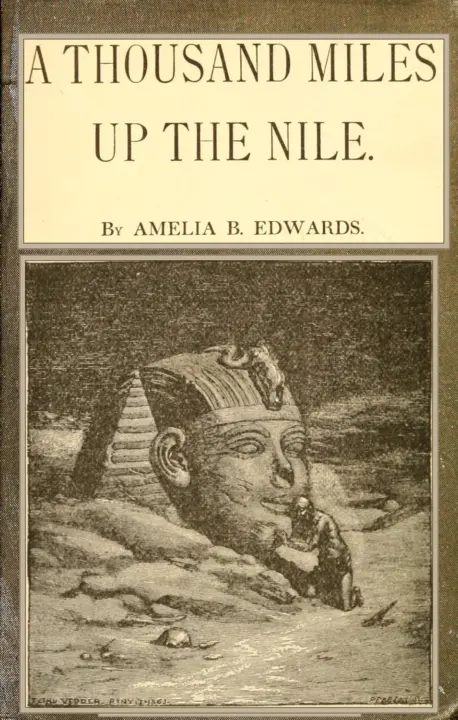
"A Thousand Miles Up the Nile" by Amelia B. Edwards is a travel narrative and exploration account written in the late 19th century. The book chronicles the author’s journey up the Nile River in Egypt, vividly depicting the landscapes, cultures, and historic sites encountered along the way. The narrative likely focuses on the experiences of the author and her companion as they delve into the wonders of ancient Egypt, blending personal anecdotes with observations about the local customs and historical significance of the sites they visit. The opening of the book sets the stage for a grand adventure, starting with the author's arrival in Cairo and the bustling atmosphere of Shepheard’s Hotel, where travelers from various backgrounds converge. The initial chapters describe the author's impressions of the rich culture, vibrant bazaars, and monumental landmarks like the Great Pyramid. Through detailed descriptions and personal reflections, Edwards captures the essence of Egyptian life, highlighting the contrast between modern travelers and the timelessness of the ancient world. The narrative promises a journey that combines historical insights with the excitement of exploration along the legendary Nile.
Introduction adapted from the source catalogue; source summaries may be automatically generated.
Free to read · English · 188,295 words · No account needed
MAKE TIME FOR A GOOD BOOK
On by default. Untick to stop anonymous reading totals. Each page counts after 10 seconds in view. How this works.
Anonymous counting is on unless you have switched it off.
[184] Horus:--“Dieu adoré dans plusieurs nomes de la basse Égypte. Le personnage d’Horus se rattache sous des noms différents, à deux generations divines. Sous le nom de Haroëris il est né de Seb et Nout, et par consequent frère d’Osiris, dont il est le fils sous un autre nom.... Horus, armé d’un dard avec lequel il transperce les ennemis d’Osiris, est appelé Horus le Justicier.”--“Dict. Arch.,” P. Pierret, article “Horus.”
[185] Hathor:--“Elle est, comme Neith, Naut, et Nout, la personnification de l’espace dans lequel se meut le soleil, dont Horus symbolize le lever: aussi son nom, Hat-hor, signifie-t-il litteralement, l’habitation d’Horus.”--“Ibid.,” article “Hathor.”
[186] “Rapport sur line Mission en Égypte.” Vicomte E. de Rougé. See “Révue Arch. Nouvelle Série,” vol. x, p. 63.
[187] “Textes Géographiques du Temple d’Edfou,” by M. J. de Rougé. “Révue Arch.,” vol. xii, p. 209.
[188] See Professor Revillout’s “Seconde Mémoire sur les Blemmyes,” 1888, for an account of how the statues of Isis and other deities were taken once a year from the temples of Philæ for a trip into Ethiopia.
[189] See Appendix III, “Religious Belief of the Ancient Egyptians.”
[190] Not only the names of the chambers, but their dimensions in cubits and subdivisions of cubits are given. See “Itinéraire de la Haute Égypte.” A. Marietta Bey. 1872, p. 241.
[191] This was, no doubt, an interment of the period of the twenty-third or twenty-fourth dynasty, the style of which is thus described by Marietta: “Succèdent les caisses à fond blanc. Autour de celles çi court une légende en hiéroglyphes de toutes couleurs. Le devant du couvercle est divisé horizontalement en tableaux où alternent les représentations et les textes tracés en hiéroglyphes verdâtres. La momie elle-même est hermétiquement enfermée dans un cartonnage cousu par derrière et peint de couleurs tranchantes.”--“Notice des Monuments à Boulak. p. 46. Paris, 1872.
[192] Diodorus, “Biblioth Hist.,” Bk. i, chap. iv. The fault of inaccuracy ought, however, to be charged to Hecatæus, who was the authority followed here by Diodorus.
[193] Possibly the Smendes of Manetho, and the Ba-en-Ded whose cartouche is found by Brugsch on a sarcophagus in the museum at Vienna; see “Hist. d’Égypte,” chap, x, p. 213, ed. 1859. Another claimant to this identification is found in a king named Se-Mentu, whose cartouches were found by Mariette on some small gold tablets at Tanis.
[194] Letter xiv, p. 235, Lettres d’Égypte; Paris, 1868. See also chap. xviii, of the present work; p. 319.
[195] See Champollion, Letter xiv, foot note, p. 418.
Your reading position is saved on this browser. Take it to another device with a library code. Reading pages adapt to text, rather than matching a printed edition.
BEHIND THE BOOK
This eBook is for the use of anyone anywhere in the United States and most other parts of the world at no cost and with almost no restrictions whatsoever. You may copy it, give it away or re-use it under the terms of the Project Gutenberg License included with this eBook or online at www.gutenberg.org. If you are not located in the United States, you will have to check the laws of the country where you are located before using this eBook. Read the source licence.
The original source file, including credits and licence, is retained by this library. Request an original-format copy at no charge. Please include the book title and Project Gutenberg identifier #70565.
KEEP YOUR CURIOSITY GOING
Wilfrid Scawen Blunt
Wilfrid Scawen Blunt

E. W. (Edgar Watson) Howe
Cécile Tormay

Moritz Busch
John L. Ransom