
The Writing of News A Handbook with Chapters on Newspaper Correspondence and Copy Reading
Charles G. (Charles Griffith) Ross
THE CLASSIC COLLECTION · 1924
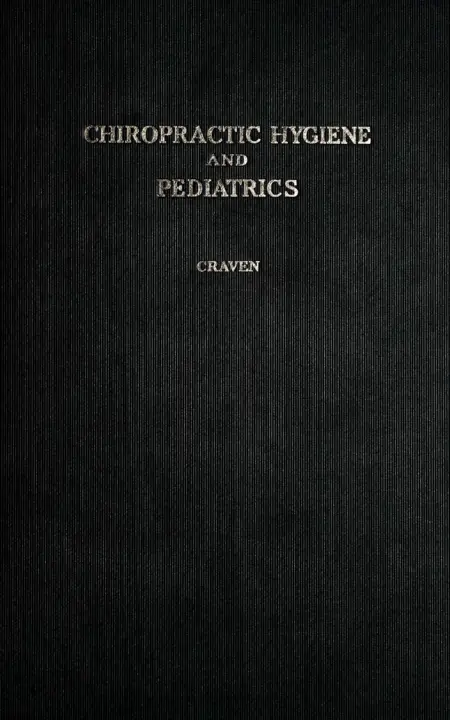
"A Text-Book on Hygiene and Pediatrics from a Chiropractic Standpoint" by John H. Craven is a scientific publication written in the early 20th century. The work serves as a specialized text focused on hygiene and pediatric care through the lens of chiropractic principles, aiming to provide students and practitioners with an understanding that diverges from traditional medical perspectives. The main topics include hygiene practices, environmental factors affecting health, and specific guidelines for caring for infants and children, emphasizing how chiropractic philosophy informs these practices. The opening of the book lays a foundation for its approach to hygiene, defining key concepts such as personal and public hygiene, sanitary science, and the distinction between sanitation and hygiene. Craven discusses the philosophical underpinnings of hygiene from a chiropractic viewpoint, asserting that true health arises from the body's internal processes rather than merely external conditions. He highlights the importance of maintaining a proper internal environment through the principles of cleanliness, balanced nutrition, and appropriate healthcare practices for infants, addressing the need for education in adjusting and caring for the younger population within the chiropractic framework.
Introduction adapted from the source catalogue; source summaries may be automatically generated.
Free to read · English · 94,193 words · No account needed
MAKE TIME FOR A GOOD BOOK
On by default. Untick to stop anonymous reading totals. Each page counts after 10 seconds in view. How this works.
Anonymous counting is on unless you have switched it off.
This is a rather unusual condition seldom found in general practice. It usually occurs as epidemics in institutions where large numbers of children are cared for. Outside of such institutions it is more common among children in unhygienic surroundings. It is characterized by an eruption of blebs containing a serous fluid.
Symptoms
These blebs appear about the third or fourth day and may be found upon any part of the body, but usually upon the exposed parts. They remain for a time and then rupture or dry up. There is no suppuration. As the blebs enlarge they sometimes coalesce, covering quite a large area. The epidermis is loosened by a serous exudate which occurs directly beneath it and separates it from the true skin. The case produces a very striking picture having the appearance of being extensively burned. After the blebs have ruptured the epidermis hangs in shreds, leaving a very bright red surface beneath. In this way there may be large areas of the body almost completely denuded of the epidermis. There may be a very slight temperature and slight restlessness. There is great depression and marked weakness. The symptoms at first appear rather slowly, later the dis-ease progresses very rapidly, death often occurring in from twenty-four to forty-eight hours. Pemphigus neonatorum should be distinguished from congenital syphilis. The liver and spleen are usually very greatly enlarged in syphilitic cases and there are usually other characteristic symptoms present, such as changes in the nails, mucous membrane and other parts.
Equation and Family
The general equation is excretion minus (E-). The condition is in the
poison and fever families.
Major Adjustment
The major adjustment is C.P. and K.P.
Abdomen, circumference of, 294
Enlargement of, 295
Normal, 295
Abscesses of brain, 382
Absolute humidity, 56
Absorption, 17
Absorption of gases, 52
Acid, carbolic, 213
Action, adaptative, 22, 187
Active occupations, 196
Acute catarrhal bronchitis, 340
Equation, 342
Family, 342
Major adjustment, 342
Symptoms, 341
Acute catarrhal laryngitis, 334
Major adjustment, 336
Acute dis-ease, 171
Acute intestinal indigestion, 359
Major adjustment, 360
Acute nasal catarrh, 327
Equation, 328
Family, 328
Major adjustment, 328
Symptoms, 327
Adaptation, 48, 50, 52, 54, 96, 188
Adaptation to environment, 20
Adaptive action, 22, 187
Adaptability of body, 186
Adenoid growths, 330, 349
Adjusting infants, 321
Adjustments during dentition, 303
Adulteration of food, 248
Aerated water, 110
Aerating, 129
Aerial envelope, 68
Aim and function of hygiene and sanitation, 15
Air, 44
Alveolar, 45
Cells, 48
Cold damp, 60
Cold dry, 57
Complemental, 65
Constituents of, 44
Emboli, 53
Foul, 68
Fresh, 66
Humidity of, 55
Impurities in, 67
Increased pressure, 51
Normal pressure, 50
Oxygenated, 51
Pressure at sea level, 54
Pressure increased, 51
Pressure, normal, 50
Pressure, reduced, 50
Rarefied, 51
Residual, 45, 66
Sources of impurities in, 67
Space, 34
Space per capita, 70
Supplemental, 65
Temperature of, 55
Tidal, 65
Warm dry, 61
Warm moist, 59
Airing a room, 70
Albuminoids, 267
Algæ, 127
Alveolar air, 45
Ammonia, 44, 49
Analyzing infants, 307
History of case, 307
Objective symptoms, 307
Zones involved, 312
Anemia, 376
Animals as source of communication, 22
Animal foods, 237
Animal life, 45
Anorexia, 341, 360
Anterior fontanels, 293
Anthrax, 207, 212
Antibiosis, 175
Antibodies, 176
Antigens, 176
Antineurotic vitamin, 241
Antiseptic, 207
Your reading position is saved on this browser. Take it to another device with a library code. Reading pages adapt to text, rather than matching a printed edition.
BEHIND THE BOOK
This eBook is for the use of anyone anywhere in the United States and most other parts of the world at no cost and with almost no restrictions whatsoever. You may copy it, give it away or re-use it under the terms of the Project Gutenberg License included with this eBook or online at www.gutenberg.org. If you are not located in the United States, you will have to check the laws of the country where you are located before using this eBook. Read the source licence.
The original source file, including credits and licence, is retained by this library. Request an original-format copy at no charge. Please include the book title and Project Gutenberg identifier #70951.
KEEP YOUR CURIOSITY GOING
Charles G. (Charles Griffith) Ross
Hannah Webster Foster

Emily Lawless
Edwin Hamlin Carr

Charles De Lano Hine
Andrew Ure