
The unhallowed harvest
Homer Greene
THE CLASSIC COLLECTION · 1892
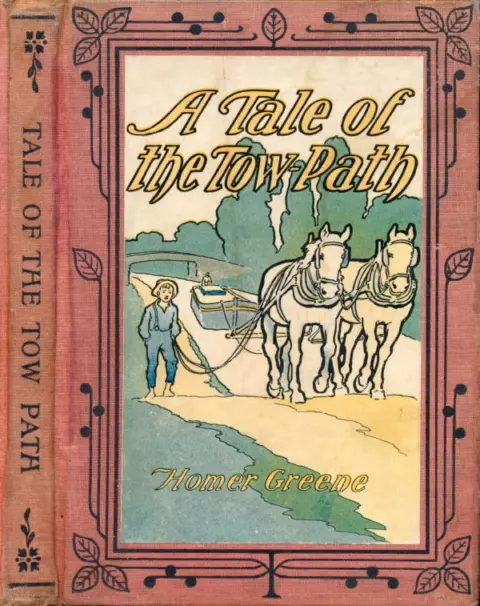
"A Tale of the Tow-Path" by Homer Greene is a novel written in the late 19th century. The story centers around a fourteen-year-old boy named Joe Gaston, who is struggling with feelings of rebellion and frustration towards his strict father. After a severe punishment for disobeying his father's commands and sneaking off to go fishing, Joe makes a rash decision to run away from home, setting off an adventure filled with challenges and self-discovery. The opening portion of the book introduces Joe as he grumbles about the hard labor of hoeing corn and dreams of the summer activities he wishes he could partake in instead. After sneaking away for a fishing trip, he is caught by his father, leading to a punishment that leaves him feeling hurt and resentful. This encounter plants the seed for Joe's decision to flee from home, aiming to reclaim his freedom. The narrative quickly unfolds into a poignant portrayal of his internal conflict as he grapples with the consequences of his disobedience and the love for his family, hinting at the trials he will face on his journey.
Introduction adapted from the source catalogue; source summaries may be automatically generated.
Free to read · English · 18,169 words · No account needed
MAKE TIME FOR A GOOD BOOK
On by default. Untick to stop anonymous reading totals. Each page counts after 10 seconds in view. How this works.
Anonymous counting is on unless you have switched it off.
“Good evenin’, ladies!” he said briskly, as the party approached him. “Good evenin’, Mr. Gaston, sir. I’m sorry to ’ave put you to the trouble of comin’ out ’ere, sir, but circumstances over which, as I may say, I have no control has made it inconwenient for me to meet you in your ’ouse.”
“Never mind that,” answered Mr. Gaston, sharply. “I’ll talk to you
here.”
“Thank you, sir! I’m glad to meet you an’ your hinteresting family, sir. I ’ad the pleasure o’ visitin’ your ’andsome place once before, sir. It was in lovely June, in the early mornin’, sir. I may say it was so early that I ’adn’t the ’eart to disturb your slumbers. But as the result o’ that ’ere visit, be’old me now!”
The man held up his hands to show the steel bands firmly clasped about his wrists, and joined by a few short links.
“Do you know anything about my son?” asked Mr. Gaston, abruptly.
“Yes, sir. I will proceed with my tale. You see I was jest about to enter the stable door that mornin’ w’en that young feller appeared a-comin’ down the path, and as ’e appeared I disappeared be’ind the corner o’ the barn. He went in w’ere the ’oss was, an’ talked some sort o’ rubbish to ’im about ’is goin’ away an’ all that, you know. I couldn’t quite make out the drift of it. But ’e bid good-by to the ’oss, an’ went out a-wipin’ of ’is eyes, an’ struck into the road ’ere, an’ walked away in that direction.”
The man was about to indicate the direction referred to; but finding his right hand securely clasped to the other, he abandoned the attempt, begging to be excused from pointing out the direction.
“Seein’ that the ’oss was up an’ awake,” he continued, “an’ probably wouldn’t sleep no more that mornin’ anyhow, I took ’im with me into the country.”
“But about Joe, the boy?” asked Mr. Gaston, eagerly. “Have you seen him
since?”
“Well, yes, sir, I ’ave. But now, look ’ere; you expects me to criminate myself, do you?”
“It will probably go less hard with you,” said Squire Bidwell, “if you tell the whole story of your performances, and reveal what you know about this boy that you’ve put under such a grave suspicion.”
“All right, all right,” said the horse-thief. “You’ve got me, ’ard and tight, that’s sure, an’ I don’t see no way out o’ it, now. I can give Mr. Gaston information that will lead him to the boy and the ’oss, sir.”
Your reading position is saved on this browser. Take it to another device with a library code. Reading pages adapt to text, rather than matching a printed edition.
Homer Greene

Homer Greene

Homer Greene
Homer Greene
BEHIND THE BOOK
This eBook is for the use of anyone anywhere in the United States and most other parts of the world at no cost and with almost no restrictions whatsoever. You may copy it, give it away or re-use it under the terms of the Project Gutenberg License included with this eBook or online at www.gutenberg.org. If you are not located in the United States, you will have to check the laws of the country where you are located before using this eBook. Read the source licence.
The original source file, including credits and licence, is retained by this library. Request an original-format copy at no charge. Please include the book title and Project Gutenberg identifier #46172.
KEEP YOUR CURIOSITY GOING
Coulson Kernahan

Maurice Baring
Frances Wright
Cécile Tormay

Frederic Jesup Stimson

W. H. P. (William Henry Pope) Jarvis