
The unhallowed harvest
Homer Greene
THE CLASSIC COLLECTION · 1892
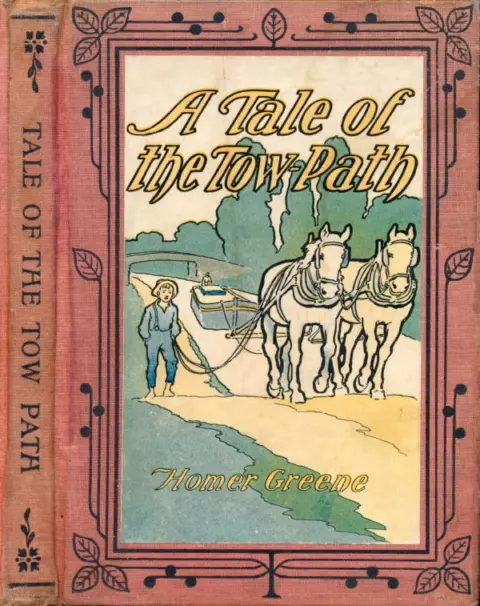
"A Tale of the Tow-Path" by Homer Greene is a novel written in the late 19th century. The story centers around a fourteen-year-old boy named Joe Gaston, who is struggling with feelings of rebellion and frustration towards his strict father. After a severe punishment for disobeying his father's commands and sneaking off to go fishing, Joe makes a rash decision to run away from home, setting off an adventure filled with challenges and self-discovery. The opening portion of the book introduces Joe as he grumbles about the hard labor of hoeing corn and dreams of the summer activities he wishes he could partake in instead. After sneaking away for a fishing trip, he is caught by his father, leading to a punishment that leaves him feeling hurt and resentful. This encounter plants the seed for Joe's decision to flee from home, aiming to reclaim his freedom. The narrative quickly unfolds into a poignant portrayal of his internal conflict as he grapples with the consequences of his disobedience and the love for his family, hinting at the trials he will face on his journey.
Introduction adapted from the source catalogue; source summaries may be automatically generated.
Free to read · English · 18,169 words · No account needed
MAKE TIME FOR A GOOD BOOK
On by default. Untick to stop anonymous reading totals. Each page counts after 10 seconds in view. How this works.
Anonymous counting is on unless you have switched it off.
“I thought,” he stammered, “that I’d come down and see--and see if--if the fish was biting to-day--”
“Well,” said his father, grimly, “are they biting?”
“They’ve bit first-rate,” responded the boy, quickly. “I’ve got fourteen in this little puddle here.”
“Throw them back into the pond,” commanded Mr. Gaston.
Joe bent over, and taking the fish one by one from the little pool of water where he had placed them, he tossed them lightly into the lake. He came to one that, badly wounded, was floating on its side.
“’Taint any use throwing that one back,” he said. “It’s--”
“Throw it back!” was the stern command.
Joe threw it back. When this task was completed, Mr. Gaston said,--
“Have you got your knife in your pocket, Joseph?”
“Yes, sir.”
“Cut me a whip, then,--a beech one; you’ll find a good one on that
sapling.”
Joe took his knife and cut from the sapling indicated a long, slender branch. He trimmed it and gave it to his father. He well knew the use to which it was to be put; and although his spirit rebelled, though he felt that he did not really deserve the punishment, he obeyed without a word.
“Joseph,” said his father, “do you remember my warning you last week not to go fishing again without my permission, and my telling you that if you did, I should whip you?”
“Yes, sir.”
“Well, I suppose you expect me to keep my word?”
Joe said nothing.
Mr. Gaston stood for another moment in anxious thought. He did not wish to whip the boy, surely. Though he was outwardly a cold man, he had all a father’s affection for Joe; but would he not fail of his duty if he did not punish him for his disobedience?
“Joseph,” he said, “can you think of any better remedy than whipping?”
“Yes, sir.”
“What is it?”
“Well, if you’d just let me go fishing once in a while,--say Saturday afternoons,--I’d never think of running away to go,--never.”
“That is, if I allow you to do what you choose, you won’t be disobeying me when you do it? Is that the idea?”
“Yes, sir, something like that.”
Joe felt that there was a difference, however, but he could not at that moment explain it. Besides, he wished to take the opportunity to air other grievances, of which heretofore he had never ventured to speak.
Your reading position is saved on this browser. Take it to another device with a library code. Reading pages adapt to text, rather than matching a printed edition.
Homer Greene

Homer Greene

Homer Greene
Homer Greene
BEHIND THE BOOK
This eBook is for the use of anyone anywhere in the United States and most other parts of the world at no cost and with almost no restrictions whatsoever. You may copy it, give it away or re-use it under the terms of the Project Gutenberg License included with this eBook or online at www.gutenberg.org. If you are not located in the United States, you will have to check the laws of the country where you are located before using this eBook. Read the source licence.
The original source file, including credits and licence, is retained by this library. Request an original-format copy at no charge. Please include the book title and Project Gutenberg identifier #46172.
KEEP YOUR CURIOSITY GOING
Coulson Kernahan

Maurice Baring
Frances Wright
Cécile Tormay

Frederic Jesup Stimson

W. H. P. (William Henry Pope) Jarvis