
The unhallowed harvest
Homer Greene
THE CLASSIC COLLECTION · 1892
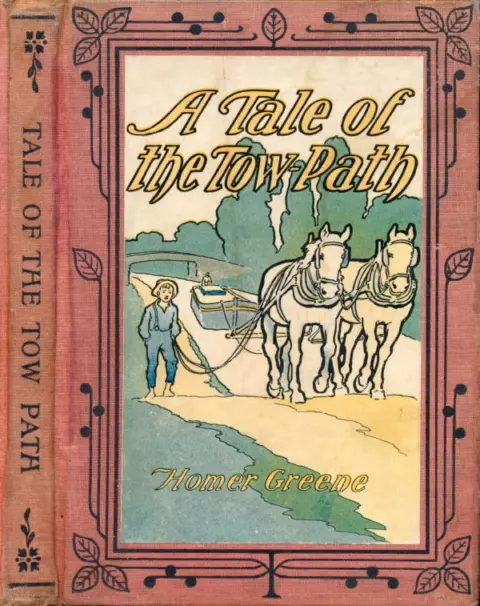
"A Tale of the Tow-Path" by Homer Greene is a novel written in the late 19th century. The story centers around a fourteen-year-old boy named Joe Gaston, who is struggling with feelings of rebellion and frustration towards his strict father. After a severe punishment for disobeying his father's commands and sneaking off to go fishing, Joe makes a rash decision to run away from home, setting off an adventure filled with challenges and self-discovery. The opening portion of the book introduces Joe as he grumbles about the hard labor of hoeing corn and dreams of the summer activities he wishes he could partake in instead. After sneaking away for a fishing trip, he is caught by his father, leading to a punishment that leaves him feeling hurt and resentful. This encounter plants the seed for Joe's decision to flee from home, aiming to reclaim his freedom. The narrative quickly unfolds into a poignant portrayal of his internal conflict as he grapples with the consequences of his disobedience and the love for his family, hinting at the trials he will face on his journey.
Introduction adapted from the source catalogue; source summaries may be automatically generated.
Free to read · English · 18,169 words · No account needed
MAKE TIME FOR A GOOD BOOK
On by default. Untick to stop anonymous reading totals. Each page counts after 10 seconds in view. How this works.
Anonymous counting is on unless you have switched it off.
“Enough! W’y, five dollars was my wages for the roun’ trip, an’ another feller I knew was to have six; only we didn’t neither of us git no money. Oh, he’s a bad man, he is; you better look out fer ’im.”
The boy rose awkwardly, as if to go.
“Well,” said Joe, anxiously, “I’ve hired out to him now, you know. What would you do about it if you was in my place?”
The big boy sat down again more awkwardly, if possible, than he had
risen.
“I’ll tell ye jest what I would do,” he began earnestly.
But he never told what it was, and Joe never had the benefit of his advice; for at that moment the bony figure of Captain Bill appeared at the corner of the shed.
The jaw of the large boy dropped suddenly, and jumping up from the box he made his escape to the tow-path.
“You’d better git!” shouted the man angrily after him. “What’d he say to ye?” he demanded, turning to Joe.
“He said,” stammered Joe, “he said that he used to work for you.”
“Did ’e say I used to lick ’im an’ kick ’im, an’ try to knock some sense into ’im?”
“Why, yes; something like that.”
“Well, I did, an’ I’ll do the same to you ef ye don’t ’ten’ closer to business. Come! Git out there to them horses! See w’ere they’re a-goin’! Jest look at that tow-line!”
The man’s look and manner were so fierce that Joe dared not even reply.
He hurried out to his disagreeable task with a sinking heart, and began to draw up the tow-line, which had slipped under the boat, and which, after much scolding on Captain Bill’s part, was straightened out.
The boat was “locked through” at last, and not long after Blixey called up that dinner was ready. The captain ate first, while Blixey minded the tiller. Then Blixey ate, and afterward relieved Joe on the tow-path.
There was not much left when the boy reached the table,--not nearly enough to satisfy his hunger. But Captain Bill stood at the rudder-post looking fiercely down the hatchway at him, and when he had eaten what was on the table he dared not ask for more.
“Wash them dishes!” ordered the captain.
Joe washed the dishes, put them away on the shelves, and then went up on deck. The light rain of the morning had settled into a steady downpour, and the boat was drenched.
“Here!” said Captain Bill, “you come here. Now take a-holt o’ this tiller, an’ push it as I tell ye to.”
Your reading position is saved on this browser. Take it to another device with a library code. Reading pages adapt to text, rather than matching a printed edition.
Homer Greene

Homer Greene

Homer Greene
Homer Greene
BEHIND THE BOOK
This eBook is for the use of anyone anywhere in the United States and most other parts of the world at no cost and with almost no restrictions whatsoever. You may copy it, give it away or re-use it under the terms of the Project Gutenberg License included with this eBook or online at www.gutenberg.org. If you are not located in the United States, you will have to check the laws of the country where you are located before using this eBook. Read the source licence.
The original source file, including credits and licence, is retained by this library. Request an original-format copy at no charge. Please include the book title and Project Gutenberg identifier #46172.
KEEP YOUR CURIOSITY GOING
Coulson Kernahan

Maurice Baring
Frances Wright
Cécile Tormay

Frederic Jesup Stimson

W. H. P. (William Henry Pope) Jarvis