
The unhallowed harvest
Homer Greene
THE CLASSIC COLLECTION · 1892
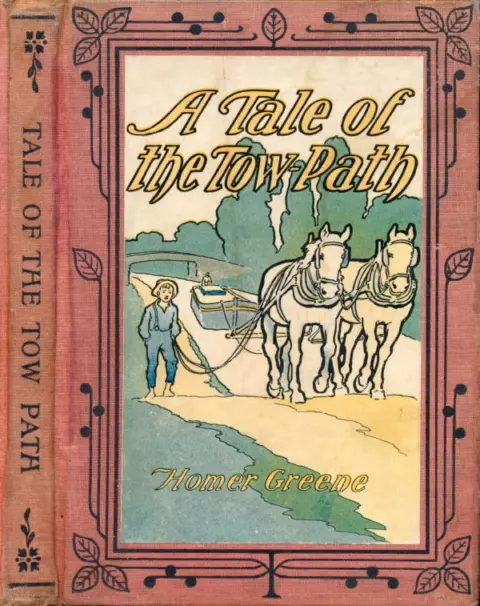
"A Tale of the Tow-Path" by Homer Greene is a novel written in the late 19th century. The story centers around a fourteen-year-old boy named Joe Gaston, who is struggling with feelings of rebellion and frustration towards his strict father. After a severe punishment for disobeying his father's commands and sneaking off to go fishing, Joe makes a rash decision to run away from home, setting off an adventure filled with challenges and self-discovery. The opening portion of the book introduces Joe as he grumbles about the hard labor of hoeing corn and dreams of the summer activities he wishes he could partake in instead. After sneaking away for a fishing trip, he is caught by his father, leading to a punishment that leaves him feeling hurt and resentful. This encounter plants the seed for Joe's decision to flee from home, aiming to reclaim his freedom. The narrative quickly unfolds into a poignant portrayal of his internal conflict as he grapples with the consequences of his disobedience and the love for his family, hinting at the trials he will face on his journey.
Introduction adapted from the source catalogue; source summaries may be automatically generated.
Free to read · English · 18,169 words · No account needed
MAKE TIME FOR A GOOD BOOK
On by default. Untick to stop anonymous reading totals. Each page counts after 10 seconds in view. How this works.
Anonymous counting is on unless you have switched it off.
“Oh, dear me!” exclaimed Mrs. Gaston, in another fright.
“Jennie,” said Mr. Gaston, sternly, “come right out. What does this
mean?”
Poor Jennie, her eyes red with weeping and with anguish written all over her tear-marked face, rose from her seat on an old chest, and came into the light of the hall.
She began to sob again as though her heart would break.
“What does this mean?” repeated her father.
“N--nothing,” sobbed Jennie, “only I--I--”
“See here!” exclaimed her father, “did you know that Joe had gone away?”
“I--I was afraid he had.”
“Did you know he intended to go?” asked her father, sternly.
“Why, he--he told me yesterday that he--was--”
“Going to run away?”
“Ye--yes.”
“O Jennie!” exclaimed her mother, “why didn’t you tell us as soon as you knew it, so that we might stop him?”
“He made--made me promise not to! I couldn’t help it.”
Little by little, in answer to repeated questions, the narration broken by many sobs, the child gave the story of the previous day’s interview with Joe.
“Jennie,” said Mr. Gaston, finally, “have you seen Joe this morning?
Answer me truly.”
“Ye--yes, Father.”
“Where?”
“Here, in the hall.”
“At what hour?”
“I don’t--don’t know. It was before daylight. He was just starting. I bade him good-by, and went back into my room, and he went on downstairs.”
Jennie was lavish of her information this time. The questions were getting dangerously near a point she dreaded, and she hoped there would be no more of them.
Alas! The very next question shook the foundation of her guilty knowledge of Joe’s apparent crime.
“Jennie,” asked her father, “did you see Joe this morning after he left
the house?”
“Yes, Father; I looked out o’ the window, an’ saw him go down the
path.”
“Which way did he go when he got to the road?” asked her mother,
eagerly.
“He--he went off that way,” replied Jennie, faintly, “east.”
“He went east, Father!” exclaimed Mrs. Gaston,--“east toward the mountains, not west toward the river. It will be easier to find him, you know. And he didn’t take the horse; you see he didn’t take Charlie!”
“Wait,” said Mr. Gaston, sternly. “Jennie, tell us the whole story. Do you mean to say that you saw Joe go down the path and out at the gate, and walk away toward the east?”
Half-unconsciously she made a final attempt to save Joe.
“No, Father, he turned around and came back up the path toward the
house.”
The mother asked no more questions. She instinctively felt that her worst fears were about to be realized.
Your reading position is saved on this browser. Take it to another device with a library code. Reading pages adapt to text, rather than matching a printed edition.
Homer Greene

Homer Greene

Homer Greene
Homer Greene
BEHIND THE BOOK
This eBook is for the use of anyone anywhere in the United States and most other parts of the world at no cost and with almost no restrictions whatsoever. You may copy it, give it away or re-use it under the terms of the Project Gutenberg License included with this eBook or online at www.gutenberg.org. If you are not located in the United States, you will have to check the laws of the country where you are located before using this eBook. Read the source licence.
The original source file, including credits and licence, is retained by this library. Request an original-format copy at no charge. Please include the book title and Project Gutenberg identifier #46172.
KEEP YOUR CURIOSITY GOING
Coulson Kernahan

Maurice Baring
Frances Wright
Cécile Tormay

Frederic Jesup Stimson

W. H. P. (William Henry Pope) Jarvis