
The unhallowed harvest
Homer Greene
THE CLASSIC COLLECTION · 1892
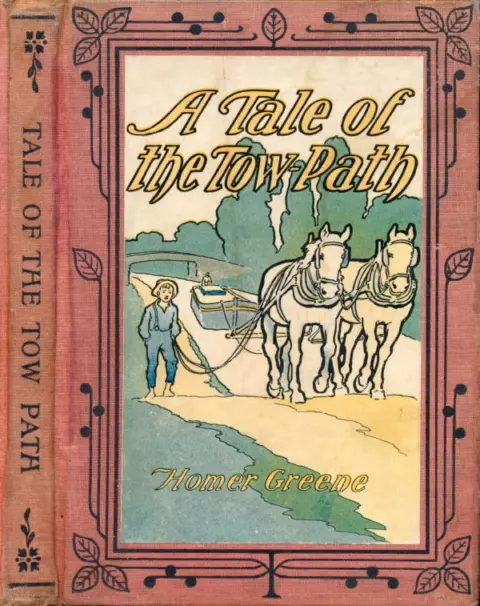
"A Tale of the Tow-Path" by Homer Greene is a novel written in the late 19th century. The story centers around a fourteen-year-old boy named Joe Gaston, who is struggling with feelings of rebellion and frustration towards his strict father. After a severe punishment for disobeying his father's commands and sneaking off to go fishing, Joe makes a rash decision to run away from home, setting off an adventure filled with challenges and self-discovery. The opening portion of the book introduces Joe as he grumbles about the hard labor of hoeing corn and dreams of the summer activities he wishes he could partake in instead. After sneaking away for a fishing trip, he is caught by his father, leading to a punishment that leaves him feeling hurt and resentful. This encounter plants the seed for Joe's decision to flee from home, aiming to reclaim his freedom. The narrative quickly unfolds into a poignant portrayal of his internal conflict as he grapples with the consequences of his disobedience and the love for his family, hinting at the trials he will face on his journey.
Introduction adapted from the source catalogue; source summaries may be automatically generated.
Free to read · English · 18,169 words · No account needed
MAKE TIME FOR A GOOD BOOK
On by default. Untick to stop anonymous reading totals. Each page counts after 10 seconds in view. How this works.
Anonymous counting is on unless you have switched it off.
“Who’s gone?” questioned Mr. Gaston, dazed by his wife’s words and manner. “What is the matter with everybody this morning?”
“Joe! Joe’s gone! Follow him, Father, do, and bring him back! Take Charlie and follow him at once. He can’t be far! Take Charlie and--Oh! Charlie’s gone, too--they’ve gone, they’ve gone--”
“Together!” said Mr. Gaston, sinking into a chair, and staring across the table at his wife, who was already seated and silent, dumb with the revelation of what appeared to be both mystery and crime.
The hired man, after witnessing for a moment the agony apparent on the faces of both father and mother, opened the door softly and went out.
Mrs. Gaston was the first to recover her voice.
“Father,” she said, “do you think Joe took the horse?”
“It looks very much like it,” he said. “They’re both gone.”
“Yes; but they may not have gone together, after all. Or if they have gone together, perhaps Joe had some errand that we don’t know about, and will come back soon. Maybe he hasn’t gone at all, but is somewhere about the place now. Don’t let’s accuse him before we know!”
“You are right; we’ll find the proof first.”
Mr. Gaston went to the door and called the hired man.
“Ralph,” he said, “don’t say anything for the present about this. We think some mistake has been made. But you may just make a quiet search for the horse around the farm and the neighborhood, and let me know if you find any trace of him.
“Now,” he continued, turning back into the house, “we will search for evidence. Let us go first to Joe’s room and see what we can find there.”
Together the father and mother mounted the stairs to the little east
room, and looked about.
On a stand in the corner Mrs. Gaston discovered something that, in her former hurried search, had escaped her notice. It was a note in Joe’s handwriting, written carefully in pencil, and it read as follows:
DEAR MOTHER,--I am going away. Father is too hard on me. I will come back to see you when I am twenty-one if Father will let me. Forgive me for making you feel bad, and for being an ungrateful boy. Good-by,
She read the note, handed it to her husband, and, sinking into a chair,
burst into tears.
When Mr. Gaston had read it he went to the open window and stood for
many minutes, looking away, thoughtfully and sternly, to the distant
hills.
Your reading position is saved on this browser. Take it to another device with a library code. Reading pages adapt to text, rather than matching a printed edition.
Homer Greene

Homer Greene

Homer Greene
Homer Greene
BEHIND THE BOOK
This eBook is for the use of anyone anywhere in the United States and most other parts of the world at no cost and with almost no restrictions whatsoever. You may copy it, give it away or re-use it under the terms of the Project Gutenberg License included with this eBook or online at www.gutenberg.org. If you are not located in the United States, you will have to check the laws of the country where you are located before using this eBook. Read the source licence.
The original source file, including credits and licence, is retained by this library. Request an original-format copy at no charge. Please include the book title and Project Gutenberg identifier #46172.
KEEP YOUR CURIOSITY GOING
Coulson Kernahan

Maurice Baring
Frances Wright
Cécile Tormay

Frederic Jesup Stimson

W. H. P. (William Henry Pope) Jarvis