The Wonderful Year
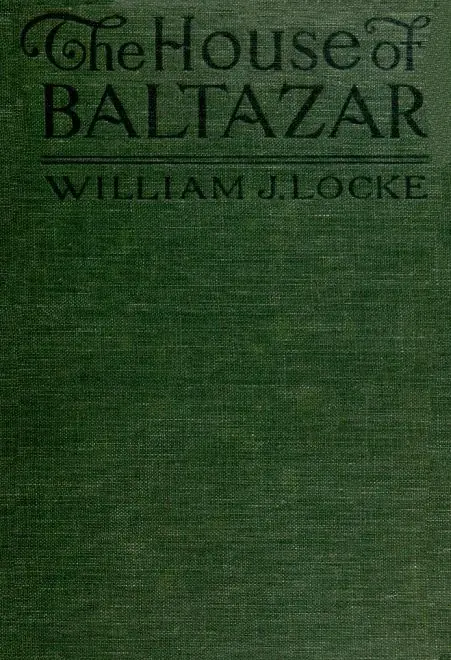
William John Locke
THE CLASSIC COLLECTION · 1908
"A Study In Shadows" by William John Locke is a novel written in the early 20th century. The story introduces Felicia Graves, a young English woman grappling with her identity and feelings of isolation while residing in the dreary Pension Boccard in Geneva. Surrounded by a diverse group of lonely women, Felicia's sheltered worldview is challenged as she confronts the complexities and sorrows of their lives. At the start of the book, Felicia is portrayed as a naive girl, having recently lost her parents and sent to live in the Pension Boccard by her well-meaning relatives. She becomes intrigued and alarmed by the six women who share her table, each of whom possesses tales of loneliness and past disappointments. Felicia's interactions reveal her initial ignorance of darker aspects of life, her yearning for connection, and a burgeoning friendship with Mrs. Stapleton, an older widow who understands the challenges of life's failures. As the setting shifts to the expectations of summer, new dynamics emerge with the anticipation of Raine Chetwynd, the old professor’s son, hinting at future complexities in Felicia's emotional journey.
Introduction adapted from the source catalogue; source summaries may be automatically generated.
Free to read · English · 47,784 words · No account needed
MAKE TIME FOR A GOOD BOOK
On by default. Untick to stop anonymous reading totals. Each page counts after 10 seconds in view. How this works.
Anonymous counting is on unless you have switched it off.
At last he grew tired, however, and suggested to Hockmaster the reasonableness of retiring. Besides, the increasing excitement of the American led him to reflect, for the first time, upon the quantity of drink that he had consumed.
“I guess I'm going to clear out all these boys,” replied Hockmaster.
“In that case,” said Raine, rising, “I'm going home.”
The other caught him by his coat.
“Half an hour more.”
“No. I have had enough. So have you.”
“Just the end of this new bank, then.”
The croupier was crying a new bank--putting it up to auction.
“La banque est aux enchères. Combien la banque?”
“I'll wait till you have had just one stake,” said Raine, by way of
compromise.
Bids were made for the bank. Ten louis, twenty louis, thirty.
“Fifty,” cried Hockmaster, suddenly, with his elbows on the table. Raine clapped him on the shoulder.
“That's not in the bargain.”
“A hundred,” cried a fat German at the end of the other tableau, who had been losing persistently.
“You wait if you want to see fun,” said Hockmaster. “Two hundred.”
Murmurs began to arise. Play seldom ran so high in the cercle. It was
too much.
“Assez, assez,” growled the Genevese citizens.
But the rest of the table was athrill with excitement.
“Two hundred and fifty,” cried the German.
“Four hundred,” said Hockmaster.
“Five!” screamed the German.
“The gentleman can have that bank,” drawled Hockmaster. “And I'll go
banco.”
Which means that he would play one hand against the new banker for the whole amount of the bank--£400.
There was a death-like silence. The German, looking pallid and flabby, took his seat. The stakes were deposited on the table. The croupier placed the fresh packs on the rest before the new banker. With trembling fingers the German slipped the two cards apiece to Hockmaster and himself. The American allowed his cards to remain in front of him for a moment as he looked up at Raine, who was standing behind him, also under the spell of the general excitement.
“If I lose this, I take the next tramcar back to Chicago.”
“Take up your cards,” grumbled an impatient voice.
Hockmaster picked them up. They were a 6 and a 4, which making 10, according to the principles of the game where tens and multiples of ten count as nothing, were valueless.
“Une carte?” asked the German.
“Yes.”
Your reading position is saved on this browser. Take it to another device with a library code. Reading pages adapt to text, rather than matching a printed edition.
William John Locke
William John Locke
William John Locke
William John Locke
BEHIND THE BOOK
This eBook is for the use of anyone anywhere in the United States and most other parts of the world at no cost and with almost no restrictions whatsoever. You may copy it, give it away or re-use it under the terms of the Project Gutenberg License included with this eBook or online at www.gutenberg.org. If you are not located in the United States, you will have to check the laws of the country where you are located before using this eBook. Read the source licence.
The original source file, including credits and licence, is retained by this library. Request an original-format copy at no charge. Please include the book title and Project Gutenberg identifier #53995.
KEEP YOUR CURIOSITY GOING
Coulson Kernahan

Maurice Baring
Frances Wright
Cécile Tormay

Frederic Jesup Stimson

W. H. P. (William Henry Pope) Jarvis