The Wonderful Year
William John Locke
THE CLASSIC COLLECTION · 1908
"A Study In Shadows" by William John Locke is a novel written in the early 20th century. The story introduces Felicia Graves, a young English woman grappling with her identity and feelings of isolation while residing in the dreary Pension Boccard in Geneva. Surrounded by a diverse group of lonely women, Felicia's sheltered worldview is challenged as she confronts the complexities and sorrows of their lives. At the start of the book, Felicia is portrayed as a naive girl, having recently lost her parents and sent to live in the Pension Boccard by her well-meaning relatives. She becomes intrigued and alarmed by the six women who share her table, each of whom possesses tales of loneliness and past disappointments. Felicia's interactions reveal her initial ignorance of darker aspects of life, her yearning for connection, and a burgeoning friendship with Mrs. Stapleton, an older widow who understands the challenges of life's failures. As the setting shifts to the expectations of summer, new dynamics emerge with the anticipation of Raine Chetwynd, the old professor’s son, hinting at future complexities in Felicia's emotional journey.
Introduction adapted from the source catalogue; source summaries may be automatically generated.
Free to read · English · 47,784 words · No account needed
MAKE TIME FOR A GOOD BOOK
On by default. Untick to stop anonymous reading totals. Each page counts after 10 seconds in view. How this works.
Anonymous counting is on unless you have switched it off.
“As God hears me,” said Raine, with the love in his voice. “To me you are ever the purest and the noblest and tenderest of women. You love me with a woman's love and I with a man's; and we will love soul to soul, dear, till we die. Our love, dear, is as sacred to me as the ghost I buried in it a few weeks ago. All this will be like a troubled dream--all the past, darling, in both our lives as shadows. Thank God!”
He put his arms suddenly round her, drew her to him, and kissed her. For both of them the world stood still, and the commonplace gardens were Eden, and the old peasant nodded his weatherbeaten head, and the mongrel and the dusty child looked on unastonished, like the beasts when the first apple was eaten.
Raine went, an hour or so after, to the Hôtel National and found Hockmaster outside, cultivating a dinner appetite with sherry and bitters. He jumped up when he perceived his visitor, and came towards him.
“Hello, Chetwynd! This is real friendly of you. Come and sit down--join
me.”
Raine accepted the seat, but declined the sherry.
“Do you mind my asking you a very intimate question?” asked Raine.
“As many as you like,” said Hockmaster, with naïve effusion. “I have given you a sort of right to be familiar. Of course, whether I answer it is a matter for my discretion.”
“Precisely. But I hope you will. Are your feelings very deeply engaged in this affair with Mrs. Stapleton?”
“Sir,” said Hockmaster. “I've repaired a wrong that has set at rest a damned uneasy conscience.”
“From which I gather you have obeyed your conscience rather than your
heart,” said Raine.
“I am going to be married,” replied Hockmaster, between the first puffs of a cigar he was lighting. “Perhaps you may not know that. So I guess I'd better fall back upon discretion. It is best in affairs between man and wife.”
“Yes, but suppose it was broken off?”
“What? My marriage?”
He stretched himself out in a comfortable attitude, his hands behind his head, and regarded Raine placidly.
“What sort of interest can the concerns of a worm like me have for you?”
“Every interest in the world,” replied Raine, flushing. “If it's merely a question of conscience on your part, I have no scruple in asking you to release Mrs. Stapleton from her engagement.”
“Did she send you?”
“Yes.”
“Tell you any reason?”
Hockmaster's tone irritated Raine. He rose quickly, thrusting his straw hat to the back of his head, and stood over the recumbent American, with his hands on his hips.
Your reading position is saved on this browser. Take it to another device with a library code. Reading pages adapt to text, rather than matching a printed edition.
William John Locke
William John Locke
William John Locke
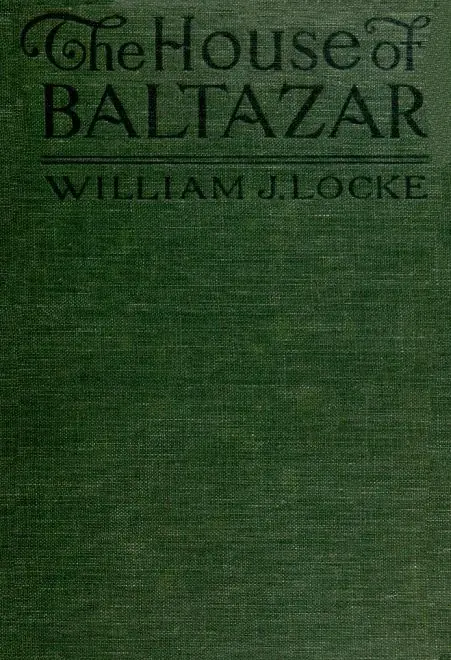
William John Locke
BEHIND THE BOOK
This eBook is for the use of anyone anywhere in the United States and most other parts of the world at no cost and with almost no restrictions whatsoever. You may copy it, give it away or re-use it under the terms of the Project Gutenberg License included with this eBook or online at www.gutenberg.org. If you are not located in the United States, you will have to check the laws of the country where you are located before using this eBook. Read the source licence.
The original source file, including credits and licence, is retained by this library. Request an original-format copy at no charge. Please include the book title and Project Gutenberg identifier #53995.
KEEP YOUR CURIOSITY GOING
Coulson Kernahan

Maurice Baring
Frances Wright
Cécile Tormay

Frederic Jesup Stimson

W. H. P. (William Henry Pope) Jarvis