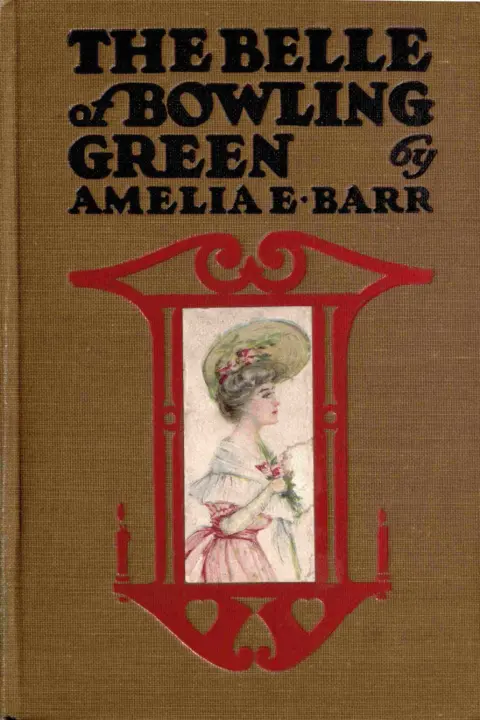
The Belle of Bowling Green
Amelia E. Barr
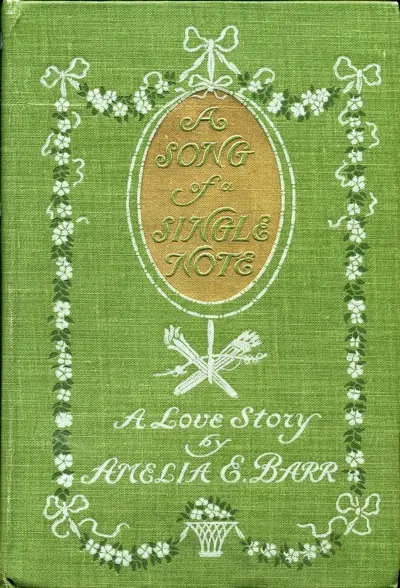
THE CLASSIC COLLECTION · 1902
"A Song of a Single Note: A Love Story" by Amelia E. Barr is a historical novel written in the early 20th century. Set during the tumultuous times of the American Revolutionary War, it emphasizes themes of love, loyalty, and the challenges faced in a divided society. The narrative revolves around the Semple family and their interactions with various characters, including the young Maria Semple, who is returning home from Boston to her grandparents amidst political strife. The opening of the novel introduces readers to an already beleaguered New York under British occupation, painting a vivid picture of the city's desolation contrasted with its natural beauty. Elder Semple, who receives a letter from his son, reflects on the impacts of war on their lives, while the arrival of Maria marks a significant change for the family. We are introduced to various community dynamics, including the tension between royalists and rebels, establishing a rich backdrop for the unfolding story. This portion sets the stage for a complex exploration of personal and political relationships, intertwined with the hopes and dilemmas of a young girl coming of age amidst chaos.
Introduction adapted from the source catalogue; source summaries may be automatically generated.
Free to read · English · 89,767 words · No account needed
MAKE TIME FOR A GOOD BOOK
On by default. Untick to stop anonymous reading totals. Each page counts after 10 seconds in view. How this works.
Anonymous counting is on unless you have switched it off.
"That is not very far from the truth," said Neil. "In the first year of the war the rebel privateers took two hundred and fifty West Indiamen, valued at nearly two millions of pounds, and Mr. Morris complained that the Eastern states cared for nothing but privateering."
"Weel, Morris caught the fever himself," said the Elder. "I have been told he made nearly four hundred thousand dollars in the worst year the rebel army ever had."
"Do the rebels call that patriotism?" asked Macpherson.
"Yes," answered the Elder, "from a Whig point of view it is vera patriotic; what do you think, Neil?"
"If I was a Whig," answered Neil, "I should certainly own privateers. Without considering the personal advantage, privateering brings great riches into the country; it impoverishes the enemy, and it adds enormously to the popularity of the war. The men who have hitherto gone to the Arctic seas for whales, find more wealthy and congenial work in capturing English ships."
"And when men get money by wholesale high-seas robbery----"
"Privateering, Madame," corrected Macpherson.
"Weel, weel, give it any name you like--what I want to say is, that
money got easy goes easy."
"In that, Madame, you are correct. While we were in Philadelphia that city was the scene of the maddest luxury. While the rebels were begging money from France to feed their starving army at Valley Forge, every kind of luxury and extravagance ran riot in Philadelphia. At one entertainment there was eight hundred pounds spent in pastry alone."
"Stop, Macpherson!" cried Madame, "I will not hear tell o' such wickedness," and she rose with the words, and the gentlemen went into the parlor to continue their conversation.
Madame had been pleased with her granddaughter's behavior. She had not tittered, nor been vulgarly shy or affected, nor had she intruded her opinions or feelings among those of her elders; and yet her self-possession, and her expressive face had been full of that charm which showed her to be an interested and a comprehending listener. Now, however, Madame wished her to talk, and she was annoyed when she did not do so. It was only natural that she should express some interest in the bright young soldier, and her silence concerning him Madame regarded as assumed indifference. At last she condescended to the leading question:
"What do you think o' Captain Macpherson, Maria?"
"I do not know, grandmother."
"He is a very handsome lad. It did my heart good to see his bright
face."
"His face is covered with freckles."
"Freckles! Why not? He has been brought up in the wind and the sunshine, and not in a boarding-school, or a lady's parlor."
Your reading position is saved on this browser. Take it to another device with a library code. Reading pages adapt to text, rather than matching a printed edition.
Amelia E. Barr
Amelia E. Barr
Amelia E. Barr

Amelia E. Barr
BEHIND THE BOOK
This eBook is for the use of anyone anywhere in the United States and most other parts of the world at no cost and with almost no restrictions whatsoever. You may copy it, give it away or re-use it under the terms of the Project Gutenberg License included with this eBook or online at www.gutenberg.org. If you are not located in the United States, you will have to check the laws of the country where you are located before using this eBook. Read the source licence.
The original source file, including credits and licence, is retained by this library. Request an original-format copy at no charge. Please include the book title and Project Gutenberg identifier #35358.
KEEP YOUR CURIOSITY GOING
Cécile Tormay

Moritz Busch
Coulson Kernahan
John L. Ransom

Maurice Baring
Frances Wright