THE CLASSIC COLLECTION✦An outlaw’s diary: the CommuneCLASSIC FREE BOOKS
An outlaw’s diary: the Commune
Cécile Tormay
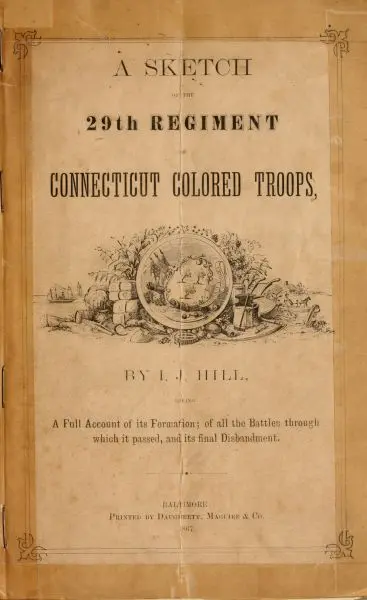
THE CLASSIC COLLECTION · 1867
"A Sketch of the 29th Regiment of Connecticut Colored Troops" by Isaac J. Hill is a historical account written in the late 19th century. The work documents the formation, battles, and experiences of the 29th Connecticut Colored Regiment during the Civil War, focusing on the trials and triumphs of the soldiers involved. It highlights the significant challenges faced by African American troops as they fought for their freedom and rights. At the start of the narrative, the author introduces himself, detailing his early life and motivations for joining the regiment as a soldier and chaplain. He provides context about the regiment's recruitment process and the soldiers' emotional farewells to their loved ones before embarking on their journey from Connecticut to battlefields in the South. The beginning sets the tone for a deeply personal recounting of military life, emphasizing the tension of preparation for combat, the lack of promised bounties, and the yearning for home, thus immersing the reader in the emotional landscape of the time.
Introduction adapted from the source catalogue; source summaries may be automatically generated.
Free to read · English · 18,990 words · No account needed
MAKE TIME FOR A GOOD BOOK
On by default. Untick to stop anonymous reading totals. Each page counts after 10 seconds in view. How this works.
Anonymous counting is on unless you have switched it off.
Wednesday morning I felt better. The first sail we had seen for two days was that of a brig, which passed us this morning on our right. The sea was quite calm, but as the day wore away the wind began to rise, and 3 P.M. found me sick in the Colonel's berth. At 6 P.M. we were in sight of land, and this, the last night we spent at sea, was the hardest time we had, but joy came in the morning as we neared Hilton Head. When we came to the landing, the Colonel and Adjutant went on shore, and we waited their return. When they came aboard, the Colonel told the Captain of the Swallow that he was ordered to Beaufort, where we arrived at 10 A.M. and were received on the wharf by a large crowd of people. We disembarked the same day, which was April 16th, and marched through the main street, and went up to the camp of the New York 26th U.S.V., and encamped on the right of Beaufort. We found Beaufort a pleasant place of about five thousand inhabitants.
May 20th, 1864. Nothing of importance had occurred up to this date. I passed up the line of tents, and saw the Major in a wagon--he informed me that the Paymaster had arrived. When I made this known to the 29th Regiment the boys were much pleased, for they had not received any money since their enlistment, but soon their spirits fell when they learned they would receive only $7 per month. Company A took the lead in the dissatisfaction, it being the first company, and company B next, company K next, company C next, and so on till company D, it being the last company and the one to which I belonged. After the companies all expressed their indignation at the small sum of $7 per month, the officers called them in line and told them they would receive $16 the next pay day, and they had better take this--at the same time promising them, that in the future they should receive full pay. They did as he wished. This has been the failing with the colored race--they are always ready to comply with wrong teachings of strange gods, especially when they come from white men, and that is the reason we cannot be a united nation. I would not and did not accept of the $7 per month, and I stood entirely alone. All in my company took that sum but myself, and when I was called up my response was, if the government could not afford to pay me a soldier's wages I would peril my life and die for my country without it. When I consider the sacrifice I have made of my beloved family, and think that the general government does nothing for them, and then to insult me with the sum of $7 per month! No, as I have given my life I will become a martyr and die before I will accept that sum. But I am happy to relate that when they found there were some that felt the dignity of their manhood, the Paymaster Major endeavored to make apology to me in reference to the affair, but there was no compromise in me. I would accept nothing but $16 per month. "Well," said he, "you will get the balance next pay day." My answer was, "Whether I do or not, I will not accept of less than $16 this time." I was brought to think of the psalmist David, when he said "Many are the afflictions of the righteous, but the Lord will deliver them out of them all." Notwithstanding our troubles, on Sabbath morning, the 22d inst., my mind was very much relieved at 6 P.M. While at dress parade, the General rode along the line, and the Colonel brought the companies up in broken columns in front of the flag. At the command of the Colonel, the regiment came to "order, arms"--and at this point General Saxton dismounted, and gave me his horse. Taking off his hat he commenced some brief remarks by saying, "Boys, I have come to greet you with an order I have received that you are to be considered soldiers of the United States and receive your pay as white soldiers, and I hope you will consider yourselves men. Although your skins are dark, you have the same muscle as white men, and the same courage to fight. It is for you to get the same skill by strictly attending to your duty, not from fear of punishment, but because you are soldiers. Two years ago I came here to Beaufort and raised the first colored regiment. They were all slaves, and their masters were in the rebel army. One day a flag of truce came in from the rebel line, and the colored troops were out on picket. Before these colored men became soldiers they could not look a white man in the face, but at this time they began to feel like men. One of the so-called masters came over, and seeing his so-called slave, he exclaimed, using his own language, 'There is my negro in arms,' but the colored soldier looked him square in the face, and as I never make use of the word negro, I said to him, if he was once a slave he is free now, and God has made him so, and there is not a regiment in the department I would sooner go into the field with than the first Southern, now called the 33d United States troops." He concluded by saying, "Boys, if you ever want to make good soldiers you must look a white man straight in the face, and let him know that you are a man."
Your reading position is saved on this browser. Take it to another device with a library code. Reading pages adapt to text, rather than matching a printed edition.
BEHIND THE BOOK
This eBook is for the use of anyone anywhere in the United States and most other parts of the world at no cost and with almost no restrictions whatsoever. You may copy it, give it away or re-use it under the terms of the Project Gutenberg License included with this eBook or online at www.gutenberg.org. If you are not located in the United States, you will have to check the laws of the country where you are located before using this eBook. Read the source licence.
The original source file, including credits and licence, is retained by this library. Request an original-format copy at no charge. Please include the book title and Project Gutenberg identifier #60700.
KEEP YOUR CURIOSITY GOING
Cécile Tormay

Moritz Busch
John L. Ransom
Frances Wright
Cécile Tormay

Mabel Potter Daggett