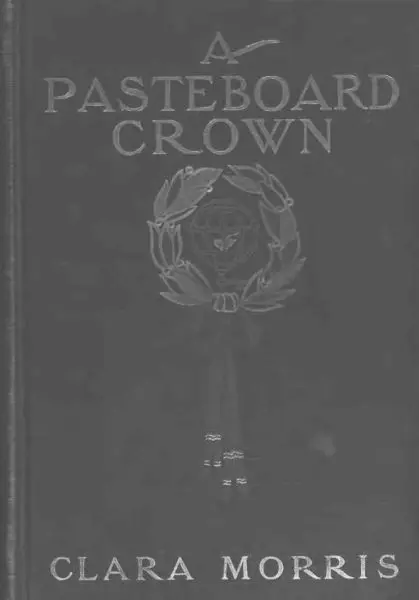
A Pasteboard Crown: A Story of the New York Stage
Clara Morris
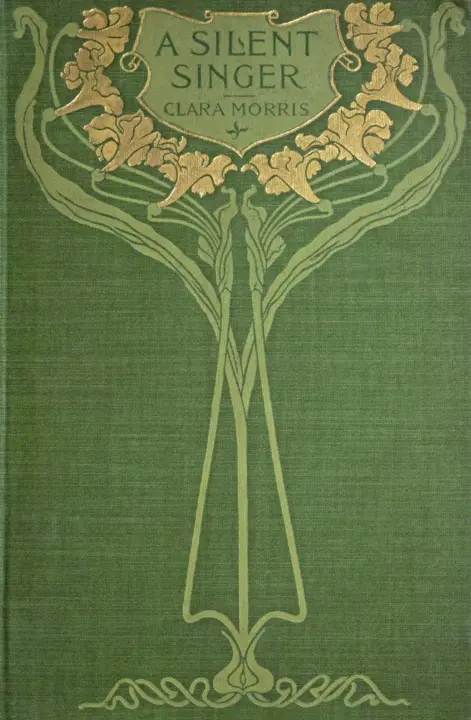
THE CLASSIC COLLECTION · 1899
"A Silent Singer" by Clara Morris is a novel written in the late 19th century. The story follows the poignant journey of a young girl who forms a deep bond with Linda Hyler, the minister's ill-fated daughter whose aspirations are stifled by her family's circumstances and her father's jealousy. As Linda’s health declines, the narrative explores themes of love, loss, and the struggles of those living on the margins of society. The opening of the novel introduces us to the narrator, who arrives at the Hyler household, carrying a mix of exhaustion and youthful curiosity. Through her innocent observations, we see the shadows of poverty and unfulfilled dreams that haunt Linda's family, particularly her father, Reverend Hyler. Linda, despite losing her voice, captures the narrator's heart with her beauty and spirit, and their relationship forms a central focus of the early chapters. As the narrator learns more about Linda's life and the burdens she carries, the reader is drawn into a world steeped in both tenderness and tragedy, setting the stage for the unfolding drama of their intertwined fates.
Introduction adapted from the source catalogue; source summaries may be automatically generated.
Free to read · English · 75,955 words · No account needed
MAKE TIME FOR A GOOD BOOK
On by default. Untick to stop anonymous reading totals. Each page counts after 10 seconds in view. How this works.
Anonymous counting is on unless you have switched it off.
“But trouble jest follow’d right along after, yes, and pretty close after. ‘Mrs. Myra Worden,’ that’s what her cards said then; they used to say Mrs. Philip Worden--but when the black went on the ‘Philip’ came off. Mother said that she never heard her speak that name but jest once, after the time she stood laughin’ like mad over his last letter. Some one told Mrs. Worden that some one else had said that ‘she had a tongue like a serpent’s,’ and mother says her eyes give a flash and she throw’d up her head and she said almost wild-like: ‘I swore me an oath and I’m keepin’ it. You should have waited; my nails are long now, and sharp; already I have a serpent’s tongue. I might yet learn to cuff, and curse and tear you with the rest! Ah! you should have waited, Philip!’ My Suz! then came the trouble. Didn’t the biggest man, most, we had in town up and blow out his miserable, dishonest, old brains, because he had first lost his own money, and then had thrown away a hull lot of Myra Worden’s after it--expectin’ to get both back, he said. It was an awful loss. She didn’t say anythin’, hardly, but she shook her head a bit, while she watched the young ones playing; she only cared for their sakes. Some one said to her, ‘Such a disgrace, I do wonder what his family will do?’ and she says so quiet-like: ‘Get a much larger monument than is usual, and see that it’s of whitest Carrara, I suppose. That’s what’s generally done in such cases.’
“Well, she give up livin’ in that house, and give up all the carriages but jest a family affair that the children could be sent about in, and came down to Lake Street. It was a pretty house, but Lord! not like her a bit. And if you’ll believe me, that girl, that Edith of hern, cut up more monkey-shines and was madder than a hornet about it. Little Phil thought it was fine; fact was, the little devil was in the lake about half his time, but nobody liked to tell, and everybody knew the dog would take care of him anyhow. They got along all right for a while, she living for the work she could do for the poor and for the love of them children, and they for lessons and fun. My Suz! she had ’em so they could jabber French all the time they was dressin’ and until lunch, and then at that meal that Dutch woman she had, great flat-faced, stupid thing, used to pitch in and make ’em eat that meal in Dutch, or German she call’d it--though I vum! I can’t see no difference between the two. And dancin’ lessons! and, O, Lord! I can’t remember half they were studyin’ at, and so their mother let ’em have lots of play too. So one day, she’d promised to take ’em to the circus at night, and they were sure the day would be a year long; and some one invited ’em to go out on the lake for a sail, and she ups and says, ‘no.’ Well, they was mad; but she was weather-wiser than any woman I ever see, and she said to ’em, ‘No, my dearies, it’s fair now, but it’s a treacherous fairness. I dare not let you go.’ Well, after sulkin’ a bit, they asked if they might go and spend the day at Auntie Anna’s? She wasn’t their true aunt, they jest called her that, and she was nothin’ but a slave to ’em, and spoiled ’em--well, don’t talk! ‘But,’ said their mother, ‘if you go there to take tea, you will not have time to dress for the circus!’ ‘Why, then, dress us now; we’ll be careful of our things, mammy,’ said Edith, ‘and then we’ll come right from tea, by our ownselves--oh! please, mammy, yes by our ownselves, and we’ll stand on the corner over there and wave our hands and handkerchers to you for a sign for you to come to us, and then we’ll all go on up town together.’ They were jest sot on that plan. They felt it would be so big for them to come alone, those few blocks, and then to stand on the corner and make signs for her to come to them, and seein’ as she had already cross’d them once, she consented, and right away they were dressed and started off under the servant’s care to their auntie’s house for the rest of the day. When they had kissed her good-by about a dozen times--for the way they loved her jest was a caution now, I tell you--little Phil runs back and he up and said, ‘Mammy, I’ll take care of Edie--she’s the biggest, but I’m the strongest, and I’m the nearest to a man, ain’t I? So, I’ll hold her hand all the way when we’re alone, mammy, and I won’t let anybody speak to her, ’till you come down to us,’ and she kissed him again, and called him, as she often did, her ‘man-child,’ and away he went after Edie. The next time she saw the poor, little things, Phil was a keepin’ his word.
Your reading position is saved on this browser. Take it to another device with a library code. Reading pages adapt to text, rather than matching a printed edition.
BEHIND THE BOOK
This eBook is for the use of anyone anywhere in the United States and most other parts of the world at no cost and with almost no restrictions whatsoever. You may copy it, give it away or re-use it under the terms of the Project Gutenberg License included with this eBook or online at www.gutenberg.org. If you are not located in the United States, you will have to check the laws of the country where you are located before using this eBook. Read the source licence.
The original source file, including credits and licence, is retained by this library. Request an original-format copy at no charge. Please include the book title and Project Gutenberg identifier #64458.
KEEP YOUR CURIOSITY GOING
Coulson Kernahan

Maurice Baring
Frances Wright
Cécile Tormay

Frederic Jesup Stimson

W. H. P. (William Henry Pope) Jarvis