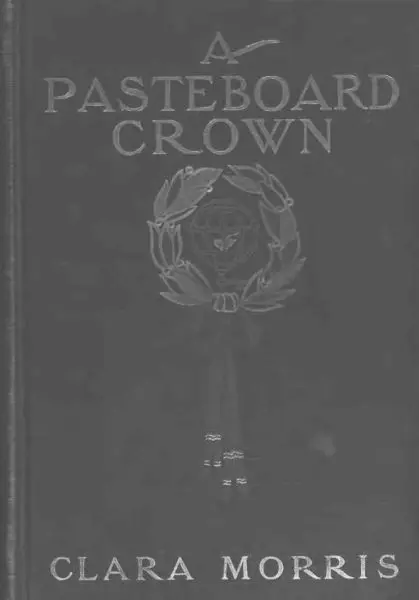
A Pasteboard Crown: A Story of the New York Stage
Clara Morris
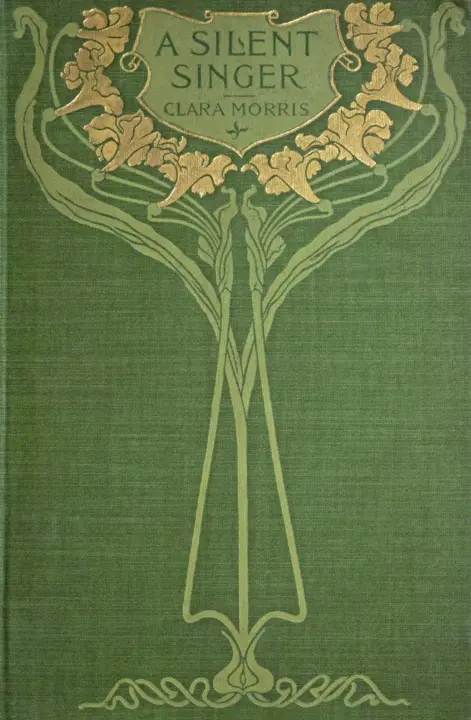
THE CLASSIC COLLECTION · 1899
"A Silent Singer" by Clara Morris is a novel written in the late 19th century. The story follows the poignant journey of a young girl who forms a deep bond with Linda Hyler, the minister's ill-fated daughter whose aspirations are stifled by her family's circumstances and her father's jealousy. As Linda’s health declines, the narrative explores themes of love, loss, and the struggles of those living on the margins of society. The opening of the novel introduces us to the narrator, who arrives at the Hyler household, carrying a mix of exhaustion and youthful curiosity. Through her innocent observations, we see the shadows of poverty and unfulfilled dreams that haunt Linda's family, particularly her father, Reverend Hyler. Linda, despite losing her voice, captures the narrator's heart with her beauty and spirit, and their relationship forms a central focus of the early chapters. As the narrator learns more about Linda's life and the burdens she carries, the reader is drawn into a world steeped in both tenderness and tragedy, setting the stage for the unfolding drama of their intertwined fates.
Introduction adapted from the source catalogue; source summaries may be automatically generated.
Free to read · English · 75,955 words · No account needed
MAKE TIME FOR A GOOD BOOK
On by default. Untick to stop anonymous reading totals. Each page counts after 10 seconds in view. How this works.
Anonymous counting is on unless you have switched it off.
And the old body did look worried and anxious. I was surprised, and I was grateful for her interest in Mrs. Worden, for whom I now had a real affection as well as a great pity.
“Oh, Mrs. Bulkley!” I cried, “don’t be uneasy; Mrs. Worden seems quite as well as usual. She works as hard as ever, too, and she is very kind to me.”
“There!” exclaimed Mrs. Bulkley, “that settles it! Myra Worden kind to anyone in her eighty-third year? She’s breaking; she’ll get the sign she’s been waiting for so long pretty soon, I reckon, poor thing!”
I simply could not help putting the question: “Do you know, Mrs. Bulkley, why Mrs. Worden hates theatres so bitterly?”
“Do I know, my Suz!--Oh, here’s the tea, and glad I am for it!”
The tea was good, and I saw by the gratified astonishment of Mary’s face that it was a treat. When the “Busy B” (as Mrs. Bulkley was generally called behind her back) had had her first cup, as a pick-me-up--a sort of green-tea cocktail--she felt better. She loosened her specs and let them slide well down her nose, so she could look at me over their tops; she planted her black alpaca elbow on the dingy table, and unlimbered, ready for conversation, while, for the first time in my life, I recognized these signs in a landlady without instantly taking flight. “Why,” she began, “it was like this: Right from the first every one said she’d throwed herself away when she took up with that great, big, pink-and-white chuckle-head, Phil Worden. But she was just plumb crazy in love with him. I suppose he must have cared a little for her at first, but mother always said he just married her out of vanity--like gals do sometimes--she being the biggest catch in town. Good looks, and money and family the hull thing! Well, anyway, he was a foolin’ her, or thought he was, before they was married a year. She knew of it in no time. Mother thought there’d be an awful rumpus, but Mrs. Worden shut herself up all afternoon alone, and walked and walked, but when supper-time come she just met him as kind and as sweet! Oh! Myra used to be sweet enough in them days, and she just talked and laughed, and he looked like a great school-boy expecting a good trouncing. Well, that blowed over, but Myra Worden was always on the watch, I reckon, after that. Mother used to say he was, somehow, afraid of her. She loved books--good Lord! the books she had; lots of ’em writ in French, too; and she first off tried to talk of ’em to him, same as to visitors, and he didn’t know a thing about ’em. Then she tried to read them to him, and mother said she didn’t know which one she felt the sorriest for, him or her; him trying to keep awake, or her trying to hide her disappointment. Well, by-and-by, she gives it all up, and, if you’ll believe me, that educated, fine-minded woman just took to readin’ out loud to him a nasty, low-down paper--I can’t just call its name now, but all about cock-fights--oh, yes! they had dog-fights and cock-fights in my time, my dear--and ring fights, and horse-races, and he’d just drink it all in, every word. She was fond of music, and he couldn’t tell one tune from another, he said; but that was just an excuse, because he hated to have to sit and listen to decent music. Common fiddling suited him well enough. He was almost stupid in behavior or sulky-like in company--proper company; but if, by chance, he was left home at night and his wife was out, he’d carry on with the servants, and sing songs, and play tricks with the cards, and imitate things--pigs gruntin’ and corks poppin’, and that like, until you’d laugh to split. In that sort of way, mother used to say, she thought he felt afraid of his wife’s finding out his real disposition, and she--why, she just followed him about with them black eyes of hers, and fair worshipped him. She was nigh tickled to death when her girl baby came into the world; yellow-headed like him. She was only like him in color, however, for of all the domineerin’ little hectoring brats I ever saw! Well, as I was saying, Mrs. Worden was the law of this town then, and it was card parties and coach parties and sleigh parties and lake moonlight parties, accordin’ to the time a year, and dinners and suppers and ‘routs’--that’s what they called ’em then, I remember--and people used to come from other places and they’d stay a week at a time, and them weeks was Phil Worden’s picnics, his two-forty-on-a-plank days, I tell you. Now, I never see nobody so dead crazy about theatres as Miss Worden was. Whenever a company came here she had the first box, and every night of her life, unless she gave a ‘rout,’ she was in that old theatre. Yes, I know it, an alley now, and only a few low variety shows go there, and no women ever enters its doors, but then it was, my Suz! it just was a fine theatre. Well, Phil was fond of the show, too, and she was awful proud of that, and it was ‘my Philip is so fond of the play,’ and ‘Mr. Worden will be at the theatre whether or no--’ Poor soul! it was so seldom they liked the same things, but Lord! even then she was deceivin’ herself. He didn’t care for no play; he just went for them dances they used to have between the acts, and the slack wire performers and that like; but he knew every man and woman behind the scenes, and knocked about with them in the daytime, and I don’t mean no slurs against you two girls now, but in them days actors was a rather common lot. The men nearly all drank too much, and, what’s worse, some of the women did, too; and well, one crowd came here for a long stay, and Phil Worden was just cock of the walk with them, and before long there was talk about one special female. She wasn’t even a leadin’ actor among ’em, just a brazen hussy who put paint an inch thick on her cheeks and daubed her mouth with a dye thing they called ‘vinegar rouge,’ because it wouldn’t come off easy, and she was poorer than Job, and all at once she had beaver bonnets and velvet pelisses and feathers and long gloves and a muff big enough for a bass drum. And because the woman was drunk oftener and oftener, and in her cups was a noisy and quarrelsome jade who would fight her best friend, and talked everything right out, all Cleveland began to wink and nod and say Phil Worden. Well, of course, Myra must have suspected, but never one cross word did she give him, nor show him the frown mother said she had on pretty often them days when he was away. But, one day, in he comes, near supper-time--even Mrs. Worden took her dinner at two o’clock them times, and people said it was all airs to have dinner so sinful late. Well, in he comes, all bunged up, a sight to see! His eye was all swelled up, and there was blood smears on his face, and his lip was hurt. Mother happened to be right there when he came in, and she looked first thing at Mrs. Worden, and she said her eyes flashed fire. She stood right in her tracks, looking in her husband’s face, and her hands were shut tight, and at last she said, and her voice cut like a knife: ‘How did you get your hurt, Mr. Worden?’ and he looked away across the room and mumbled something about ‘sky-larking with a fellow who was drunk and hit harder than he knew,’ and she, as white as death and as cold as ice, said: ‘You lie, you coward! You lie! Not even a drunken man fights with his nails! A woman did that work for you--’ and she threw open the door and pointed for him to go, but in came the two children in their gowns, with the nurse behind, to tell them both good-night. Her arm fell like a log, and she made a spring and caught him by the shoulder and turned him so the young ones couldn’t see his face, and pushed him towards her dressin’-room and said all in one moment, ‘poor daddy! has got hurted, so mammy must tell you good-night alone this time,’ and when she kissed them the boy said, ‘Sall ’ou tiss him hurt, mammy?’ and she says: ‘God knows! God knows!’ and mother said she got away with the dresses she was carryin’ and only knows that Myra nursed him faithfully till he was able to face the world again, and for her pay, one week later he left her, to follow the third-rate actress, who beat him in her drunken frenzies--like the dog he was. He left a letter for her. My mother stood, shaking like a leaf with fright, but Mrs. Worden stood like a rock and read it all out loud: ‘How he was not her equal, how she had been too generous and too kind,’ and then mother said he quite worked up there, and blamed her hard for not flying out at him when he done wrong. He said he could have stood it better if she had abused him, but she held her tongue or only spoke gently to him, and at the very end that’s what he said, ‘You should have lashed me, I could have understood that, but your tongue was not sharp enough,’ and then she stopped, my mother said, and then she read that line again, ‘your tongue was not sharp enough,’ and then, says she, with blazing eyes and white lips, ‘By God! no other man shall make that complaint of me! I’ll sharpen my tongue like a serpent’s, and adder’s poison shall lurk under my lips!’ and then suddenly she began to laugh and laughed and laughed, and while we all went a running for doctors, she laughed her way into the fever that came nigh to killin’ her.”
Your reading position is saved on this browser. Take it to another device with a library code. Reading pages adapt to text, rather than matching a printed edition.
BEHIND THE BOOK
This eBook is for the use of anyone anywhere in the United States and most other parts of the world at no cost and with almost no restrictions whatsoever. You may copy it, give it away or re-use it under the terms of the Project Gutenberg License included with this eBook or online at www.gutenberg.org. If you are not located in the United States, you will have to check the laws of the country where you are located before using this eBook. Read the source licence.
The original source file, including credits and licence, is retained by this library. Request an original-format copy at no charge. Please include the book title and Project Gutenberg identifier #64458.
KEEP YOUR CURIOSITY GOING
Coulson Kernahan

Maurice Baring
Frances Wright
Cécile Tormay

Frederic Jesup Stimson

W. H. P. (William Henry Pope) Jarvis