The Later Renaissance
David Hannay
THE CLASSIC COLLECTION · 1898
"A Short History of the Royal Navy, 1217 to 1688" by David Hannay is a historical account written in the late 19th century. The book aims to provide a popular yet accurate overview of the Royal Navy's development and its contributions to England's maritime strength over several centuries. Hannay focuses on significant events, ship design evolution, and notable figures integral to the Navy's history, rather than offering a comprehensive maritime history of England. At the start of the text, the author sets the stage for an exploration of the Royal Navy's origins, beginning with its medieval roots and emphasizing the importance of geographical location in establishing sea power. He outlines the necessary conditions that allowed England to develop a navy capable of protecting its shores and asserting dominance at sea. Hannay introduces King John as a pivotal figure who utilized naval strength to thwart invasions, showcasing the early strategic importance of a functional fleet, as demonstrated in battles such as those against the French. The opening effectively sets the tone for a detailed examination of naval warfare, organization, and technological advancements throughout the history of the Royal Navy leading up to the late 17th century.
Introduction adapted from the source catalogue; source summaries may be automatically generated.
Free to read · English · 194,912 words · No account needed
MAKE TIME FOR A GOOD BOOK
On by default. Untick to stop anonymous reading totals. Each page counts after 10 seconds in view. How this works.
Anonymous counting is on unless you have switched it off.
In spite of the ease with which Willoughby established his authority, the Barbadians were not undivided. There was a Parliamentary party among them. Some of the leaders of this section of the inhabitants thought it more prudent to desert the island on the arrival of Lord Willoughby. They had taken refuge in England, and had promised the Parliament support if it could send out a force for the conquest of the island. Several of them accompanied Ayscue. Sir George did not proceed at once to the West Indies, but began his campaign by a cruise on the coasts of Spain and Portugal. It was hoped that before crossing the Atlantic he might do something towards the final suppression of Prince Rupert. But Rupert had by this time given up even the appearance of struggling with the Parliament's navy, and had gone farther to the south. After searching in vain for an enemy who eluded him, Ayscue went on to discharge the second part of his mission. It is possible that he did not wish to reach the West Indies during the hurricane months of July, August, and September. In October that danger is considered to be over. On the 16th of October he appeared off Carlisle Bay, on the western side of Barbadoes. There were several Dutch and some English ships at anchor, and these Ayscue seized, on the ground that they were trading with the enemies of the Parliament. Then he summoned Lord Willoughby to surrender. The Royalist governor made a stout answer, and the planters appeared for a time to be ready to support him. But in truth, as the result showed, they were not prepared to risk much for the cause. Ayscue established a blockade of the island, and put an entire stop to its trade. This threatened the planters with ruin, and a large party among them were soon converted to a conviction of the necessity of bringing Lord Willoughby to reason. A very active leader of this section of the inhabitants was a certain Thomas Modyford, colonel of one of the regiments of colonial militia, a man who had a very strange and varied career to run in the West Indies before he died. He had fought for the king in England, and was a new-comer in Barbadoes, where he had landed only in 1647, but he had brought with him the means of buying a plantation, and now he was not inclined to risk his possessions in the apparently desperate cause of his master's son. He therefore made his peace with Ayscue, and gave the Parliamentary leader assurances of support. Ayscue had but few soldiers with him, and would probably not have risked the landing unless he had been sure of help. In December, two months after his arrival, he received what he had the art to represent as a reinforcement. The West Indian Islands were commonly supplied with food for themselves and their slaves from Virginia. The ships bringing these stores arrived in the month of December. Trading fleets at that time, when the New World swarmed with pirates, preferred to sail together, for the sake of mutual protection. When they reached him, Ayscue made believe that he had received a reinforcement of men, and at once landed at Carlisle Bay. The resistance was so trifling that it is hard to believe the defenders to have been in earnest. Ayscue obtained possession of the forts without the least difficulty. The occupation of the rest of the island would have been beyond his power if the planters had been unanimous in the support of Lord Willoughby. Colonel Modyford had done his work too well, and there were no doubt many other planters as little disposed as himself to lose all for loyalty's sake. They must have known very well that even if they beat off Ayscue, they would only bring a more formidable armament on themselves a little later, while their trade would be ruined in the interval. They soon made Lord Willoughby understand that he must not expect too much from their devotion, and the king's governor surrendered on terms which Ayscue had the generosity, or the good sense, to make liberal. From Barbadoes the fleet sailed to Virginia. There had been some fear that Prince Rupert might reach the Old Dominion, and give trouble; but the prince, as we have seen, was otherwise employed. Virginia, though partly Royalist in sympathies, had already submitted. The plantations farther to the north were thoroughly Puritan; and when Ayscue returned to England, he was able to report that the authority of the Parliament was peacefully acknowledged throughout the whole extent of the American colonies.
Your reading position is saved on this browser. Take it to another device with a library code. Reading pages adapt to text, rather than matching a printed edition.
David Hannay
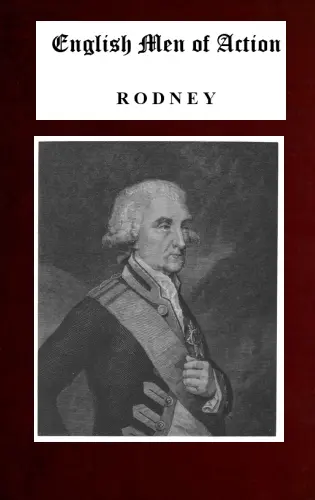
David Hannay
BEHIND THE BOOK
This eBook is for the use of anyone anywhere in the United States and most other parts of the world at no cost and with almost no restrictions whatsoever. You may copy it, give it away or re-use it under the terms of the Project Gutenberg License included with this eBook or online at www.gutenberg.org. If you are not located in the United States, you will have to check the laws of the country where you are located before using this eBook. Read the source licence.
The original source file, including credits and licence, is retained by this library. Request an original-format copy at no charge. Please include the book title and Project Gutenberg identifier #46754.
KEEP YOUR CURIOSITY GOING
Cécile Tormay

Moritz Busch
John L. Ransom
Frances Wright
Cécile Tormay

Mabel Potter Daggett