THE CLASSIC COLLECTION✦A Book of Strife in the Form of The Diary of an Old SoulCLASSIC FREE BOOKS
A Book of Strife in the Form of The Diary of an Old Soul
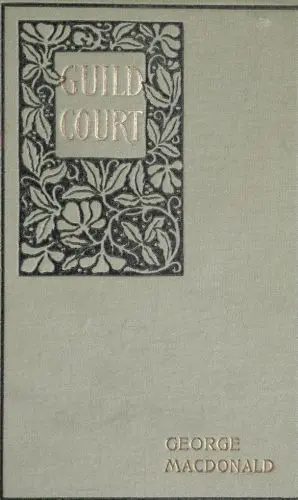
George MacDonald
THE CLASSIC COLLECTION · 1890
"A Rough Shaking" by George MacDonald is a novel written during the late 19th century. The story introduces us to the life of Clare Skymer, a boy whose mother dies in an earthquake, prompting a series of transformative events in his life as he navigates his childhood amid profound loss and connection to nature. The narrative emphasizes themes of love, companionship, and the bonds between humans and animals, intertwined with personal growth and the quest for understanding. The opening of the novel presents a deeply reflective atmosphere, focusing on the narrator's encounter with Mr. Skymer, Clare's father, who shares a unique bond with his horse, Memnon. Through their conversation, the narrator learns about the compassionate nature of Mr. Skymer, who treats his horse as a friend, expressing profound insights into life, love, and death that resonate throughout the story. The scene paints a vivid picture of an idyllic landscape and sets the stage for the unfolding journey of Clare and Mr. Skymer, highlighting their interactions with the natural world and hinting at the struggles that will come with Clare’s tragic circumstances. As the opening concludes, it hints at a future filled with challenges and the potential for healing through the bonds of family and nature.
Introduction adapted from the source catalogue; source summaries may be automatically generated.
Free to read · English · 110,244 words · No account needed
MAKE TIME FOR A GOOD BOOK
On by default. Untick to stop anonymous reading totals. Each page counts after 10 seconds in view. How this works.
Anonymous counting is on unless you have switched it off.
“Look here, then! I’ll give you a lesson,” said Clare. “Many’s the boot I’ve blacked. Up with your foot! I’ll soon show you how the thing’s done!”
“Please, sir,” objected the boy, “there ain’t enough boot left to take
a polish!”
“We’ll see about that!” returned Clare. “Put it up. I’ve worn worse in
my time.”
The boy obeyed. The boot was very bad, but there was enough leather to carry some blacking, and the skin took the rest.
Clare was working away, growing pleasantly hot with the quick, sharp motion, while two of his fellow clerks were strolling up on the other side of the corner, who had been having more with their lunch than was good for them. Swinging round, they came upon a well dressed youth brushing a ragged boy’s boots. It was an odd sight, and one of them, whose name was Marway, thought to get some fun out of the phenomenon.
“Here!” he cried, “I want my boots brushed.”
Clare rose to his feet, saying,
“Brush the gentleman’s boots. I will finish yours after, and then you
shall finish mine.”
“Hullo, Nursie! it’s you turned boot-black, is it?--Nice thing for the office, Jack!” remarked Marway, who was the finest gentleman, and the lowest blackguard among the clerks.
He put his foot on the block. The boy began his task, but did no better with his boots than he had done with Clare’s.
“Soul of an ass!” cried Marway, “are you going to keep my foot there till it freezes to the block? Why don’t you do as Nursie tells you? He knows how to brush a boot! You ain’t worth your salt! You ain’t fit to black a donkey’s hoofs!”
“Give me the brushes, my boy,” said Clare.
The boy rose abashed, and obeyed. After a few of Clare’s light rapid strokes, the boots looked very different.
“Bravo, Nursie!” cried Marway. “There ain’t a flunkey of you all could
do it better!”
Clare said nothing, finished the job, and stood up. Marway, turning on the other heel as he set his foot down, said, “Thank you, Nursie!” and was walking off.
“Please, Mr. Marway, give the boy his penny,” said Clare.
But Marway wanted to take a rise out of Clare.
“The fool did nothing for me!” he answered. “He made my boot worse
than it was.”
“It was I did nothing for you, Mr. Marway,” rejoined Clare. “What I did, I did for the boy.”
“Then let the boy pay you!” said Marway.
Your reading position is saved on this browser. Take it to another device with a library code. Reading pages adapt to text, rather than matching a printed edition.
George MacDonald
George MacDonald
George MacDonald
George MacDonald
BEHIND THE BOOK
This eBook is for the use of anyone anywhere in the United States and most other parts of the world at no cost and with almost no restrictions whatsoever. You may copy it, give it away or re-use it under the terms of the Project Gutenberg License included with this eBook or online at www.gutenberg.org. If you are not located in the United States, you will have to check the laws of the country where you are located before using this eBook. Read the source licence.
The original source file, including credits and licence, is retained by this library. Request an original-format copy at no charge. Please include the book title and Project Gutenberg identifier #8886.
KEEP YOUR CURIOSITY GOING
Coulson Kernahan

Maurice Baring
Frances Wright
Cécile Tormay

Frederic Jesup Stimson

W. H. P. (William Henry Pope) Jarvis