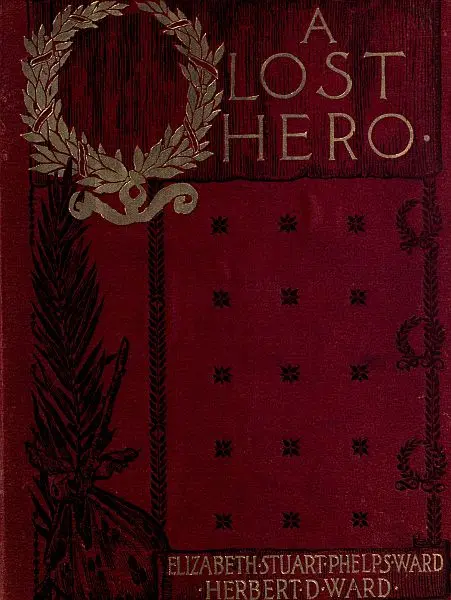
A Lost Hero
Elizabeth Stuart Phelps & Herbert D. (Herbert Dickinson) Ward
THE CLASSIC COLLECTION · 1891
"A Republic Without a President, and Other Stories" by Herbert D. Ward is a collection of short stories reportedly written in the late 19th century. The opening story centers around a fictional and dramatic event where the President of the United States and his wife mysteriously disappear from the White House, causing national panic and intrigue. The unfolding mystery delves into political implications, abduction, and the reactions of the public and officials in response to this chilling circumstance. The beginning of this story reveals that on June 8, 1893, an announcement of the President's disappearance sends shockwaves across the nation. As newspapers publish front-page headlines detailing the events, the atmosphere is thick with suspicion and fear. Several witnesses recount strange occurrences, but the investigation leads to wild speculation and confusion, hinting at a political conspiracy behind the abduction. The narrative sets the stage for a blend of mystery, suspense, and political commentary that invites readers to ponder the implications of such an unprecedented calamity.
Introduction adapted from the source catalogue; source summaries may be automatically generated.
Free to read · English · 51,963 words · No account needed
MAKE TIME FOR A GOOD BOOK
On by default. Untick to stop anonymous reading totals. Each page counts after 10 seconds in view. How this works.
Anonymous counting is on unless you have switched it off.
Mr. Stalls Ticks answered the summons promptly. He was a sallow, faded, middle-aged man, dressed in a sere and faded Prince Albert coat, with sallow and faded boots. In fact, the whole appearance of this invaluable member of the Planet corps gave one the impression of the last minute of autumn, when even the trunks of the trees, the stones of the hills, the soil of the valleys look sere and yellow and faded and ready for a winter's sleep. Mr. Ticks looked as if he were waiting for the trance that never overcame him.
"I wish to know something of Russell, the capital of the new State of
Harrison, Mr. Ticks."
Mr. Ticks pulled out a yellow, faded, silk bandanna, wiped his spectacles sadly, and with an over-aspirated tone asked:
"Yes, sir?"
Mr. Swift looked at him with mingled disgust and respect, and tapped his foot impatiently on the bare floor.
"Let me see; it is situated?" proceeded the chief quietly.
"On the southeast shore of the Great Gopher lake." Mr. Ticks finished
the sentence mechanically.
"Ah! I remember. Its population?"
"Twenty-nine thousand five hundred and fifty-two. It increases at the
rate of thirty a day."
"Exactly so! It is--?"
"Just two years nine months and twelve days old."
"To be sure. Its property--?"
"Is one hundred and sixty-four million dollars, in round numbers."
"Of course. Its industries are--?"
"The usual pertaining to Western cities, I suppose. I confess ignorance to concrete particulars. The reports have been singularly deficient in this respect. I credit this entirely to its youth."
"Indeed! Its railroad facilities--?"
"The C. H. & S. F. is its great trunk line. Three branch lines have their centre there--just built. Two roads are surveyed to shorten the distance to Chicago and San Francisco respectively."
"Any other facts of interest, Mr. Ticks?" Mr. Ticks hesitated.
"Well--no--yes--no. In fact, there is nothing of special importance that I--that is different from any other city--except--nothing, sir, that I am willing to stake my professional reputation upon; you must excuse me, sir."
"Is it in the cyclone area, Mr. Ticks?"
"No, sir. The centre of barometric depression is farther north. The Buzzard mountains to the south deflect all such storm centres. Russell will be singularly free from tornadoes."
The editor-in-chief looked somewhat nonplussed, and handed Mr. Ticks the telegram, with the remark:
"What do you think of that?"
"I do not know, sir. I cannot give an opinion."
"I, Mr. Ticks, I for one believe this is true. I'll--I'll stake my reputation on it!" said Swift decidedly. Mr. Ticks' exasperating caution grated on the news editor and converted his scepticism into conviction.
Your reading position is saved on this browser. Take it to another device with a library code. Reading pages adapt to text, rather than matching a printed edition.
Elizabeth Stuart Phelps & Herbert D. (Herbert Dickinson) Ward
BEHIND THE BOOK
This eBook is for the use of anyone anywhere in the United States and most other parts of the world at no cost and with almost no restrictions whatsoever. You may copy it, give it away or re-use it under the terms of the Project Gutenberg License included with this eBook or online at www.gutenberg.org. If you are not located in the United States, you will have to check the laws of the country where you are located before using this eBook. Read the source licence.
The original source file, including credits and licence, is retained by this library. Request an original-format copy at no charge. Please include the book title and Project Gutenberg identifier #33662.
KEEP YOUR CURIOSITY GOING
Coulson Kernahan

Maurice Baring
Frances Wright
Cécile Tormay

Frederic Jesup Stimson

W. H. P. (William Henry Pope) Jarvis