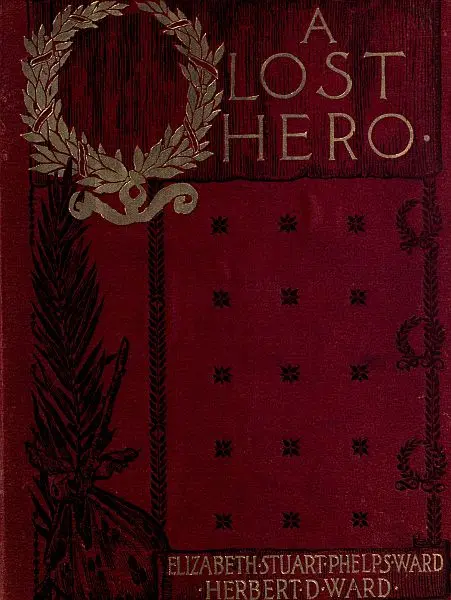
A Lost Hero
Elizabeth Stuart Phelps & Herbert D. (Herbert Dickinson) Ward
THE CLASSIC COLLECTION · 1891
"A Republic Without a President, and Other Stories" by Herbert D. Ward is a collection of short stories reportedly written in the late 19th century. The opening story centers around a fictional and dramatic event where the President of the United States and his wife mysteriously disappear from the White House, causing national panic and intrigue. The unfolding mystery delves into political implications, abduction, and the reactions of the public and officials in response to this chilling circumstance. The beginning of this story reveals that on June 8, 1893, an announcement of the President's disappearance sends shockwaves across the nation. As newspapers publish front-page headlines detailing the events, the atmosphere is thick with suspicion and fear. Several witnesses recount strange occurrences, but the investigation leads to wild speculation and confusion, hinting at a political conspiracy behind the abduction. The narrative sets the stage for a blend of mystery, suspense, and political commentary that invites readers to ponder the implications of such an unprecedented calamity.
Introduction adapted from the source catalogue; source summaries may be automatically generated.
Free to read · English · 51,963 words · No account needed
MAKE TIME FOR A GOOD BOOK
On by default. Untick to stop anonymous reading totals. Each page counts after 10 seconds in view. How this works.
Anonymous counting is on unless you have switched it off.
"That was Aunt Betsey," said the girl decisively. "But we never took boarders," with a stately drawing up of her head, "why should she send you here?"
"My dear," protested Mrs. McCorkle mildly, "the Randolphs of Sunshine took boarders last winter; and I suppose we could get Aunt Betsey to cook." She rose to carry away Ellesworth's glass, and beckoned to the girl to follow her. Evidently the two poor ladies whispered together in the hall, consulting upon the awful problem suddenly presented to their empty pockets and plethoric pride. They came out on the veranda again, and Mrs. McCorkle asked him point blank what his name was. Without perceptible hesitation he replied:
"Bigelow, madam. Frank Bigelow." The unimagined value of a middle name suddenly presented itself to the young man's mind, and his conscience slipped behind the camellias and made no protest. A very irreligious baby, black in the face from howling, had been indeed baptized Francis Bigelow in King's Chapel, twenty-nine years ago--and had since bought a mortgage on the Benson property.
"Couldn't you take me? It's a case of charity," he pleaded, turning to the girl beside him. "It's so noisy at the hotel, I can't sleep."
This last shot went straight to the mark. Sympathy and need are powerful partners, and they worked together for Ellesworth's case in the hearts of the two poor, lonely women.
It is only in the South that one can find women--ladies, and who dress like ladies, and who hardly have ten dollars in cash the year round. The mystery of the maintenance of their existence is not solved outside the walls of their own homes. Proud, refined and shy, they divulge nothing. Who is a boarder that he should think to comprehend the pathetic ingenuity of their eventless lives?
"Are you connected with the Bigelows of Charleston?" asked Mrs.
McCorkle, softly.
"I think we must be another branch," replied Ellesworth, boldly.
"I will--I would pay you," added Ellesworth, blushing, "just what they would charge me at the Sunshine Hotel, if that would be satisfactory."
"How much is that, Mr. Bigelow?" inquired Mrs. McCorkle, reddening too.
"Twenty-five dollars a week."
"That is too much. We should think that enough for a month," said the girl, turning her wonderful face upon her visitor.
"I could not think of giving less," he insisted. Still he did not look
at her.
"Perhaps," admitted Mrs. McCorkle with a sigh, "we might take you, sir, seeing that you are one of the Bigelow family--on trial."
"I will come," returned Ellesworth, quickly, looking straight at Georgiella, "I will come next Monday--on trial.
Your reading position is saved on this browser. Take it to another device with a library code. Reading pages adapt to text, rather than matching a printed edition.
Elizabeth Stuart Phelps & Herbert D. (Herbert Dickinson) Ward
BEHIND THE BOOK
This eBook is for the use of anyone anywhere in the United States and most other parts of the world at no cost and with almost no restrictions whatsoever. You may copy it, give it away or re-use it under the terms of the Project Gutenberg License included with this eBook or online at www.gutenberg.org. If you are not located in the United States, you will have to check the laws of the country where you are located before using this eBook. Read the source licence.
The original source file, including credits and licence, is retained by this library. Request an original-format copy at no charge. Please include the book title and Project Gutenberg identifier #33662.
KEEP YOUR CURIOSITY GOING
Coulson Kernahan

Maurice Baring
Frances Wright
Cécile Tormay

Frederic Jesup Stimson

W. H. P. (William Henry Pope) Jarvis