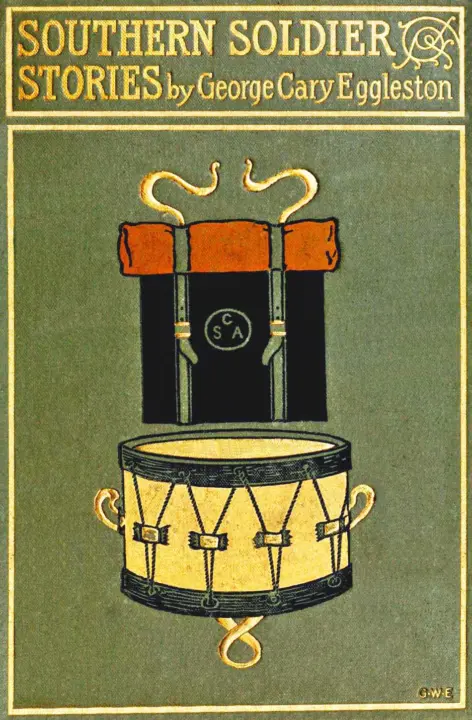
Southern Soldier Stories
George Cary Eggleston
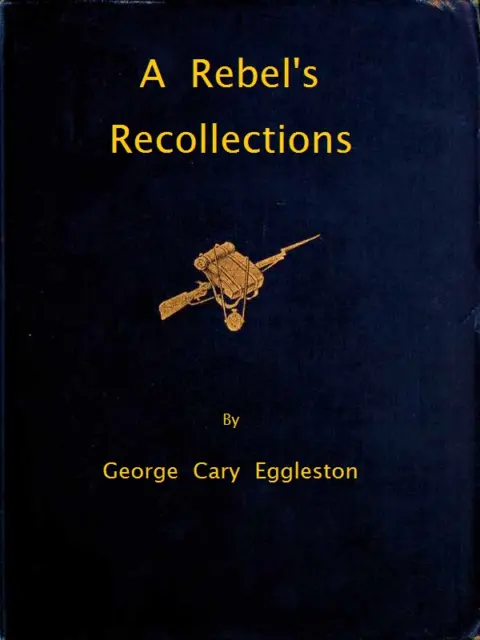
THE CLASSIC COLLECTION · 1905
"A Rebel's Recollections" by George Cary Eggleston is a historical account written in the late 19th century. The work provides a personal perspective on the experiences and sentiments of Southern soldiers during the Civil War, particularly from the viewpoint of Virginia. It captures the complexities of Southern patriotism, highlighting themes of honor, sacrifice, and the struggles faced by the men who fought in the war. The opening of the book sets the stage for Eggleston's recollections by establishing a need for readers to adopt a Southern perspective to fully grasp the events and motivations described. He recounts the initial phases of the Civil War, emphasizing the reluctance of Virginians to secede and the mixture of enthusiasm and trepidation as preparations for conflict began. He paints a picture of the disorganized yet spirited volunteers, who eagerly took up arms despite their lack of military training, and reflects on the conflicting emotions surrounding the concept of honor and the duty to protect their state. The opening serves not only as a historical narrative but also as a contemplation on the nature of loyalty and the deeply rooted beliefs that drove the South to war.
Introduction adapted from the source catalogue; source summaries may be automatically generated.
Free to read · English · 53,075 words · No account needed
MAKE TIME FOR A GOOD BOOK
On by default. Untick to stop anonymous reading totals. Each page counts after 10 seconds in view. How this works.
Anonymous counting is on unless you have switched it off.
A few months later, I paid my debt by returning the very horse I had bought. I give this incident merely to show how utterly without financial compass or rudder we were.
How did people manage to live during such a time? I am often asked; and as I look back at the history of those years, I can hardly persuade myself that the problem was solved at all. A large part of the people, however, was in the army, and drew rations from the government. During the early years of the war, officers were not given rations, but were allowed to buy provisions from the commissaries at government prices. Subsequently, however, when provisions became so scarce that it was necessary to limit the amount consumed by officers as well as that eaten by the men, the purchase system was abolished, and the whole army was fed upon daily rations. The country people raised upon their plantations all the necessaries of life, and were generally allowed to keep enough of them to live on, the remainder being taken by the subsistence officers for army use. The problem of a salt supply, on which depended the production of meat, was solved in part by the establishment of small salt factories along the coast, and in part by Governor Letcher's vigorous management of the works in southwestern Virginia, and his wise distribution of the product along the various lines of railroad.
In the cities, living was not by any means so easy as in the country. Business was paralyzed, and abundant as money was, it seems almost incredible that city people got enough of it to live on. Very many of them were employed, however, in various capacities, in the arsenals, departments, bureaus, etc., and these were allowed to buy rations at fixed rates, after the post-office clerks in Richmond had brought matters to a crisis by resigning their clerkships to go into the army, because they could not support life on their salaries of nine thousand dollars a year. For the rest, if people had anything to sell, they got enormous prices for it, and could live a while on the proceeds. Above all, a kindly, helpful spirit was developed by the common suffering and this, without doubt, kept many thousands of people from starvation. Those who had anything shared it freely with those who had nothing. There was no selfish looking forward, and no hoarding for the time to come. During those terrible last years, the future had nothing of pleasantness in its face, and people learned not to think of it at all. To get through to-day was the only care. Nobody formed any plans or laid by any money for to-morrow or next week or next year, and indeed to most of us there really seemed to be no future. I remember the start it gave me when a clergyman, visiting camp, asked a number of us whether our long stay in defensive works did not afford us an excellent opportunity to study with a view to our professional life after the war. We were not used to think of ourselves as possible survivors of a struggle which was every day perceptibly thinning our ranks. The coming of ultimate failure we saw clearly enough, but the future beyond was a blank. The subject was naturally not a pleasant one, and by common consent it was always avoided in conversation, until at last we learned to avoid it in thought as well. We waited gloomily for the end, but did not care particularly to speculate upon the question when and how the end was to come. There was a vague longing for rest, which found vent now and then in wild newspaper stories of signs and omens portending the close of the war, but beyond this the matter was hardly ever discussed. We had early forbidden ourselves to think of any end to the struggle except a successful one, and that being now an impossibility, we avoided the subject altogether. The newspaper stories to which reference is made above were of the wildest and absurdest sort. One Richmond paper issued an extra, in which it was gravely stated that there was a spring near Fredericksburg which had ceased to flow thirty days before the surrender of the British at Yorktown, thirty days before the termination of the war of 1812, and thirty days before the Mexican war ended; and that "this singularly prophetic fountain has now again ceased to pour forth its waters." At another time a hen near Lynchburg laid an egg, the newspapers said, on which were traced, in occult letters, the words, "peace in ninety days."
Your reading position is saved on this browser. Take it to another device with a library code. Reading pages adapt to text, rather than matching a printed edition.
George Cary Eggleston
George Cary Eggleston
George Cary Eggleston
George Cary Eggleston
BEHIND THE BOOK
This eBook is for the use of anyone anywhere in the United States and most other parts of the world at no cost and with almost no restrictions whatsoever. You may copy it, give it away or re-use it under the terms of the Project Gutenberg License included with this eBook or online at www.gutenberg.org. If you are not located in the United States, you will have to check the laws of the country where you are located before using this eBook. Read the source licence.
The original source file, including credits and licence, is retained by this library. Request an original-format copy at no charge. Please include the book title and Project Gutenberg identifier #51211.
KEEP YOUR CURIOSITY GOING
Cécile Tormay

Moritz Busch
John L. Ransom
Frances Wright
Cécile Tormay

Mabel Potter Daggett