THE CLASSIC COLLECTION✦Peeps at People Being Certain Papers from the Writings of Anne Warrington WitherupCLASSIC FREE BOOKS
Peeps at People Being Certain Papers from the Writings of Anne Warrington Witherup
John Kendrick Bangs
THE CLASSIC COLLECTION · 1896
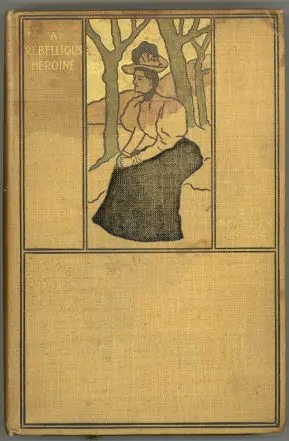
"A Rebellious Heroine" by John Kendrick Bangs is a novel likely written in the late 19th century. The story centers around a struggling author, Stuart Harley, who is attempting to craft a love story featuring an independent heroine named Marguerite Andrews. However, the tale quickly takes an unexpected turn as Marguerite begins to assert her own will, challenging the conventional narrative tropes laid out by Harley and disrupting his plans for an ideal romance. At the start of the narrative, Harley is introduced as a realist author believing that he must accurately portray life in his writings, drawing inspiration from the very people around him. As he seeks to develop his love story for publication, he plans for Marguerite’s journey and encounters aboard a ship. However, Marguerite defies his expectations by missing her appointed departure, leading to a series of amusing complications that disrupt Harley's storyline. Her independent spirit becomes a point of contention, revealing her determination to take ownership of her own narrative and challenging Harley's authority as the author. Thus, the opening portion establishes a dynamic interplay between the creator and his character, setting the stage for a humorous and insightful exploration of storytelling and autonomy.
Introduction adapted from the source catalogue; source summaries may be automatically generated.
Free to read · English · 29,418 words · No account needed
MAKE TIME FOR A GOOD BOOK
On by default. Untick to stop anonymous reading totals. Each page counts after 10 seconds in view. How this works.
Anonymous counting is on unless you have switched it off.
(“Parker merely echoed my own hope in that remark,” said Harley. “If I could get them engaged, I was satisfied to do it in any way that might be pleasing to her.”)
A moment later Marguerite appeared, arrayed for the walk. Parker rose as she entered and picked up his gloves.
“You are a perfect picture this morning,” said he.
“I’m ready,” she said, shortly, ignoring the compliment. “Where are we scheduled to walk?—or are we to have something to say about it ourselves?”
Parker looked at her with a wondering smile. The aptness of the remark did not strike him. However, he was equal to the occasion.
“You don’t believe in free will, then?” he asked.
(“It was the only intelligent remark he could make, under the circumstances, you see,” explained Harley.
“He was a clever fellow,” said I, and resumed reading.)
“I believe in a great many things we are supposed to do without,” said
Marguerite, sharply.
They had reached the street, and in silence walked along Bellevue Avenue.
[Picture: The walk on the cliff]
“There are a great many things,” vouchsafed Parker, as they turned out of the avenue to the cliffs, “that men are supposed not to do without—”
“Yes,” said Marguerite, sharply—“vices.”
“I did not refer to them,” laughed Parker. “In fact, Miss Andrews, the heart of man is supposed to be incomplete until he has lost it, and has succeeded in getting another for his very—”
“Are you an admirer of Max Nordau?” interposed Marguerite, quickly.
(“Whatever led you to put that in?” I asked.
“Go on, and you’ll see,” said Harley. “I didn’t put it in. It’s what she said. I’m not responsible.”)
“I don’t know anything about Max Nordau,” said Parker, somewhat surprised at this sudden turn of the conversation.
“Are you familiar with Schopenhauer?” she asked.
(“It was awfully rough on the poor fellow,” said Harley, “but I couldn’t help him. I’d forced him in so far that I couldn’t get him out. His answer floored me as completely as anything that Miss Andrews ever did.”)
“Schopenhauer?” said Parker, nonplussed. “Oh yes,” he added, an idea dawning on his mind. “That is to say, moderately familiar—though, as a matter of fact, I’m not at all musical.”
Miss Andrews laughed immoderately, in which Parker, thinking that he had possibly said something witty, although he did not know what it was, joined. In a moment the laughter subsided, and for a few minutes the two walked on in silence. Finally Parker spoke, resignedly.
“Miss Andrews,” he said, “perhaps you have noticed—perhaps not—that you have strongly interested me.”
Your reading position is saved on this browser. Take it to another device with a library code. Reading pages adapt to text, rather than matching a printed edition.
John Kendrick Bangs
John Kendrick Bangs
John Kendrick Bangs
John Kendrick Bangs
BEHIND THE BOOK
This eBook is for the use of anyone anywhere in the United States and most other parts of the world at no cost and with almost no restrictions whatsoever. You may copy it, give it away or re-use it under the terms of the Project Gutenberg License included with this eBook or online at www.gutenberg.org. If you are not located in the United States, you will have to check the laws of the country where you are located before using this eBook. Read the source licence.
The original source file, including credits and licence, is retained by this library. Request an original-format copy at no charge. Please include the book title and Project Gutenberg identifier #3324.
KEEP YOUR CURIOSITY GOING
Coulson Kernahan

Maurice Baring
Frances Wright
Cécile Tormay

Frederic Jesup Stimson

W. H. P. (William Henry Pope) Jarvis