THE CLASSIC COLLECTION✦In a winter cityCLASSIC FREE BOOKS
In a winter city
Ouida
THE CLASSIC COLLECTION · 1905
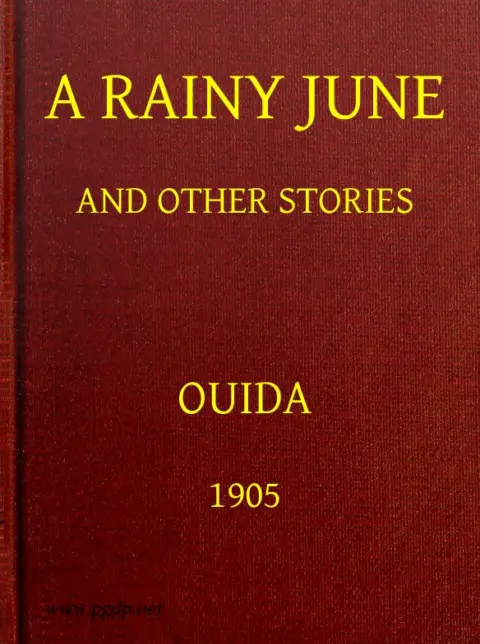
"A Rainy June, and Other Stories" by Ouida is a collection of short stories written in the late 19th century. The prominent narrative of the opening tale, "A Rainy June," revolves around the romantic entanglements and societal observations of the characters within English high society, particularly focusing on a young Italian prince and his English bride, Gladys. The themes of cultural clash, marital expectations, and the struggles of love amidst societal pressures set the tone for this poignant exploration of human relationships. At the start of the collection, the reader is introduced to the correspondence between various characters, including the Principessa di San Zenone and members of the English aristocracy, capturing the intrigue surrounding a recent marriage. The letters reveal the excitement and underlying tensions as the prince grapples with the dreary realities of an English June, especially as he finds himself retreating from the lively atmosphere he yearns for. His reflections on his bride and their newlywed life unfold amidst a moody and rainy countryside backdrop, laying the groundwork for a narrative rich in emotional depth and social commentary. The opening establishes a vibrant setting where love battles against the mundane, highlighting the inner conflicts the new couple faces as they adjust to each other's differing backgrounds and expectations.
Introduction adapted from the source catalogue; source summaries may be automatically generated.
Free to read · English · 66,294 words · No account needed
MAKE TIME FOR A GOOD BOOK
On by default. Untick to stop anonymous reading totals. Each page counts after 10 seconds in view. How this works.
Anonymous counting is on unless you have switched it off.
'It goes where it will be better than with us,' said Fringuello, in a vague apology to it, as he lifted it out of the entrance of the house.
He had sold it to a gardener in a villa near at hand.
'Oh yes, it will be better off,' he said feverishly, in the doubtful yet aggressive tone of one who argues that which he knows is not true. 'With rich people instead of poor; out in a fine garden half the year, and in a beautiful airy wooden house all winter. Oh yes, it will be much better off. Now it has grown so big it was choked where it stood in my little place; no light, no air, no sun, nothing which it wanted. It will be much better off where it goes; it will have rich, new earth and every sort of care.'
'It has done well enough with you,' said his comrade carelessly, as he helped to shove the vase on to the hand-cart.
'Yes, yes,' said Fringuello impatiently, 'but it will do better where it goes. It has grown too big for a room. It would starve with me.'
'Well, it is your own business,' said the other man.
'Yes, it is his own business,' said the neighbours, who were standing to see it borne away as if it were some rare spectacle. 'But the tree was always there; and the money you get will go,' they added, in their collective wisdom.
He took up the handles of the little cart and placed the yoke of cord over his shoulders, and began to drag it away. He bent his head down very low so that the people should not see the tears which were running down his cheeks.
When he came back to his home he carried its price in his hands--thirty francs in three paper notes. He held them out to Lizina.
'All is well with it; it is to stand in a beautiful place, close to falling water, half in shade, half in sun, as it likes best. Oh, all is well with it, dear! do not be afraid.' Then his voice failed him, and he sobbed aloud.
The child took the money. She had a little bundle in her hand, and she had put on the only pair of shoes she possessed.
'Clean yourself, father, and come--come quickly,' she said in a little
hard, dry, panting voice.
'Oh wait, wait, my angel!' he cried piteously through his sobs.
I cannot wait,' said the child, 'not a minute, not a minute. Clean
yourself and come.'
Your reading position is saved on this browser. Take it to another device with a library code. Reading pages adapt to text, rather than matching a printed edition.
BEHIND THE BOOK
This eBook is for the use of anyone anywhere in the United States and most other parts of the world at no cost and with almost no restrictions whatsoever. You may copy it, give it away or re-use it under the terms of the Project Gutenberg License included with this eBook or online at www.gutenberg.org. If you are not located in the United States, you will have to check the laws of the country where you are located before using this eBook. Read the source licence.
The original source file, including credits and licence, is retained by this library. Request an original-format copy at no charge. Please include the book title and Project Gutenberg identifier #42944.
KEEP YOUR CURIOSITY GOING
Coulson Kernahan

Maurice Baring
Frances Wright
Cécile Tormay

Frederic Jesup Stimson

W. H. P. (William Henry Pope) Jarvis

