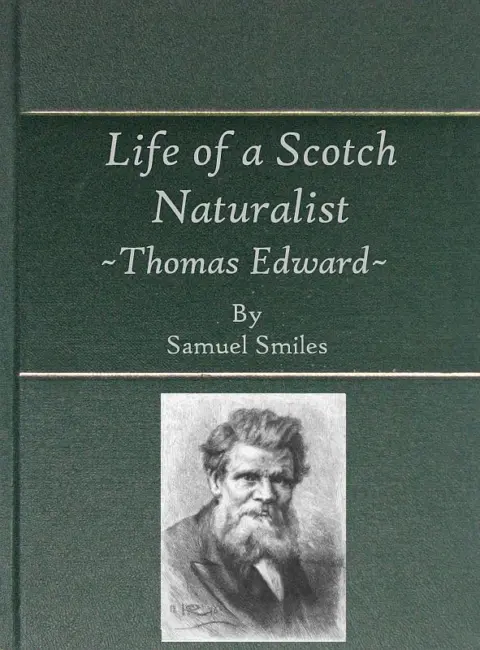
Life of a Scotch Naturalist: Thomas Edward, Associate of the Linnean Society. Fourth Edition
Samuel Smiles
THE CLASSIC COLLECTION · 1891
"A Publisher and His Friends" by Samuel Smiles is a memoir and correspondence detailing the career of John Murray, a significant figure in the publishing industry during the late 18th and early 19th centuries. Written in the early 20th century, the book provides a detailed account of Murray's rise from modest beginnings as he founded and developed his publishing business, which would go on to become highly influential in the literary world, notably in connection with famous authors and literary figures of the time. The opening of the memoir sets the stage by describing John Murray's background, starting with the initial establishment of his publishing house in 1768 after acquiring the business of William Sandby in Fleet Street. It highlights his early struggles, including financial hardships and the need for capital, alongside his interactions with notable contemporaries such as poets and fellow publishers. The letters exchanged with friends and colleagues reveal Murray's ambitions, challenges, and the formative connections he forged, leading to significant contributions to literary history, including the nurturing of authors and the development of influential periodicals like the "Edinburgh Review" and the "Quarterly Review".
Introduction adapted from the source catalogue; source summaries may be automatically generated.
Free to read · English · 152,370 words · No account needed
MAKE TIME FOR A GOOD BOOK
On by default. Untick to stop anonymous reading totals. Each page counts after 10 seconds in view. How this works.
Anonymous counting is on unless you have switched it off.
Maas, of Coblentz,
Macaulay, Lord, his articles in Edin. Rev., on Crokers's "Boswell's
Johnson,"
Gladstone's "Church and State,"
Macirone, Col.
Mackay, the actor
Mackintosh, Sir James
Macleod, John,
"Voyage of H.M.S. Alceste to Loochoo"
Macready, W.C.
Maginn, Dr.
Magnus, Samuel,
his testimonial to Dean Milman
Mahon, Lord (Earl Stanhope)
Malcolm, Sir John
"Sketch of the Sikhs"
Malthus,
"Rent," "Corn-Laws," "Essay on Population"
Markham, Mrs.,
"History of England"
Mason, Rev. William (T. Gray's executor)
controversy with Murray
Maturin, Rev. Chas. Robert
his early life and marriage; "The Fatal Revenge," "The Wild Irish
Boy," "The Milesian Chief," "Bertram"
"Bertram" at Drury Lane
"Manuel"
his death
Maule, William
Mavrocordato, Prince
Mawman, Joseph
Medwin, Capt. Thomas,
"Conversations of Lord Byron"
Melbourne, Lord (see Lamb)
Mémoires pour servir
Milbanke, Miss
Mill, James,
"History of British India"
Mill, John Stuart
Miller, John
Miller, Robert
Miller, William,
of Albemarle Street
Mills, James
Milman, Dean (Rev. H.H.)
"Fall of Jerusalem"
one of Murray's Historians
"History of Christianity"
"History of the Jews" received with disapprobation; his remarks
on Sharon Turner's Expostulation; testimonial from the Jews
opinion of "Contarini Fleming"
Mirza, Abul Hassan,
impressions of English Society
Mitchell, Thomas
impressions of Ugo Foscolo
opinion of Murray
Mitford,
"History of Greece"
Monthly Register
Moore, Thomas
opinion of "The Corsair"
presented with Byron's Memoirs
offers them to Longman
accepted by Murray
their destruction
reconciled to Murray and undertakes "Life of Byron"
his views on Cookery Books and on Mrs. Rundell's "Domestic
Cookery"
agreement with Murray as to "Life of Byron," receives £3,000
from Murray for "Life"
Lockhart's opinion of the "Life"
Vol. I. of "Life" published
Vol. II. of "Life" published; Mrs. Somerville's opinion of it
"Thoughts on Editors"
Murray's proposal as to a complete edition of Byron's works
Morgan, Lady
Morier, James,
"Hajji Baba"
Morritt,
of Rokeby Park
Murat, King of Naples
Murray, Sir George
Murray, Joe (Byron's Steward)
Murray I., John.
1745-68--His birth and early years
1768--Marriage and retirement from Royal Marines
offers partnership to W. Falconer
purchases W. Sandby's business
early publications
1769-70--Support from Sir R. Gordon and his old comrades
money difficulties
agents in Ireland and Scotland
1771--Defence of Sir R. Gordon
1777-78--Second marriage
controversy with Rev. W. Mason
1782-93--Paralytic stroke
his son's education and character
Dr. Johnson's funeral
illness and death
Murray II., John
called by Lord Byron "The Anax of Publishers,"
nicknamed "The Emperor of the West,"
1778-92--Birth,
at Edinburgh High School,
at school at Margate,
at school at Gosport,
sight of one eye destroyed,
1793--At school at Kennington,
1795--Enters his father's business firm of Murray & Highley,
1802--Dissolves partnership with Highley and starts business
alone,
1803--Offers to publish Colman's Comedy "John Bull,"
money difficulties,
military duties,
friendship with Isaac D'Israeli,
Isaac D'Israeli's "Narrative Poems,"
business transactions with Constable,
appoints Constable his agent in Edinburgh;
pushes sale of Edinburgh Review,
1804--Birth of Benjamin Disraeli,
takes Charles Hunter as apprentice,
1805--Isaac D'Israeli's letters to him,
attempts to reconcile Constable and Longman,
expedition to Edinburgh,
attachment to Miss Elliot,
1806--The "Miniature" and Stratford Canning,
introduced to George Canning,
close attention to business,
visits Edinburgh,
engagement to Miss Elliot,
financial position,
appointed publisher of Edinburgh Review,
Campbell's proposed Magazine and "Selection from British Poets,"
1807--Marries Miss Elliot,
I. D'Israeli one of his Trustees,
friendship with Sharon Turner,
injunction in the matter of the Edinburgh Review,
remonstrates with Constable about drawing bills,
breach with Constable,
bill transactions with Ballantyne,
writes to George Canning proposing a new Review,
1808--"Marmion" and friendship with Scott,
proposed edition of the "British Novelists,"
De Foe's works,
introduced to Gifford by Stratford Canning,
visits Scott at Ashestiel,
correspondence about Quarterly Review,
Gifford accepts editorship,
Missionary Reports and Southey's article in
Q.R.,
article on Spain for Q.R. by Canning, Gifford, and Ellis,
correspondence with Mrs. Inchbald,
1809--Meets Ballantyne at Boroughbridge,
appoints Ballantyne Edinburgh publisher
of Q.R.,
Scott's Life of Swift,
Q.R., No. 1 published,
urges Scott to visit London,
letter to Stratford Canning,
exertions to procure contributors,
Mrs. Rundell's "Domestic Cookery,"
close alliance with Ballantyne,
Grahame's "British Georgies" and Scott's "English Ministrelsy,"
financial difficulties with Ballantyne,
letter from Campbell on "Selection from British Poets,"
Campbell's Gertrude of "Wyoming,"
1810--Breach with Ballantyne,
appoints W. Blackwood his agent in Scotland,
Southey's "Life of Nelson,"
money difficulties--Ballantyne's bills,
transfers printing business,
Constable's bills,
decrease in circulation of Q.R.,
1811--Relations with Gifford,
improvement of Q.R.,
generosity to Gifford,
origin of his connection with Byron,
"Childe Harold,"
1812--Ballantyne's bills again,
purchases stock of Miller,
of Albemarle Street,
removes to Albemarle Street,
Constable's bills,
final breach with Constable,
complete success of Q.R.
refuses "The Rejected Addresses,"
1813--"The Giaour," and "The Bride of Abydos,"
Sir J. Malcolm,
I. D'Israeli's "Calamities of Authors,"
Scott's bill transactions,
Mme. de Staël at Albemarle Street,
other books published by him during the year,
1814--"The Corsair,"
"Ode to Napoleon,"
"Lara and Jacqueline,"
Mrs. Murray's visit to Leith,
letters to Mrs. Murray,
visit from Blackwood,
dines with I. D'Israeli,
education of his son John,
visit to D'Israeli at Brighton,
description of Newstead Abbey,
Byron's skull-cup,
trip to Edinburgh,
alliance with Blackwood,
visit to Abbotsford,
shares in Scott's "Don Roderick,"
correspondence with Coleridge,
1815--Drawing-room in Albemarle Street,
Mme. de Staël,
first meeting of Scott and Byron,
Napoleon's escape from Elba,
sends first news of Battle of Waterloo to Blackwood,
literary parties,
portraits of distinguished men,
trip to Paris,
Scott's proposed letters from the Continent,
Napoleon's personal correspondence with crowned heads, etc., of
Europe,
publishes Miss Austen's "Emma,"
begins to publish Malthus' works,
correspondence with Leigh Hunt as to the "Story of Rimini,"
correspondence with James Hogg,
dealings with Byron,
his liberal offer to Byron,
"Siege of Corinth" and "Parisina,"
remonstrates with Byron,
correspondence with Blackwood,
other books published by him during the year,
1816--Kindness to Rev. C.R. Maturin,
Coleridge's "Glycine: a Song," "Remorse," "Zapolya," "Christabel,"
and "Christmas Tale,"
correspondence with Leigh Hunt,
Gifford's illness,
gives Gifford a carriage,
entrusted with sale of Byron's books and furniture,
buys some of Byron's books, the large screen (now at Albemarle
Street), and silver cup,
Byron's "Sketch from Private Life,"
Byron leaves England,
"Childe Harold" and "The Prisoner of Chillon,"
letter to Byron on the "Monody on Sheridan,"
"Tales of my Landlord,"
correspondence with Lady Byron and Lady C. Lamb,
Ballantyne's proposal about Scott's works,
his assistance to Hogg,
other books published by him during the year,
1817--Correspondence with Coleridge,
Scott's review of "Childe Harold," Canto III.,
letters from Lady C. Lamb,
"Manfred,"
"Manuscrit venu de Ste. Hèléne,"
"Childe Harold," Canto IV.,
Captain Basil Hall's "Fragments of Voyages and Travels,"
correspondence with Lady Abercorn,
Giovanni Belzoni,
Washington Irving at Albemarle Street,
other books published by him during the year,
1818--"Beppo,"
visit to Scott,
"Don Juan," Canto I.,
takes share in
Blackwood's Magazine,
remonstrances with Blackwood on the personality of the Magazine
Articles,
the anonymous pamphlet "Hypocrisy Unveiled,"
assailed by a pamphlet, entitled "A Letter to Mr. John Murray
of Albemarle Street, etc.,"
Hazlitt's libel action,
correspondence with Scott,
friendship with Hallam--publishes "Middle Ages,"
the proposed Monthly Register,
Crabbe's "Tales of the Hall," and other poems,
Rev. H.H. Milman
1819--Campbell's "Selections from British Poets,"
suggestions to Byron about "Don Juan," Canto II.,
"Mazeppa" and "The Ode to Venice,"
Blackwood refuses to sell "Don Juan,"
copyright of "Don Juan" infringed--injunction applied for and
granted;
retires from Blackwood's Magazine,
transfers his Scottish Agency to Oliver and Boyd,
Thomas Hope's "Anastasius,"
threatened by Colonel Macirone with libel action,
verdict in his favour,
buys house at Wimbledon,
literary levées at Albemarle Street,
his acquaintance with Ugo Foscolo
1820--"Don Juan, Cantos III. and IV.,"
Hobhouse's anger--the "My boy Hobby O!" incident,
Milman's "Fall of Jerusalem,"
B. Disraeli first mentioned,
Washington Irving's "Sketch-Book,"
other books published by him during the year
1821--Cantos III., IV., and V. of "Don Juan,"
refuses to publish further cantos of "Don Juan,"
Byron's pamphlet on Bowles,
"Sardanapalus,"
"The Two Foscari," "Cain, a Mystery,"
present with Scott at Coronation of George IV.,
injunction in case of "Cain,"
accepts Byron's "Memoirs,"
Mrs. Graham's letter to him about Sir Charles Eastlake,
pirated copies of Byron's works in America and France,
injunction obtained restraining sale by Longman of Mrs. Rundell's
"Domestic Cookery,"
1822--Death of Allegra,
Milman's "Fall of Jerusalem,"
intimacy with Milman,
"Bracebridge Hall,"
declines James Fenimore Cooper's novels,
Ugo Foscolo
1823--Giflord's serious illness--difficulty in choosing new Editor
for the Q.R.,
other books published by him during the year
1824--Closing incidents of friendship with Byron,
Byron's last letter and illness,
Byron's death,
correspondence with Dr. Ireland (Dean of Westminster) about Byron's
burial in Westminster Abbey,
destruction of Byron's Memoirs,
Moore undertakes "Life of Byron,"
Mrs. Markham's "History of England,"
a crisis in the Q.R.,
John Taylor Coleridge appointed Editor of Q.R.;
correspondence with B. Disraeli about "Aylmer Papillon"
1825--Agreement and arrangements regarding proposed morning paper,
Representative,
letters from B. Disraeli as to Representative,
I. D'Israeli's views on the Representative,
offers editorship of Representative to Lockhart;
Scott's opinion of the scheme,
secures foreign
correspondents for Representative,
bears the whole expense,
appoints Lockhart Editor of Q.R. on Coleridge's resignation,
letters to him from Scott on Lockhart's fitness for the Q.R.
editorship,
letters from Lockhart,
Hallam's "Constitutional History,"
renews friendship with Constable after fifteen years' interval,
other books published by him during the year,
1826--Representative started--its utter failure,
health breaks down,
commercial crisis and failure of large publishing houses, Constable
& Co., Ballantyne & Co., Hurst, Robinson & Co., and others,
helps London publishers in their difficulties,
Representative ceases to exist after career of six months,
misunderstanding with I. D'Israeli,
intimacy with Lockhart,
Wordsworth's proposal to him,
1827--Letter from his son describing Scott's acknowledgement of
the authorship of "Waverley Novels" at the Theatrical Fund dinner in
Edinburgh,
Henry Taylor's "Isaac Comnenus,"
buys all Byron's works,
1828--Offers Scott £1,250 for copyright of "History of Scotland,"
"Tales of a Grandfather,"
Napier's "History of Peninsular War,"
the "Wellington Despatches,"
"Library of Entertaining Knowledge,"
negotiations with Moore as to "Life of Byron,"
1829--Resigns his share in "Marmion" to Scott,
Croker's edition of "Boswell's Johnson,"
"The Family Library,"
1830--Milman's "History of the Jews,"
Moore's "Life of Byron," Vol. I.,
renewal of correspondence with B. Disraeli and negotiations with
him as to "Contarini Fleming: a Psychological Biography,"
1831--Moore's "Life of Byron," Vol. II.,
Moore's "Thoughts on Editors,"
Thomas Carlyle recommended to him by Lord Jeffrey,
"Sartor Resartus"--which he ultimately declines to publish,
1832--Complete edition of Byron's works,
correspondence with Benjamin Disraeli about "Gallomania,"
1834--Dean of Westminster refuses his request that Thorwaldsen's
statue of Byron should be placed in Westminster Abbey,
1836--The first Handbook to the Continent (Holland, Belgium, and
North Germany), published,
1837--Letter to Morning Chronicle on Napier's "History of the
Peninsular War,"
1838--Mr. Gladstone's "Church and State,"
T. Powell Buxton's "Slave Trade and its Remedy,"
Handbook to Switzerland,
1839--Handbook to Norway, Sweden, and Denmark,
1840--Mrs. Jameson and her "Guide to the Picture Galleries of
London,"
Handbook to the East,
George Borrow,
Borrow's "Gypsies of Spain,"
Southey's death,
1841--Bishop of Llandaff and "Lord Dudley's Letters,"
correspondence with John Colquhoun on "The Moor and the Loch,"
1842--Handbook to Italy,
letters from George Borrow,
"The Bible in Spain" published,
Horace
Horace Twiss's "Life of Lord Eldon,"
his illness,
1843--In constant communication with Sir Robert Peel,
many of whose speeches, etc., he published,
Richard Ford's Handbook of Spain,
Mr. Gladstone on the Copyright Bill,
his failing health and death,
his dinner-parties an institution,
tokens of respect from all parts--extracts from letters
of sympathy from the Americans, Dr. Robinson and Mrs.
L.H. Sigourney,
Murray, III., John, a reader for the press at six years
old,
recollections of Scott and Byron at Albemarle Street,
present at the destruction of Byron's Memoirs,
letter from R.W. Hay on the anonymous attack on Gifford's
memory,
present at the Theatrical Fund Dinner in Edinburgh when
Scott declared himself the author of the "Waverley Novels,"
the originator and author of the "Guides,"
extract from his article in Murray's Magazine on the
"Handbooks,"
Your reading position is saved on this browser. Take it to another device with a library code. Reading pages adapt to text, rather than matching a printed edition.
Samuel Smiles
Samuel Smiles
Samuel Smiles
Samuel Smiles
BEHIND THE BOOK
This eBook is for the use of anyone anywhere in the United States and most other parts of the world at no cost and with almost no restrictions whatsoever. You may copy it, give it away or re-use it under the terms of the Project Gutenberg License included with this eBook or online at www.gutenberg.org. If you are not located in the United States, you will have to check the laws of the country where you are located before using this eBook. Read the source licence.
The original source file, including credits and licence, is retained by this library. Request an original-format copy at no charge. Please include the book title and Project Gutenberg identifier #10884.
KEEP YOUR CURIOSITY GOING
Cécile Tormay

Moritz Busch
John L. Ransom
Frances Wright
Cécile Tormay

Mabel Potter Daggett