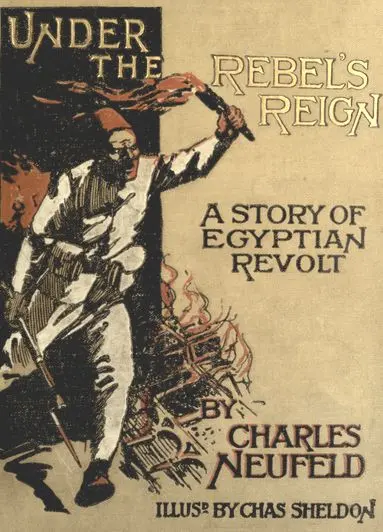
Under the Rebel’s Reign
Charles Neufeld
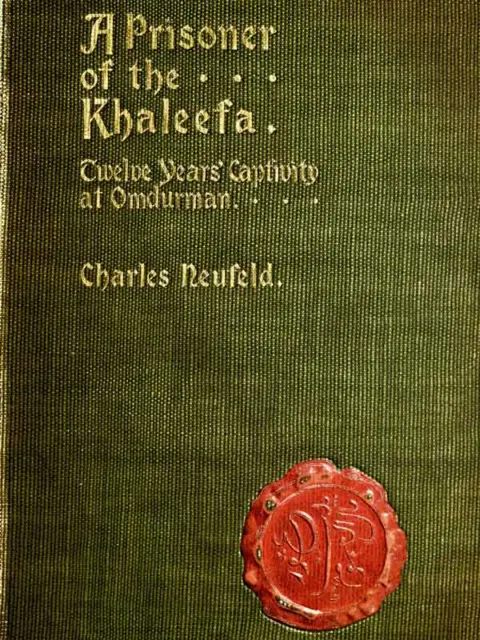
THE CLASSIC COLLECTION · 1899
"A Prisoner of the Khaleefa: Twelve Years Captivity at Omdurman" by Charles Neufeld is a historical account written in the late 19th century. The narrative focuses on Neufeld's journey through the Sudan and his capture by dervishes, ultimately shedding light on his twelve years of enslavement and survival amid brutal conditions. It is likely of interest to readers who are fascinated by personal stories of resilience and historical conflicts in the region. At the start of the book, Neufeld introduces readers to the context surrounding his ill-fated expedition into Kordofan. He recounts the preparations leading up to the journey, the engagement of guides, and the warnings he receives, especially concerning the trustworthiness of his caravan members. Soon after they set out, complications arise as they navigate the unforgiving desert, culminating in their betrayal by the guides. The tension escalates as they become aware of being led into an ambush, which ultimately results in Neufeld's capture and imprisonment by the rival dervish factions, setting the stage for the rest of his perilous journey.
Introduction adapted from the source catalogue; source summaries may be automatically generated.
Free to read · English · 103,208 words · No account needed
MAKE TIME FOR A GOOD BOOK
On by default. Untick to stop anonymous reading totals. Each page counts after 10 seconds in view. How this works.
Anonymous counting is on unless you have switched it off.
Orphali—as Gordon is not alive to speak for him, and as so many knew from Gordon himself of his threat to shoot him many years before—has been afraid, since his return, to talk |334| about his relations with Gordon, and was not a little surprised when I assured him that, if he appeared in “Londra,” he need have nothing to be afraid of from the English people. Having introduced the man, I now give his description of the night of the 25th January, keeping as much as possible to his own words, and only, to give a complete account, mentioning the incidents occurring in other parts of the palace while Gordon and he fought the upper floor:―
His excellency was not an early sleeper, and on the night the dervishes entered Khartoum he was in his room. At eight o’clock, Consul Hansall, Consul Leontides and the Doctor, Abou Naddara (he of the spectacles), came to see him, and remained until midnight. After their departure, he did not go to sleep, but sat reading and writing letters, and sometimes pacing the room. At one o’clock in the morning, he sent me to the telegraph-office to inquire about the enemy’s movements, as he had received confirmed news of the intended attack, and his excellency had issued general orders to the soldiers and employés to be on guard to attack and withstand the dervishes. Ali Effendi Riza, Mohammad Effendi Fauzi, and Youssef Effendi Esmatt were on duty, also the messenger Mohammad Omar. They reported all was quiet, and this news I gave his excellency. Half an hour later, perhaps, firing was heard from the land side (i.e. to the south); I was sent to seek information. Bakhit Bey, from Buri, telegraphed that a few dervishes had attacked, but had been driven off, and when I told his excellency, he prepared to sleep, and gave me the customary order to bolt his door, and this I did. Then I closed the door of the terrace (I, plan), then the door of the Gouvernorat (H), near Rouchdi Bey’s room, and returning along the corridor leading to the private apartments, closed the door in the middle (B), and then went down the private staircase (D), gave the usual orders to the guards, and returned to my sleeping place opposite the pasha’s room (K), after I had told the telegraph-clerks to bring information as soon as any news came from the lines. About three o’clock, Mohammad Omar, the messenger, with Cavass Ali |335| Agha Gadri, roused me and said that an attack was being made at Kabakat (boats) on the White Nile. I informed the Pasha, who told me to run to the telegraph-office for more news, and there I met Hassan Bey Bahnassawi, who was on duty, and we heard that an attack had been made, but had been repulsed.[13] On informing the Pasha, he told me to close the door of his room again, which I did, and sat down to make coffee. Then we heard more firing from the White Nile, and the cavasses, having run to the terrace, called to me that the dervishes were coming into the town. I ran down to Buluk Bashi Ibrahim El Nahass, who had twenty-four men; fifteen we placed at the windows (rooms on right ground-plan), and nine on the terrace overlooking the garden (G). There were also twenty-four cavasses and ferrashes; thirteen were placed at the windows (left of ground-plan) under my second, Niman Agha, eight on the terrace (F), and three at the door of the palace (B). Each man had ten dozen cartridges, besides which, each party had a spare case of ammunition. All these arrangements did not take five minutes, as each knew his place. I then ran up to the Governor-General’s room, and informed him of the arrangements. The day had now come (dawned). The dervishes who ran to the front of the palace were killed by the fire from the steamer. About seventy were killed in the garden by the soldiers firing on them from the terrace, and then we saw the dervishes coming over the rukooba (vine-trellis A), and they were met with the fire from the windows and terraces. They came in great numbers very quickly. Some ran to the entrance (B), killed the guards and opened the door; then they all ran to the Gouvernorat door and killed the telegraph-clerks, all except Esmatt, who hid among the sacks in the storeroom; they then went to the terrace (G) and killed the soldiers, and Nahass, seeing the massacre, jumped from the window. Four men were on guard at the private stairs, but when the |336| dervishes came back from the Gouvernorat door (E) they were soon killed, and some of the dervishes ran to the terrace (F), and killed the soldiers there; others came up the steps to the private apartment, and broke the door; Gordon Pasha met them with his sword in his right hand and his pistol (revolver) in his left, and killed of them two who fell at the door, and one who fell down the stairs,[14] and the others ran away. Then we heard the dervishes breaking the private door (B), while the Pasha was loading his revolver. I went forward and received a little wound in the face, and when the Pasha came, he received a wound in the left shoulder; the man who wounded him was a half-blood slave. We followed them to Rouchdi Bey’s room, killing three and wounding many, and the others ran away and fell down the stairs. We went back to the Pasha’s room and reloaded, but the dervishes came back, and I received a slight wound in my right leg from a sword, but I warded the blow, and the cut was nothing. We attacked the dervishes on the private stairs (D), and while we were passing the door a native of Khartoum, dressed as a dervish, stabbed the Pasha with a spear on the left shoulder; seeing this man’s hand coming from behind the door, I cut at it, and he ran and fell on a spear held by one of his companions on the steps, and was killed. At this time more dervishes were coming along the corridor (from H), and we returned to meet them; I received a thrust in the left hand, but the Pasha cut the man down with his sword, and kicked him on the head and he died; then the dervishes ran into the clerks’ offices (5, 6, 7, upper-floor plan), and while we were standing in the corridor, a tall negro fired a shot from the door (H) near Rouchdi Bey’s room, and the bullet struck the Pasha in the right breast, and the Pasha ran up and shot the man dead. The dervishes then came out of the offices, and we turned, and they ran to the private stairs, and we fired into them, but the Pasha was getting weak from loss of blood. We fought these dervishes down the stairs till we reached the last one, and a native of |337| Katimeh speared the Pasha in the right hip, but I shot him, and the Pasha fell down on the cavasses’ mat at the door, and he was dead, and as I turned to seek refuge in the finance-office (F plan), I was struck down and lost my senses, and I was lying down with the dead. In the afternoon, a man of El Katimeh—Abd-el-Rahman, whom I knew, helped me to go to the river for water, and I saw the body of the Pasha at the door (D), but the head was not there. I was helped to my house, and found my wife and children and property all missing. . . . I was taken by a friend and Abd-el-Rahman to El Dem-el-Darawish, and left on the plain all night, and in the morning I was taken before Wad en Nejoumi . . . and I was stripped to see if I had any money and papers, but I had not; and when I said that I was ignorant of any treasure, I was heavily beaten, though much wounded, and was very ill for seventeen days, and my wife found me.
Your reading position is saved on this browser. Take it to another device with a library code. Reading pages adapt to text, rather than matching a printed edition.
Charles Neufeld
BEHIND THE BOOK
This eBook is for the use of anyone anywhere in the United States and most other parts of the world at no cost and with almost no restrictions whatsoever. You may copy it, give it away or re-use it under the terms of the Project Gutenberg License included with this eBook or online at www.gutenberg.org. If you are not located in the United States, you will have to check the laws of the country where you are located before using this eBook. Read the source licence.
The original source file, including credits and licence, is retained by this library. Request an original-format copy at no charge. Please include the book title and Project Gutenberg identifier #52226.
KEEP YOUR CURIOSITY GOING
Cécile Tormay

Moritz Busch
John L. Ransom
Frances Wright
Cécile Tormay

Mabel Potter Daggett