THE CLASSIC COLLECTION✦A dead man’s diaryCLASSIC FREE BOOKS
A dead man’s diary
Coulson Kernahan
THE CLASSIC COLLECTION · 1904
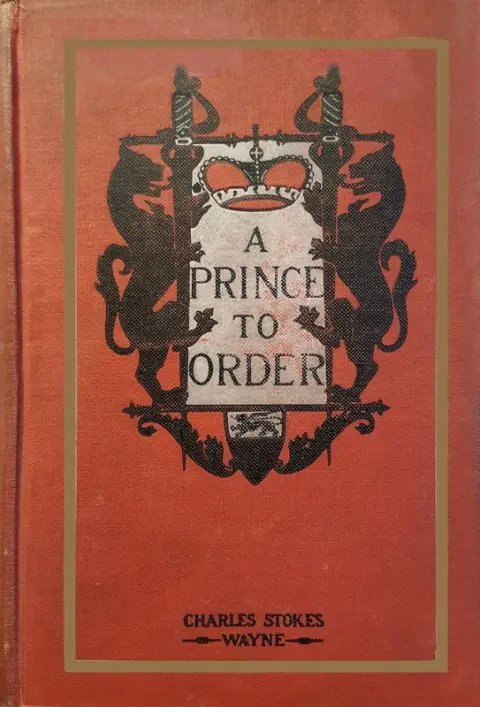
"A Prince to Order" by Charles Stokes Wayne is a novel written in the early 20th century. The story begins with an American man named Carey Grey who wakes up in a Paris hotel, disoriented and with no memory of how he ended up there or what has happened in the last five months. As Grey grapples with his mysterious circumstances and his altered appearance, he uncovers shocking truths about his past and some troubling connections that may link him to a larger, convoluted plot involving his identity and a royal throne. The opening of the novel presents a gripping scenario as Grey struggles to understand his sudden transformation and the mystery of his disappearance. He remembers a night at the opera and visits to clubs and wakes up finding himself in a strange hotel room, transformed and alone. In his quest for answers, he interacts with various figures, including acquaintances who do not recognize him and hint at darker truths regarding his missing identity. Through poignant reflections, Grey realizes he is not only a fugitive but entangled in a royal intrigue, setting the stage for a deeper exploration of themes around identity, loyalty, and the search for truth.
Introduction adapted from the source catalogue; source summaries may be automatically generated.
Free to read · English · 56,887 words · No account needed
MAKE TIME FOR A GOOD BOOK
On by default. Untick to stop anonymous reading totals. Each page counts after 10 seconds in view. How this works.
Anonymous counting is on unless you have switched it off.
“Bah!” almost shrieked the Chancellor, irascibly, “and a throne hangs on the slender thread of that ‘may be.’ Unless the box is found, Captain, it will be well for you to--but it is needless for me to suggest. You yourself know that your life, henceforth, would be not only useless, but a burden.”
Lindenwald’s chin dropped and his eyes sought the floor.
“The box shall be found,” he said; but the assurance in his tone was
meagre.
“And His Royal Highness,” continued von Ritter, “is in a sanitarium in
Paris?”
“Yes, Count; the sanitarium of----”
But a rap on the door cut short his answer, and the name either was not pronounced or was drowned in the Chancellor’s stentorian:
“Herein!”
A footman handed His Excellency a telegram, and with a “Pardon me,
Captain!” he opened it.
Years of diplomatic training had given the Count von Ritter a command of his facial muscles that was perfect. Not by so much even as the quiver of an eyelash did he signify the character of the tidings thus conveyed to him. Having read the message at a glance he refolded the paper with some deliberation, and then turning to Lindenwald again, asked:
“In whose sanitarium did you say?”
“Dr. De Cerveau’s.”
“You saw him there yourself?”
“Yes, Count.”
“And there is no possible chance of his escaping?”
“None whatever, Count.”
His Excellency took another turn to the window overlooking the rose garden, his head bowed meditatively. Lindenwald was still standing, his arm resting on the high back of the chair from which he had risen.
“You are quite sure,” His Excellency pursued, when he was again opposite the Captain, “that we need have no apprehension on that score?”
“Quite sure, Count von Ritter.”
Very slowly, and with a care and precision that emphasised the action, the Chancellor again unfolded the telegram he held and extended it towards Lindenwald.
“Then you will, perhaps, explain to me what that means?” he said, with a calmness that was portentous.
The face of the Herr Captain went ashen white. He caught his breath sharply, and his left hand gripped the chair back where a second before his arm had rested.
“Am leaving this evening, Orient Express,” he read. “Have me met on arrival. ARNDT.”
He made as if to speak, but his lips emitted no sound.
“Well? Well?” queried the Count, impatiently. “What is it? Explain it. That is from His Royal Highness, isn’t it?”
“I--I--you see, I--” stammered the Captain, dazed and affrighted, “I--I am not so sure. It may be a hoax--a trap.”
Von Ritter’s eyes poured out upon him their contempt.
Your reading position is saved on this browser. Take it to another device with a library code. Reading pages adapt to text, rather than matching a printed edition.
BEHIND THE BOOK
This eBook is for the use of anyone anywhere in the United States and most other parts of the world at no cost and with almost no restrictions whatsoever. You may copy it, give it away or re-use it under the terms of the Project Gutenberg License included with this eBook or online at www.gutenberg.org. If you are not located in the United States, you will have to check the laws of the country where you are located before using this eBook. Read the source licence.
The original source file, including credits and licence, is retained by this library. Request an original-format copy at no charge. Please include the book title and Project Gutenberg identifier #54916.
KEEP YOUR CURIOSITY GOING
Coulson Kernahan

Maurice Baring
Frances Wright
Cécile Tormay

Frederic Jesup Stimson

W. H. P. (William Henry Pope) Jarvis