THE CLASSIC COLLECTION✦A dead man’s diaryCLASSIC FREE BOOKS
A dead man’s diary
Coulson Kernahan
THE CLASSIC COLLECTION · 1904
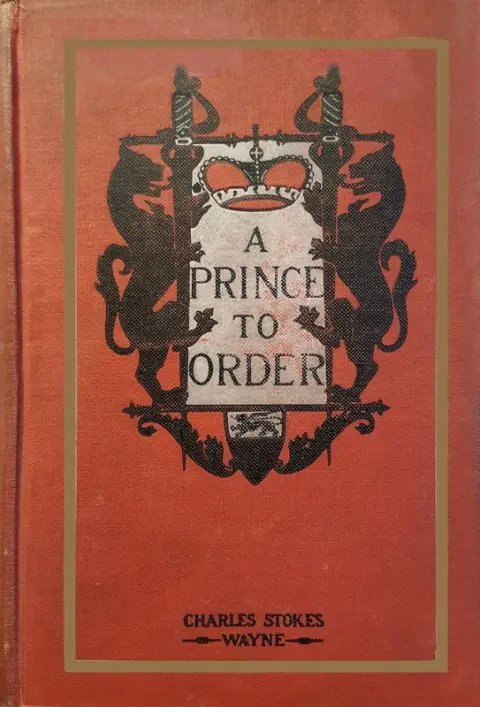
"A Prince to Order" by Charles Stokes Wayne is a novel written in the early 20th century. The story begins with an American man named Carey Grey who wakes up in a Paris hotel, disoriented and with no memory of how he ended up there or what has happened in the last five months. As Grey grapples with his mysterious circumstances and his altered appearance, he uncovers shocking truths about his past and some troubling connections that may link him to a larger, convoluted plot involving his identity and a royal throne. The opening of the novel presents a gripping scenario as Grey struggles to understand his sudden transformation and the mystery of his disappearance. He remembers a night at the opera and visits to clubs and wakes up finding himself in a strange hotel room, transformed and alone. In his quest for answers, he interacts with various figures, including acquaintances who do not recognize him and hint at darker truths regarding his missing identity. Through poignant reflections, Grey realizes he is not only a fugitive but entangled in a royal intrigue, setting the stage for a deeper exploration of themes around identity, loyalty, and the search for truth.
Introduction adapted from the source catalogue; source summaries may be automatically generated.
Free to read · English · 56,887 words · No account needed
MAKE TIME FOR A GOOD BOOK
On by default. Untick to stop anonymous reading totals. Each page counts after 10 seconds in view. How this works.
Anonymous counting is on unless you have switched it off.
Von Ritter’s geniality was still fervent.
“You wish to know, for instance--” he invited.
“We wish to know, Count, whether there is any basis for the story that His Royal Highness, Prince Maximilian, is being restrained of his liberty.”
The Chancellor smiled a little patronisingly.
“Do they say that?” he asked.
“That is the least they say,” Van Tuyl returned.
For a moment Count von Ritter hesitated.
“May I, without discourtesy, inquire why you are interested?” he
questioned.
“We are interested,” answered the New Yorker, promptly, “because he is our personal friend. I have known him for years, and Lieutenant O’Hara here has been with him, he tells me, continually from the day he left America.”
The three were still standing; but now the Chancellor motioned his
visitors to be seated.
“You in turn interest me,” he said, as he took a chair and sat down facing them. “How long, Mr. Van Tuyl, have you known him? For how many years?”
“Ten at least,” was the answer. “He came down to the Street when he was twenty. He was with Dunscomb & Fiske in 1893, I remember.”
“The Street?” repeated the Count, questioningly.
“Yes, Wall Street. You knew he was a Wall Street stock broker, didn’t
you?”
The Chancellor paled perceptibly, his eyes widened a trifle and the straight line of his lips narrowed under his close-cropped moustache.
“Yes,” he returned, diplomatically, after an instant’s pause. “Yes. His name, I think, was Grey, was it not?”
“Grey. Yes, Carey Grey.”
Count von Ritter cleared his throat and then for a moment he sat in silence, his lids half-closed, his mouth tight-drawn. When he spoke it was very seriously, with a changed demeanour.
“Budavia has still more for which to thank you, Mr. Van Tuyl,” he said,
rising.
The New York banker and the Irish lieutenant also stood up. It was evident to both that a blunder had been made.
“I don’t just see for what,” said the older man, a little nervously. “I haven’t told you anything you didn’t know. I didn’t come here to tell you anything. I came to have you tell me something.”
“I think,” replied the Count, with an urbanity that was the acme of trained diplomacy, “that you said just now you came here to confirm a rumour, or words to that effect. You have, my dear sir, confirmed it. And now I must ask you to excuse me. You are at the Königin Anna, I suppose? I shall have the pleasure of calling upon you tomorrow.”
Your reading position is saved on this browser. Take it to another device with a library code. Reading pages adapt to text, rather than matching a printed edition.
BEHIND THE BOOK
This eBook is for the use of anyone anywhere in the United States and most other parts of the world at no cost and with almost no restrictions whatsoever. You may copy it, give it away or re-use it under the terms of the Project Gutenberg License included with this eBook or online at www.gutenberg.org. If you are not located in the United States, you will have to check the laws of the country where you are located before using this eBook. Read the source licence.
The original source file, including credits and licence, is retained by this library. Request an original-format copy at no charge. Please include the book title and Project Gutenberg identifier #54916.
KEEP YOUR CURIOSITY GOING
Coulson Kernahan

Maurice Baring
Frances Wright
Cécile Tormay

Frederic Jesup Stimson

W. H. P. (William Henry Pope) Jarvis