THE CLASSIC COLLECTION✦A dead man’s diaryCLASSIC FREE BOOKS
A dead man’s diary
Coulson Kernahan
THE CLASSIC COLLECTION · 1904
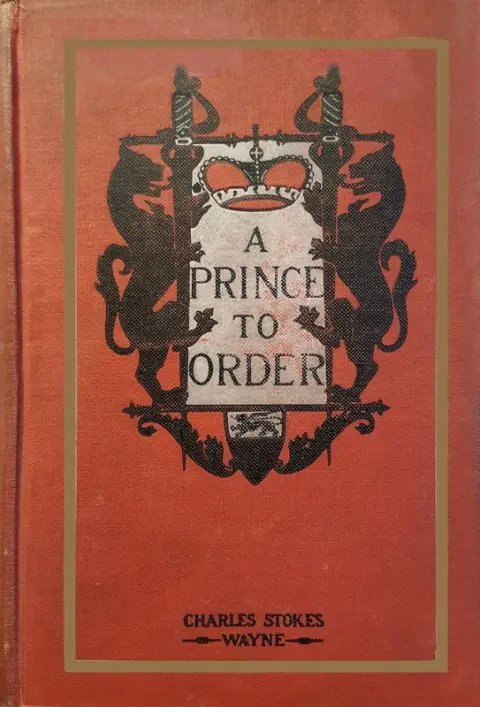
"A Prince to Order" by Charles Stokes Wayne is a novel written in the early 20th century. The story begins with an American man named Carey Grey who wakes up in a Paris hotel, disoriented and with no memory of how he ended up there or what has happened in the last five months. As Grey grapples with his mysterious circumstances and his altered appearance, he uncovers shocking truths about his past and some troubling connections that may link him to a larger, convoluted plot involving his identity and a royal throne. The opening of the novel presents a gripping scenario as Grey struggles to understand his sudden transformation and the mystery of his disappearance. He remembers a night at the opera and visits to clubs and wakes up finding himself in a strange hotel room, transformed and alone. In his quest for answers, he interacts with various figures, including acquaintances who do not recognize him and hint at darker truths regarding his missing identity. Through poignant reflections, Grey realizes he is not only a fugitive but entangled in a royal intrigue, setting the stage for a deeper exploration of themes around identity, loyalty, and the search for truth.
Introduction adapted from the source catalogue; source summaries may be automatically generated.
Free to read · English · 56,887 words · No account needed
MAKE TIME FOR A GOOD BOOK
On by default. Untick to stop anonymous reading totals. Each page counts after 10 seconds in view. How this works.
Anonymous counting is on unless you have switched it off.
“Captain Lindenwald,” answered the Chancellor, “is an officer of the Royal household--he was the late King’s equerry--and he is, moreover, the brother of our Minister to the United States.”
Grey smiled in spite of himself. Of Lindenwald’s complicity he had had no doubt from the first. The fact that the Budavian Minister at Washington was his brother made it all the more probable that that dignitary was also criminally involved.
“Now, just one more matter, Count,” the American continued. “Can you tell me anything of this Baron von Einhard?”
The Chancellor shrugged his square shoulders.
“The Baron is a supporter of Prince Hugo,” he answered.
“That much I know,” Grey returned. “And in his loyalty to his leader he is apt to be unscrupulous to the Prince’s opponents?”
Count von Ritter smiled a trifle cynically.
“I have been led to understand so,” he answered.
“He would pay well, I suppose, to get Prince Max out of the way just at this juncture? Is it not so?”
“The price asked would probably not deter him.”
“And Captain Lindenwald--But no, of course not. It is silly of me to suggest such a possibility. You are satisfied of that officer’s fealty, I am sure?”
The Chancellor straightened in his seat and leaned forward with an exhibition of concern that had hitherto been lacking.
“You do not make yourself altogether clear, your Royal Highness,” he ventured. “Am I to understand that you have reason to suspect that Captain Lindenwald and the Baron von Einhard are----”
“Pardon me,” interrupted Grey, pleased nevertheless at the awakened interest of the Chancellor, “I did not say so. I merely asked a question. You are satisfied of Captain Lindenwald’s entire honesty and loyalty, are you not?”
“The Captain,” von Ritter replied, guardedly, “has not been as eager as I could have wished at times, but I have never regarded him as venal.”
“Then his explanation of why he left me in Paris, without so much as a word as to his going, and why that night an attempt was made to abduct me by persons in the employ of Baron von Einhard--I suppose he has made such an explanation--was entirely satisfactory to you?”
Grey sprung the question suddenly and noted scrutinisingly the effect.
The Chancellor’s usually immobile features gave perceptible token of his surprise. His bushy brows raised the merest trifle, and his keen black eyes widened.
“His story was, I must confess, not altogether satisfactory, your Royal Highness,” he answered, quietly; “it was, I may say, lacking in detail.”
“I would suggest,” continued Grey, in a tone equally repressed, “that you question him in the line I have indicated.”
The Chancellor bowed.
Your reading position is saved on this browser. Take it to another device with a library code. Reading pages adapt to text, rather than matching a printed edition.
BEHIND THE BOOK
This eBook is for the use of anyone anywhere in the United States and most other parts of the world at no cost and with almost no restrictions whatsoever. You may copy it, give it away or re-use it under the terms of the Project Gutenberg License included with this eBook or online at www.gutenberg.org. If you are not located in the United States, you will have to check the laws of the country where you are located before using this eBook. Read the source licence.
The original source file, including credits and licence, is retained by this library. Request an original-format copy at no charge. Please include the book title and Project Gutenberg identifier #54916.
KEEP YOUR CURIOSITY GOING
Coulson Kernahan

Maurice Baring
Frances Wright
Cécile Tormay

Frederic Jesup Stimson

W. H. P. (William Henry Pope) Jarvis