THE CLASSIC COLLECTION✦An outlaw’s diary: the CommuneCLASSIC FREE BOOKS
An outlaw’s diary: the Commune
Cécile Tormay
THE CLASSIC COLLECTION · 1894
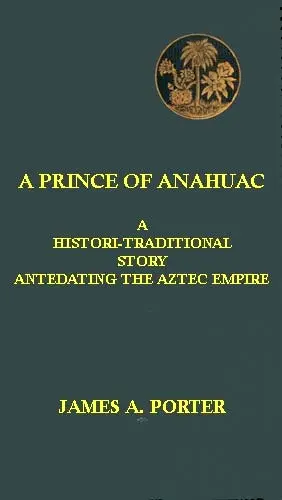
"A Prince of Anahuac: A Histori-traditional Story Antedating the Aztec Empire" by James A. Porter is a historical novel written in the late 19th century. The narrative centers around Hualcoyotl, the young prince of Tezcuco, as he navigates the turmoil of his people's subjugation by the despotic Tepanec king, Maxtla. This work not only explores themes of power, identity, and resistance but also delves into the cultural fabric of the pre-Aztec civilization. At the start of the story, Hualcoyotl, living in the shadows of past glory, receives news of the death of the tyrannical Tepanec king, Tezozomoc. This moment ignites both hope and dread, as his successor, Maxtla, is known for his cruelty. With Hualcoyotl's life now in danger due to Maxtla's jealousy and fear of his potential as a leader, he begins to ponder his future actions. The prince's loyal companion, Euetzin, undertakes a risky mission to rally support for a revolt against their oppressors, while Hualcoyotl grapples with the weight of his lineage and the perilous road ahead. The opening chapters set the stage for an engaging narrative filled with intrigue, cultural detail, and the struggle for justice.
Introduction adapted from the source catalogue; source summaries may be automatically generated.
Free to read · English · 98,336 words · No account needed
MAKE TIME FOR A GOOD BOOK
On by default. Untick to stop anonymous reading totals. Each page counts after 10 seconds in view. How this works.
Anonymous counting is on unless you have switched it off.
The prison-keeper was speechless with amazement at the discovery, and, on contemplating the consequences to himself of the prisoner's escape, became horrified at the thought of the fate which certainly awaited him. He returned to the presence of the king, fully realizing the awful strait in which the situation put him. Prostrating himself at Maxtla's feet, he cried out, in accents of despair:
"Woe is come to thy servant, O King, and he is undone; for Itzalmo, the prisoner, is gone! He has fled his prison cell."
Maxtla looked for a moment, in menacing silence, on the prostrate man before him, his face becoming, as he did so, livid with rage. When he spoke, his accents were inhuman--demoniacal.
"Miserable dotard!" he exclaimed. "Thy cowardly, cringing body is fit only for sacerdotal hands. A heart for a heart it shall be--not Itzalmo's, but thine, shall fall to-day, to assuage the offended gods. Take him hence to the block, and let his blood condone his offense." Thus did the keeper of Itzalmo's dungeon become, innocently, the victim of Maxtla's ferocity.
The sacrificial ceremony was at last concluded. The sanguinary rites, in compliance with the demands of the offended deities, had been formally observed, and Maxtla, according to the declarations of the oracles, was thereby restored to favor. The assembled multitude dispersed, self-satisfied with its part in the bloody festival, and quiet once more prevailed in Azcapozalco.
Maxtla was not a man to be thwarted in his designs without a supreme effort to accomplish them. Itzalmo had escaped, but the whole Tepanec empire should be called to the support of the king, that his purposes might be made good. Pursuant to this end an edict was issued, to the effect that Itzalmo was outlawed, and, furthermore, his delivery to the Tepanec authorities, dead or alive, would be amply rewarded.
Unfortunately for Maxtla, in his purpose to not only retake Itzalmo, but to discover his abettors, who, if taken, would suffer equally with the escaped prisoner, he had, in sacrificing his prison-keeper, removed the only person who might have found a clue to the party concerned in the liberation. By his destruction the security of the liberators, if not Itzalmo's, was assured.
When it was learned by the friends of Itzalmo, who were members of the king's retinue, and who, during his imprisonment, had looked well to his comforts, that a sacrifice to the gods was contemplated, they became alarmed for his safety, and at once set about arranging for his escape. The necessary preparations were effected, and the night prior to the day on which the sacrifice was to take place was fixed upon as the time to deliver him from his imprisonment.
Your reading position is saved on this browser. Take it to another device with a library code. Reading pages adapt to text, rather than matching a printed edition.
BEHIND THE BOOK
This eBook is for the use of anyone anywhere in the United States and most other parts of the world at no cost and with almost no restrictions whatsoever. You may copy it, give it away or re-use it under the terms of the Project Gutenberg License included with this eBook or online at www.gutenberg.org. If you are not located in the United States, you will have to check the laws of the country where you are located before using this eBook. Read the source licence.
The original source file, including credits and licence, is retained by this library. Request an original-format copy at no charge. Please include the book title and Project Gutenberg identifier #41698.
KEEP YOUR CURIOSITY GOING
Cécile Tormay

Moritz Busch
Coulson Kernahan
John L. Ransom

Maurice Baring
Frances Wright