THE CLASSIC COLLECTION✦Mystery of the inn by the shoreCLASSIC FREE BOOKS
Mystery of the inn by the shore
Florence Warden
THE CLASSIC COLLECTION · 1894
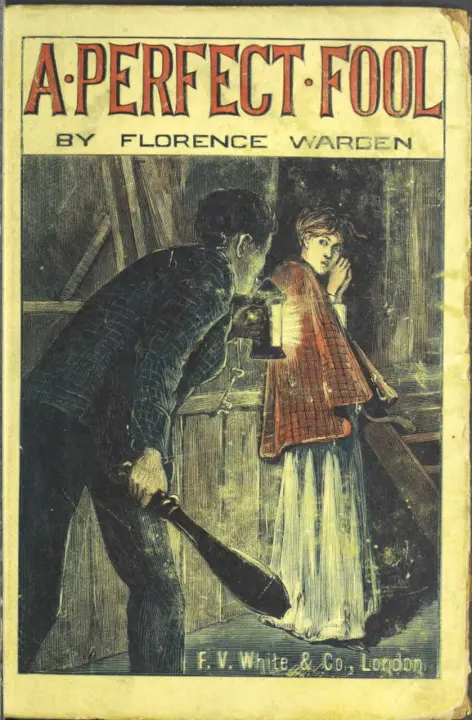
"A Perfect Fool: A Novel" by Florence Warden is a fictional work written in the late 19th century. The story revolves around Chris Abercarne, the daughter of a recently impoverished widow, as they navigate their new life after accepting a position as a housekeeper in the home of the enigmatic Mr. John Bradfield. The book unfolds themes of societal status, personal identity, and the complexities of family obligations against the backdrop of an intriguing domestic setting. At the start of the novel, we are introduced to the challenging circumstances faced by Chris and her mother, Mrs. Abercarne. After a significant financial crisis, they decide to take on a new life working for Mr. Bradfield. Their move to Wyngham House is filled with awkward encounters and uncertainties, particularly revolving around Chris’s initial impressions of the brusque, enigmatic master of the house and the peculiar presence of another occupant, Mr. Richard, who is hidden away in the east wing. As Chris attempts to find her place and meaning within this new environment, her curiosity leads to further mysteries surrounding her employer and the unexpected responsibilities that come with their new position.
Introduction adapted from the source catalogue; source summaries may be automatically generated.
Free to read · English · 83,550 words · No account needed
MAKE TIME FOR A GOOD BOOK
On by default. Untick to stop anonymous reading totals. Each page counts after 10 seconds in view. How this works.
Anonymous counting is on unless you have switched it off.
“You will oblige me, then,” went on Dick, with very cold courtesy, “by arranging with Mr. Reynolds the income which you would wish to have paid to you”--he paused a little before he went on with some emphasis--“in consideration, not of your past, but of your present services.”
John Bradfield winced; but he submitted like a lamb to be awarded a handsome pension in consideration of the fact that he had had to disgorge the remains of the property he had stolen.
As soon as they decently could, both Mr. Reynolds and Richard left him. When they were in the hall, lawyer and client looked at each other.
“Well,” said Mr. Reynolds, as he prepared to leave the house in company with Dick, “I’ve met some rogues in my time, but----”
“I prefer to think,” said Dick, gravely, “that he has tried so long to believe that I was insane that the forced belief has injured his own brain.”
“Very kind of you to put it like that. You forgive him then?”
The answer came, short and sharp:
“No. You can’t forgive the man who has robbed you of seventeen years of life, and youth, and hope. If I had forgiven him, I should not have insulted the cur by offering him a pension.”
The lawyer shrugged his shoulders.
“You don’t understand the world, Mr. Wryde. Nobody minds such an insult
as that.”
“It’s a satisfaction to me, at all events,” answered Richard, simply.
But he would not have been so magnanimous if he had not known that Chris was waiting to meet him in the meadow by the barn.
Later in the day Mr. Bradfield came across Stelfox, who was enjoying the victory he had been the means of bringing about too greatly to leave the scene of it with undue haste. His late master, who had recovered his spirits a little, addressed him, with some abruptness, in the following manner:
“Stelfox, you’re a scoundrel.”
“Thank you, sir,” answered the man as quietly as ever. “If I hadn’t been a bit of a rogue myself,” he went on thoughtfully, “perhaps, sir, I shouldn’t have been so successful in bringing another rogue to book.”
For one moment Mr. Bradfield seemed disposed to kick him, but he refrained, and laughed instead, with some constraint, however. The remark had to be treated as a joke, though it could not be made to pass for a palatable one.
“Now, why,” pursued he, with an appearance of sincere regret, “did you not either let me know that you believed Mr. Richard to be recovering, or else let him escape much sooner than you did?”
Your reading position is saved on this browser. Take it to another device with a library code. Reading pages adapt to text, rather than matching a printed edition.
Florence Warden
Florence Warden
Florence Warden
Florence Warden
BEHIND THE BOOK
This eBook is for the use of anyone anywhere in the United States and most other parts of the world at no cost and with almost no restrictions whatsoever. You may copy it, give it away or re-use it under the terms of the Project Gutenberg License included with this eBook or online at www.gutenberg.org. If you are not located in the United States, you will have to check the laws of the country where you are located before using this eBook. Read the source licence.
The original source file, including credits and licence, is retained by this library. Request an original-format copy at no charge. Please include the book title and Project Gutenberg identifier #65401.
KEEP YOUR CURIOSITY GOING
Coulson Kernahan

Maurice Baring
Frances Wright
Cécile Tormay

Frederic Jesup Stimson

W. H. P. (William Henry Pope) Jarvis