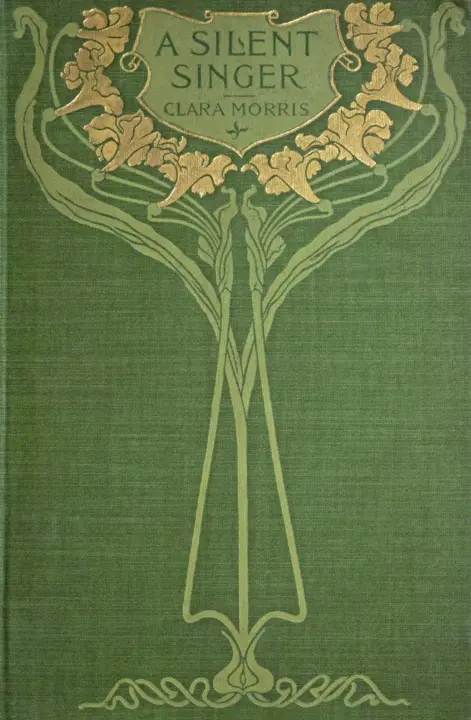
A Silent Singer
Clara Morris
THE CLASSIC COLLECTION · 1902
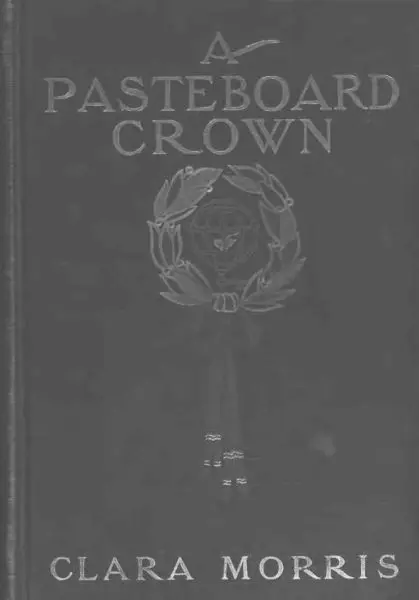
"A Pasteboard Crown: A Story of the New York Stage" by Clara Morris is a novel written in the early 20th century. The narrative introduces the Lawton family as they arrive at their new home, Woodsedge, an old estate that garners mixed reactions from the locals. Central to the story are the two daughters, Sybil and Dorothy, whose aspirations and challenges unfold against the backdrop of their family's financial struggles and the theatrical world. The opening of the novel sets the stage for the family's arrival and the community's curiosity about the Lawtons, who are seen as a curious spectacle in their decrepit new surroundings. John Lawton, the father, almost oblivious to the social implications of their situation, is accompanied by his spirited daughters and wife, Letitia. As they settle in, the girls begin to confront their new reality, balancing their hopes and dreams with the socio-economic limitations they face, foreshadowing deeper developments in their personal lives as they connect with the local stage and the enigmatic Claire Morrell. The tone and representation of family dynamics and societal commentary create an engaging introduction to their journey.
Introduction adapted from the source catalogue; source summaries may be automatically generated.
Free to read · English · 95,150 words · No account needed
MAKE TIME FOR A GOOD BOOK
On by default. Untick to stop anonymous reading totals. Each page counts after 10 seconds in view. How this works.
Anonymous counting is on unless you have switched it off.
Among these crowns and crosses, stomachers and necklaces, there were minutely exact copies of some famous originals treasured in the museums of Europe. Nor were these ornaments cheap; the price of many of them was told in hundreds of dollars, not tens. And Sybil, while missing their real value, which lay in their historical accuracy, might well be forgiven for her childish delight in their meretricious splendor.
"Oh, how I wish Dorrie could see, too!" she exclaimed, and the snuffy old man nudged his rumpled old wife with his elbow, and, looking at Sybil's flushed and happy young face, they wagged their heads knowingly.
And Stewart Thrall said to himself: "To watch her countenance is like watching the surface of a land-locked lake--one moment glass-smooth beneath the sun, then reflecting a slow white cloud, then breaking into ripples, fretting into waves and blackening to sudden storm! Ah, surely you are the headlong Capulet in love with love!" and his meditation broke off short.
Lefebvre was advancing, diamond coronet in hand, and he anxiously waited results. Nonna Angelique, with stumpy brown fingers, had still further loosened Sybil's black hair and fluffed it out, crooning to herself the while, and had turned her head this way and that, bent it down, lifted it, then put her hand out for the coronet her husband brought, placed it, drew back a step, then tore it off to a chorus of, "o! no!"
"Too old!" said Lefebvre.
"C'est cela! too old!" nodded Nonna Angelique.
"Too old!" acquiesced Thrall.
Then was handed over a golden net, studded with jewels; and oh, Sybil did hope they would let her wear that!
Old Angelique put it on with deft hands. "Mais comme elle est belle!"
she exclaimed; "but----"
Thrall shook his head and repeated: "Beautiful, but----"
And the old man explained the "buts" fully with the remark: "Too
Zingary, n'est ce pas?"
"Yes! yes!" cried Nonna, throwing her arms over her head and snapping her fingers to imitate castanets. "Oui! oui! too Zingary--too gypsy-like!" and off came the golden net.
A head-piece of colored stones barely touched her brow when, with a contemptuous "Bah! too Egyptian" it was returned to the drawer.
The costumers stood looking at each other, silently. Thrall waited; he wanted them to propose pearls themselves, and thus avoid a wrangle, for they did not accept suggestions willingly. Then, suddenly, Nonna Angelique said: "Let me hear the voice, Mr. Thrall. Give her a cue; let me know whether her voice matches the mobilite of her face. That may give me my idee!"
Sybil gave a frightened, deprecating, "Oh, Mr. Thrall!"
But he answered with: "Steady! steady!" then added: "Give her 'Wherefore
art thou Romeo?'"
Your reading position is saved on this browser. Take it to another device with a library code. Reading pages adapt to text, rather than matching a printed edition.
BEHIND THE BOOK
This eBook is for the use of anyone anywhere in the United States and most other parts of the world at no cost and with almost no restrictions whatsoever. You may copy it, give it away or re-use it under the terms of the Project Gutenberg License included with this eBook or online at www.gutenberg.org. If you are not located in the United States, you will have to check the laws of the country where you are located before using this eBook. Read the source licence.
The original source file, including credits and licence, is retained by this library. Request an original-format copy at no charge. Please include the book title and Project Gutenberg identifier #35055.
KEEP YOUR CURIOSITY GOING
Coulson Kernahan

Maurice Baring
Frances Wright
Cécile Tormay

Frederic Jesup Stimson

W. H. P. (William Henry Pope) Jarvis