THE CLASSIC COLLECTION✦A Terrible TomboyCLASSIC FREE BOOKS
A Terrible Tomboy
Angela Brazil
THE CLASSIC COLLECTION · 1912
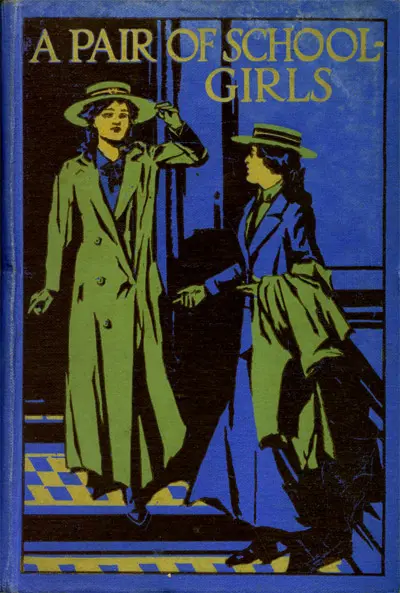
"A Pair of Schoolgirls: A Story of School Days" by Angela Brazil is a fictional narrative set in the late 19th century, focusing on the experiences of schoolgirls at a day college. The story revolves around the character Dorothy Greenfield, who is eager to take part in the school elections and is navigating her social position and friendships within the school environment. The book likely explores themes of friendship, ambition, rivalry, and the challenges of growing up within a school community. At the start of the novel, we are introduced to Avondale College on the first day of the autumn term. The excitement is palpable as the students gather to hear about the upcoming election for the "Warden of the Lower School." Dorothy, one of the candidates, is filled with hopes for the position, setting the stage for her ambitions and the competitive atmosphere among her peers. As she canvasses for votes, we learn about her personality, including her determination and pride, as well as her complex feelings of self-worth related to her unknown family background. Dorothy’s character is quickly established as she engages with her classmates, experiences rivalry with others, and faces the reality of both friendship and social standing in her quest for acceptance and recognition within the school.
Introduction adapted from the source catalogue; source summaries may be automatically generated.
Free to read · English · 54,354 words · No account needed
MAKE TIME FOR A GOOD BOOK
On by default. Untick to stop anonymous reading totals. Each page counts after 10 seconds in view. How this works.
Anonymous counting is on unless you have switched it off.
"Here I am at last, Auntie! Oh, I feel as if I hadn't seen you for a hundred years! I'm in the Upper Fourth, but it's been a hateful day. I never thought school was so horrid before. I'm very disappointed and disgusted and abominably cross."
"Poor little woman! What's the matter?" said Aunt Barbara, taking Dorothy's face in her hands, as the girl knelt by her side, and trying to kiss away the frown that rested there. "You certainly don't look as if you had been enjoying yourself."
"Enjoying myself? I should think not! We had an election for the wardenship, and my name was on the list, and I might perhaps have won if the others hadn't been so mean; but I didn't, and Hope Lawson has got it!"
"We can't always win, can we? Never mind! It's something that your name was on the list of candidates. All the girls who lost will be feeling equally disappointed. Suppose you just forget about it, go and take off your things, and tell Martha to make some buttered toast."
Dorothy laughed. Already her face had lost its injured and woeful
expression.
"That's as good as saying: 'Don't make a fuss about nothing'. All right, Auntie, I'm going. But I warn you that this is only a respite, and I mean to give you a full and detailed list of all my particular grievances after tea. So make up your mind to it, and brace your dear nerves!"
Miss Barbara Sherbourne was a most charming personality. She was young enough to be still very pretty and attractive, but old enough to take broad views of life, and to have attained that independence of action which is the prerogative of middle age. She was a clever and essentially a cultured woman; she had lived abroad in her youth, and the glamour of old Italian cities and soft, southern skies still seemed to cling to her. She was a good amateur musician, could sketch a little, and had lately obtained some success in writing. Ever since Dorothy could remember, she and Aunt Barbara and Martha, the maid, had lived together at Holly Cottage, a particularly harmonious trio, liking their own mode of life, and quite independent of the outside world. The little house seemed to fit its inmates, and, in spite of its small accommodation, to provide just what was wanted for each. First there was the old-fashioned dining-room, with its carved oak furniture, blue china, and rows of shining pewter; its choice prints on the walls, its bookshelves, overflowing with interesting volumes; and the desk where Aunt Barbara wrote in the mornings--a room that seemed made especially for comfort, and reached its acme of cosiness on a cold winter's day, when arm-chairs were drawn up to the blazing fire that burnt in the quaint dog grate. Then there was the little drawing-room, with its piano and music rack, and its great Japanese cabinet, full of all kinds of treasures from foreign places. When Dorothy was a tiny girl it had been her Sunday afternoon treat to be allowed to investigate the mysteries of this cabinet, to open its numerous drawers and sliding panels, and to turn over the miscellaneous collection of things it contained; and she still regarded it in the light of an old friend. The artistic decorations, the chintz hangings, the water-colour paintings of Italian scenes, all helped to give an aesthetic effect to the room, and to make a very pleasant whole. The kitchen was, of course, Martha's particular domain, but even here there were books and pictures, and a table reserved for writing desk and work basket. I fear Martha did not often busy herself with pens and paper, for she held head-learning in good-natured contempt; but she appreciated her mistress's effort to make her comfortable, and polished the brass-topped inkpot diligently, if she seldom used it. Peterkin, the grey Persian cat, generally sat in the arm-chair, or on Martha's knee, which he much preferred, when he got the chance; and Draco, the green parrot, hobbled up and down his perch at the sunny window, repeating his stock of phrases, begging for titbits, or imitating smacking kisses.
Your reading position is saved on this browser. Take it to another device with a library code. Reading pages adapt to text, rather than matching a printed edition.
Angela Brazil
Angela Brazil
Angela Brazil
Angela Brazil
BEHIND THE BOOK
This eBook is for the use of anyone anywhere in the United States and most other parts of the world at no cost and with almost no restrictions whatsoever. You may copy it, give it away or re-use it under the terms of the Project Gutenberg License included with this eBook or online at www.gutenberg.org. If you are not located in the United States, you will have to check the laws of the country where you are located before using this eBook. Read the source licence.
The original source file, including credits and licence, is retained by this library. Request an original-format copy at no charge. Please include the book title and Project Gutenberg identifier #33389.
KEEP YOUR CURIOSITY GOING
Coulson Kernahan

Maurice Baring
Frances Wright
Cécile Tormay

Frederic Jesup Stimson

W. H. P. (William Henry Pope) Jarvis