THE CLASSIC COLLECTION✦A Terrible TomboyCLASSIC FREE BOOKS
A Terrible Tomboy
Angela Brazil
THE CLASSIC COLLECTION · 1912
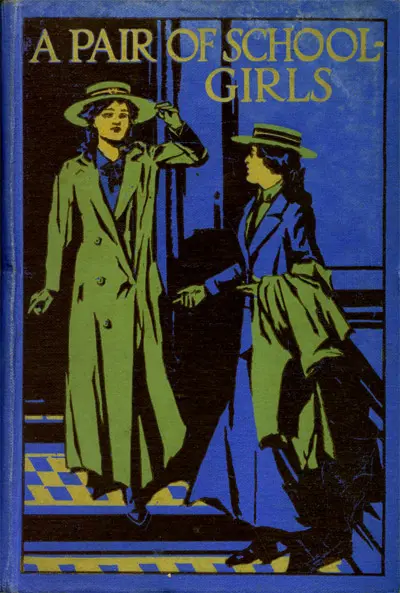
"A Pair of Schoolgirls: A Story of School Days" by Angela Brazil is a fictional narrative set in the late 19th century, focusing on the experiences of schoolgirls at a day college. The story revolves around the character Dorothy Greenfield, who is eager to take part in the school elections and is navigating her social position and friendships within the school environment. The book likely explores themes of friendship, ambition, rivalry, and the challenges of growing up within a school community. At the start of the novel, we are introduced to Avondale College on the first day of the autumn term. The excitement is palpable as the students gather to hear about the upcoming election for the "Warden of the Lower School." Dorothy, one of the candidates, is filled with hopes for the position, setting the stage for her ambitions and the competitive atmosphere among her peers. As she canvasses for votes, we learn about her personality, including her determination and pride, as well as her complex feelings of self-worth related to her unknown family background. Dorothy’s character is quickly established as she engages with her classmates, experiences rivalry with others, and faces the reality of both friendship and social standing in her quest for acceptance and recognition within the school.
Introduction adapted from the source catalogue; source summaries may be automatically generated.
Free to read · English · 54,354 words · No account needed
MAKE TIME FOR A GOOD BOOK
On by default. Untick to stop anonymous reading totals. Each page counts after 10 seconds in view. How this works.
Anonymous counting is on unless you have switched it off.
"At this juncture my brother-in-law, David Clarke, returned to England, bringing his motherless baby in charge of an ayah. He did not intend to stay, only to settle a few necessary business matters and to make some arrangement for his little girl, who was delicate, and could not be reared in India. He had no near relations of his own who were willing to be troubled with the child, so he asked me if I would undertake to bring her up with mine, and I accepted the charge. I was drawn to little Rosamond for her mother's sake, though I could never forgive her for being a fortnight older than her cousin. So everything was settled. I took a house in Scotland for the summer, which I thought would be healthy for the children, and I sent Alison on there in advance with her own nurse. The ayah who had brought Rosamond from India was to return in the same ship as my brother-in-law, who was starting immediately for Madras. He wanted to see his baby till the very last, so I accompanied him to London, taking with me Mrs. Burke, a respectable woman who had once been a maid at my father's house, and was now married, to act as temporary nurse after the ayah's departure.
"When the last good-byes were said, and my brother-in-law and the ayah had started, I found I wished to do some shopping in London before I went north. It is awkward and inconvenient to keep a baby at a hotel, so I determined to send Mrs. Burke with my little niece to Scotland, where my own responsible nurse was already settled in charge of Alison. I took them to the station and saw them safely off in the express. In a few days I intended to follow them. That very night, as I sat at dinner in the hotel, I heard the newsboys shouting 'Special edition', and learnt of a terrible northern railway smash. I set off by the first available train for the scene of the disaster. It was impossible to get beyond Burkden, for the line was disorganized, but I hired a carriage and went on to Greenfield. The first point to be ascertained was whether my niece was among the victims. I wasted some time enquiring at the railway offices, and it was not till late in the afternoon that I saw a newspaper poster with the heading: 'Baby's Wonderful Escape from the Accident'. It was only after further investigations and delays that I learnt the child was being taken care of by its rescuer at the Red Lion Hotel. Do you remember how I came into the inn parlour that evening? The scene is stamped vividly upon my memory. You sat by the fireside with the baby on your knee; the light falling from the hanging lamp above made a picture of you both. It had taken a fancy to you, though it was always shy with me, and its soft little cheek was pressed against your face. I looked at it, and I think if it had given one sign of recognition, or held out its arms to me, I should have claimed it. But it took no notice at all, and my heart hardened against it. A terrible temptation assailed me. If I disowned the baby, nobody would ever know its identity. It would be so easy to tell its father that it had perished in the fire; there could be no positive evidence about any of the victims of the disaster. If it were out of the way, then my baby would inherit the fortune which I had always considered was my due. I was not left well off, and money meant so much to me. I had not been brought up to study economy, and I hated to be poor. I am a good judge of character, and I knew from your face that you would not abandon the child you had saved. I thought Fate had interfered forcibly, and had given it into your keeping instead of mine. At the moment it seemed to me a direct interposition of Providence, and a sign that my father's inheritance was not intended to be lost to me after all. Before me stood a great choice--the good of my sister's little one, or my own--and I chose my own. The sequel proved easy--only too easy. I said the baby I had seen at the inn was not my niece, and nobody doubted my word. My brother-in-law and the ayah were already on their way to India, Mrs. Burke was dead, and no one else was likely to raise the question of identity. The portrait circulated in the newspapers was such a poor snapshot that neither my nurse nor any of Mr. Clarke's relations recognized it. They had not known the child intimately; they had only seen her once or twice in her ayah's arms. Before I left the Red Lion at Greenfield I ascertained your name--I scarcely knew why; it seemed an instinct at the moment. I wished to forget it, but it remained all the same--one of those things which it is impossible to wine from one's remembrance.
Your reading position is saved on this browser. Take it to another device with a library code. Reading pages adapt to text, rather than matching a printed edition.
Angela Brazil
Angela Brazil
Angela Brazil

Angela Brazil
BEHIND THE BOOK
This eBook is for the use of anyone anywhere in the United States and most other parts of the world at no cost and with almost no restrictions whatsoever. You may copy it, give it away or re-use it under the terms of the Project Gutenberg License included with this eBook or online at www.gutenberg.org. If you are not located in the United States, you will have to check the laws of the country where you are located before using this eBook. Read the source licence.
The original source file, including credits and licence, is retained by this library. Request an original-format copy at no charge. Please include the book title and Project Gutenberg identifier #33389.
KEEP YOUR CURIOSITY GOING
Coulson Kernahan

Maurice Baring
Frances Wright
Cécile Tormay

Frederic Jesup Stimson

W. H. P. (William Henry Pope) Jarvis